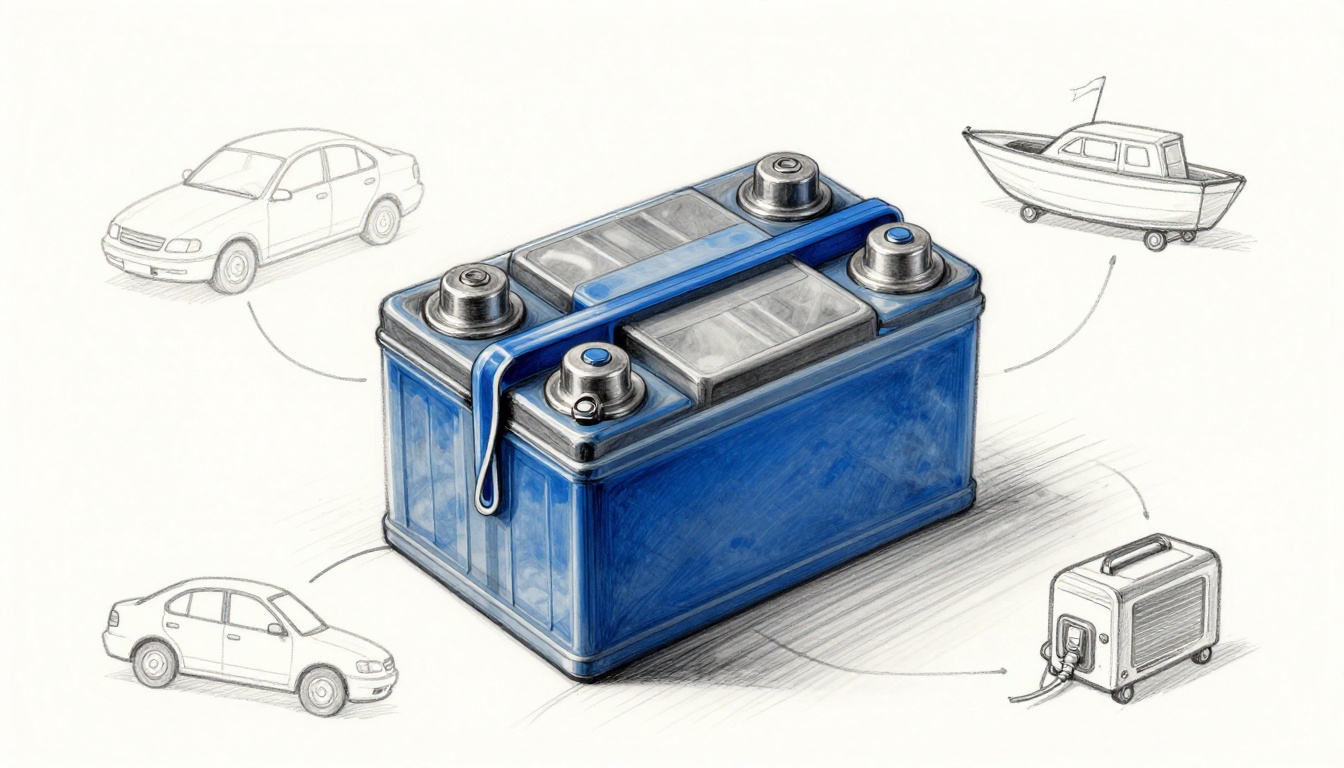
You know the problem when the car starts slow on a cold morning. You also see it during outages, when backup power must keep running. In both cases, lead-acid batteries often show up as the practical answer.
For clarity, lead-acid batteries are an older rechargeable battery type that stores energy using lead plates and sulfuric acid. Even in 2026, they still remain common because they stay dependable under real-world stress, and they cost less than many newer options.
This guide covers the basics without skipping the important parts. It explains how the chemistry works, highlights the main types (flooded, sealed/VRLA, AGM), and identifies common uses across vehicles, marine jobs, and backup power systems. It also covers key strengths, limits, and what recent improvements change for buyers.
Next, the internal design and science behind lead-acid batteries are set out in plain terms.
Unpack the Simple Design and Science of Lead-Acid Batteries
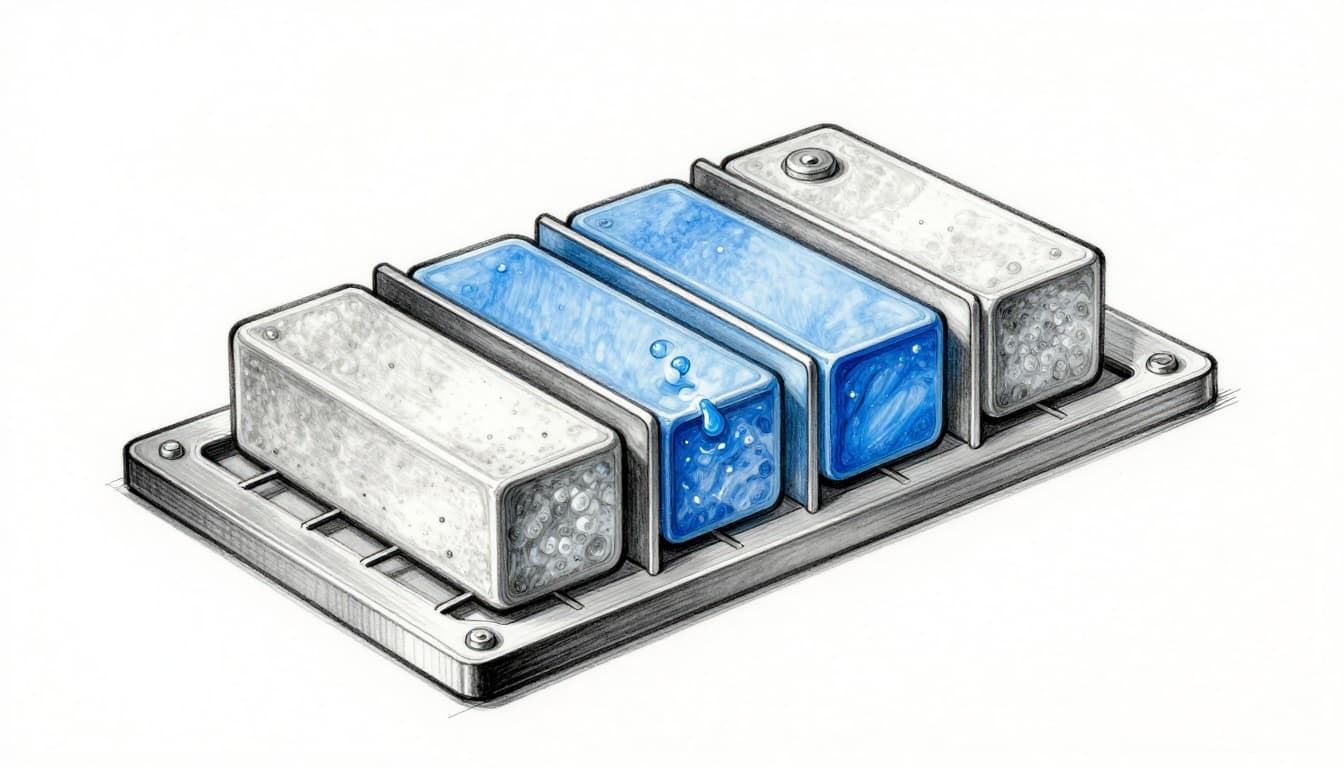
A lead-acid battery is an electrochemical “battery cell” system built to do one task well: convert chemistry into usable electrical power, then reverse that process when recharging. The core construction uses positive lead dioxide, negative sponge lead, and a sulfuric acid electrolyte that sits between them (with separators to reduce shorting). If you want a visual for the construction, see lead acid battery construction guide.
In use, the battery discharges. During discharge, both plates gradually turn into lead sulfate (PbSO₄), while the acid weakens as the reaction produces water. When charging begins, an external DC source pushes the reaction back in the other direction, which converts lead sulfate back into active materials.
A simple way to picture this is to treat ions like people moving around a playground. They do not “create” energy from nothing. Instead, they move because of chemical conditions inside the battery, and that movement produces electrical current through the external circuit.
Historically, this concept traces to Gaston Planté’s work in 1859. Over time, manufacturers improved plate shapes, separators, and charging methods. As a result, modern lead-acid batteries deliver more usable capacity, better cycle behavior, and more predictable performance.
From a chemistry standpoint, recent summaries still describe the same key reactions:
- Overall discharge converts active lead materials into 2PbSO₄ and 2H₂O, while acid concentration drops.
- Overall charge reverses that reaction, rebuilding Pb at the negative plate and PbO₂ at the positive plate.
- A practical limitation remains sulfation, where not all PbSO₄ fully reverses after repeated partial charge patterns.
Therefore, the basic design stays simple, while the details decide whether the battery lasts.
Key Parts That Make Them Tick
For operational understanding, the main internal parts can be stated as follows.
First, the battery uses two different electrodes:
- Positive electrode: coated with lead dioxide (PbO₂).
- Negative electrode: made from sponge lead (Pb).
Next, the electrolyte provides the chemical pathway. In standard designs, this electrolyte is dilute sulfuric acid (H₂SO₄).
Separators then control physical contact. They prevent the plates from touching. Without separators, an internal short could occur, which would end the battery’s useful output.
Finally, grids support current flow. The grids also distribute charge across the plate surface. As a result, the battery can deliver higher surge current and respond more consistently during starts and loads.
Although the internal stack can vary by model type, the functional pattern remains consistent. A battery that fails early usually does so because one of these functions breaks down: plate activity loss, separator issues, or electrolyte imbalance.
In addition, users should recognize one common wear mechanism. Repeated undercharging can let hard lead sulfate crystals form. That process reduces the material that can convert into electricity, which drives lower capacity over time.
Step-by-Step: How Charging and Discharging Works
Operationally, discharge and charge follow the same chemistry in opposite directions. The key difference is whether electricity leaves the battery or enters it.
During discharge (battery powers a device), the chemical state moves toward lead sulfate:
- Electrons leave through the negative terminal.
- The negative plate oxidizes, forming PbSO₄.
- The positive plate reduces, also forming PbSO₄.
- Sulfuric acid concentration drops as water forms.
During charging (external charger restores the battery), the reaction reverses:
- A charger supplies DC power.
- PbSO₄ at the negative side converts back toward Pb.
- PbSO₄ at the positive side converts back toward PbO₂.
- Sulfuric acid concentration rises as water decreases.
In everyday terms, the battery behaves like a water pump in a loop. The pump does not create water. It moves water between states. If the loop never fully resets, the system stores less usable water each time.
This also explains why charging practices matter. If a battery spends long periods partially charged, sulfation can become harder to reverse.
The practical goal is full or correct charging for the use pattern. Partial-charge habits often shorten life more than the load itself.
Recent manufacturing updates often focus on reducing sulfation harm. In particular, carbon additives have been reported to improve cycle life and charge acceptance by helping limit hard PbSO₄ formation on the negative plate.
Explore the Main Types of Lead-Acid Batteries
Lead-acid batteries are not a single product. They are a family of designs with different sealing, plate construction, and maintenance rules. As a result, the correct selection depends on how you intend to use the battery.
A high-level comparison is shown below.
| Lead-acid type | Common structure | Typical fit |
|---|---|---|
| Flooded (FLA) | Liquid electrolyte, vented | Vehicles, jobs needing low cost |
| Sealed VRLA | Sealed case with valves | Telecom, indoor standby |
| AGM | Absorbed glass mat, sealed | Higher vibration tolerance, many vehicles |
If you need a quick reference across models, 5 Battery Types Explained can support side-by-side decisions.
In 2026, ongoing improvements also target start-stop cars and higher cycling needs. For example, EFB (Enhanced Flooded Battery) exists for certain start-stop applications. Carbon additions also appear in some designs, because they can reduce sulfation and raise usable cycle life.
Meanwhile, the sealed and AGM families often get selected when maintenance access is limited. Flooded units remain common when users accept periodic checks.
Therefore, the best type is usually the one that matches your environment, charging method, and expected discharge patterns.
Flooded vs. Sealed: What Sets Them Apart
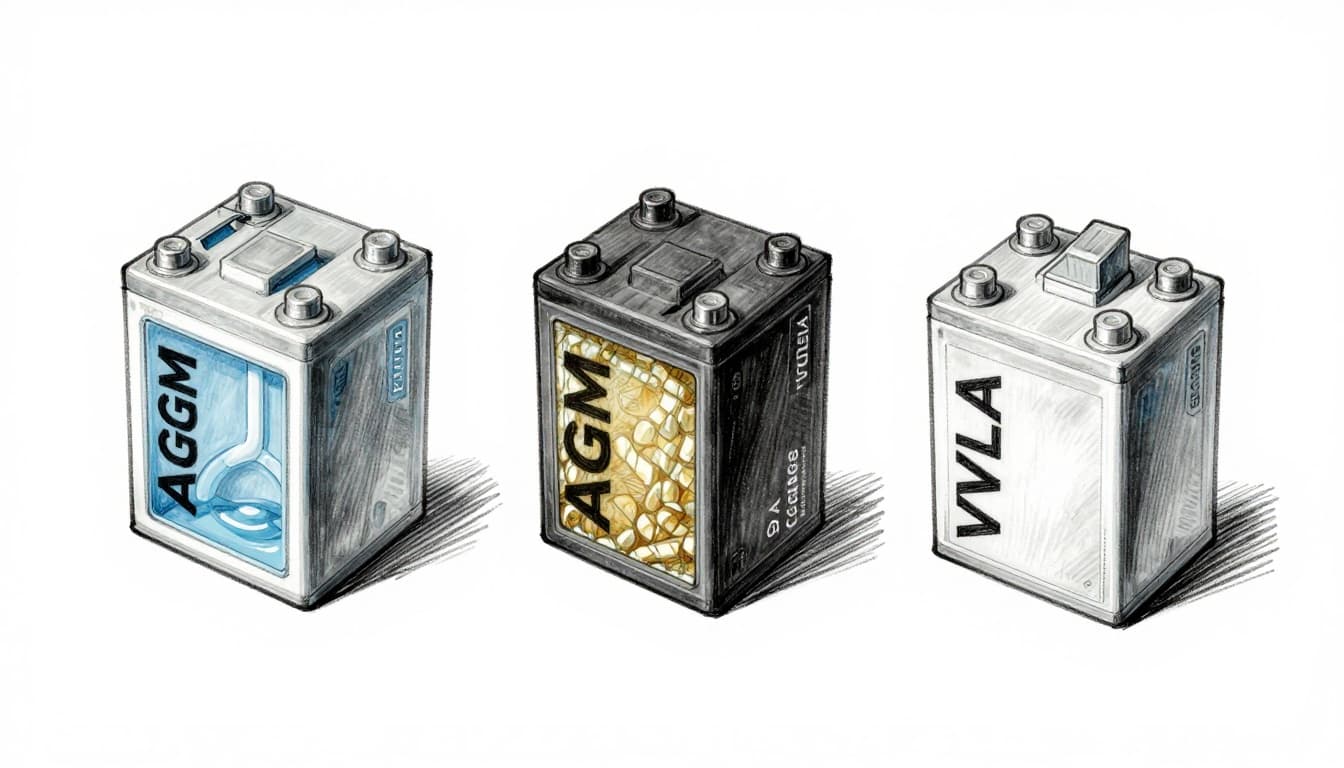
Flooded lead-acid batteries, sometimes called FLA, use liquid electrolyte and vent ports. Because of that, they usually require user attention. Users may need to add water after charging losses, depending on design and operating conditions.
Sealed options fall under VRLA (Valve-Regulated Lead-Acid). In VRLA batteries, the case is sealed and controlled with valves. As a result, these units typically do not require water top-ups during normal operation.
For selection purposes, the decision can be framed as follows:
- Flooded: lower purchase cost, but maintenance steps apply.
- Sealed VRLA: maintenance avoidance, but charging must match manufacturer limits.
Charging behavior is especially important for sealed units. Overcharging can increase internal gas pressure. Valves can vent, and venting can reduce long-term capacity. Therefore, a charger that tracks voltage correctly matters.
However, it would be inaccurate to state that flooded units are always inferior. When a user follows maintenance guidance, flooded batteries can offer stable service at lower upfront cost.
AGM and VRLA: Built for Tough Jobs
AGM (Absorbent Glass Mat) is a lead-acid design where the electrolyte is held in a fiberglass mat. That structure supports vibration resistance and reduces electrolyte movement inside the case. As a result, AGM models often perform well in mobile equipment.
AGM designs also commonly support deep cycling better than basic starting models. Therefore, AGM units get used where starts and partial cycling both appear.
VRLA is broader than AGM. VRLA includes AGM and other sealed patterns. The valve design supports controlled release if pressure rises. In practice, these units get used where users want a sealed case, low odor risk, and less maintenance.
In the real world, “tough jobs” often mean vibration, frequent starts, or installation constraints. For example, some marine systems, wheelchairs, and industrial carts use AGM because the mounting location experiences shock and movement.
Finally, start-stop needs a special mention. Some modern offerings include EFB variants and plate formulations aimed at improved partial-state durability. In addition, carbon additive approaches have been reported to reduce sulfation buildup, which can improve cycle life when batteries frequently operate without full recharges.
Real-World Spots Where Lead-Acid Batteries Shine
Lead-acid batteries remain widely used because they meet a cost and duty-cycle balance. In 2026, market forecasts still place the global lead-acid market in a broad range, roughly $47.16 billion to $105.5 billion, depending on the definition and data sources.
The applications list is broad, because lead-acid batteries handle both short bursts and backup standby. They are also available in many sizes, from small starting units to large racks for facility backup.
For industry context, see lead-acid applications in modern industries.
Most importantly, these batteries serve places where reliability matters, downtime costs money, and budgets demand predictable pricing.
Powering Vehicles from Cars to Forklifts
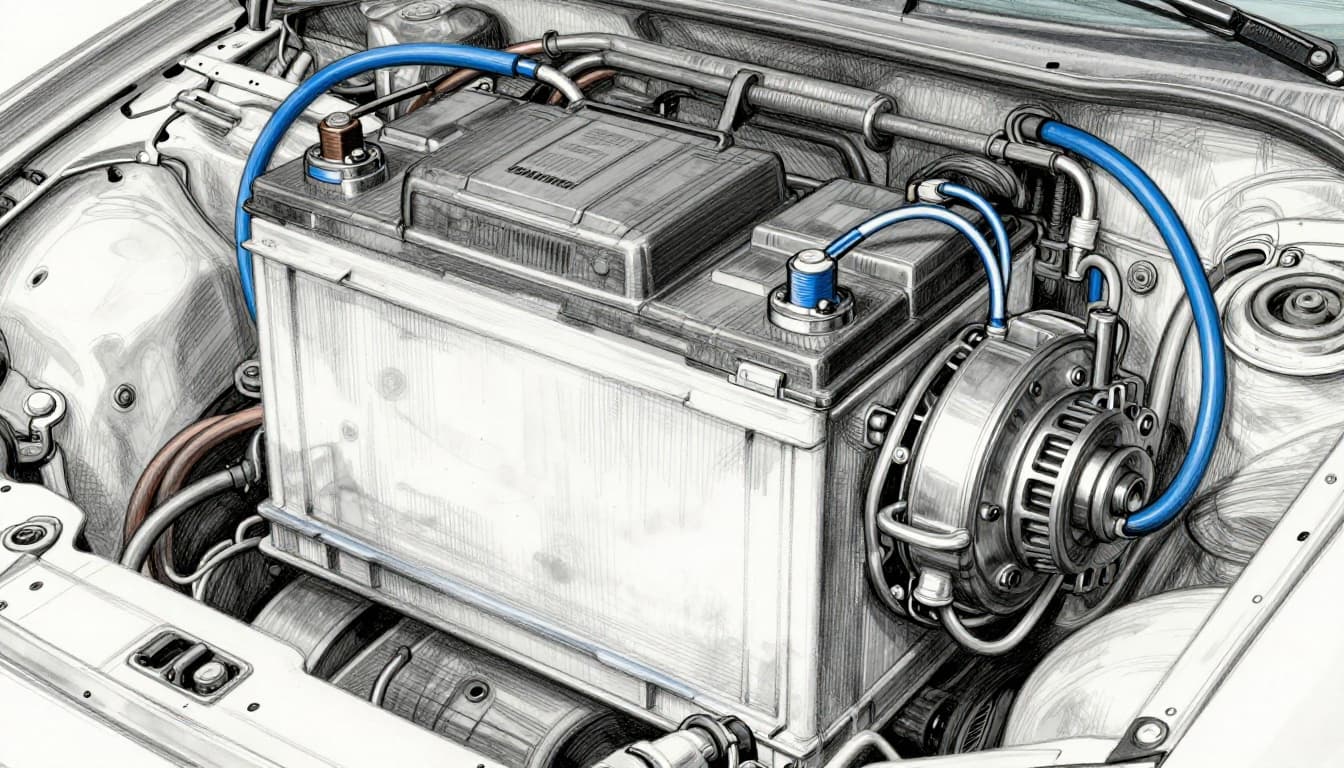
The most visible use remains automotive. Lead-acid batteries power starting systems, lighting, and ignition. In vehicles, this role is often called SLI (starting, lighting, ignition).
In addition, lead-acid batteries show up in equipment that needs high surge current. Forklifts and industrial carts often draw large current spikes. Lead-acid chemistry can supply those spikes with good short-term performance.
For hybrid systems and certain low-speed electric applications, lead-acid may also appear in lower-cost segments, depending on duty cycle and system design.
The most common operational requirement is correct charging after driving. If the alternator does not bring the battery to a full state often enough, sulfation risk increases, and capacity drops.
Reliable Backup for Homes and Businesses
Backups are where lead-acid batteries often earn their reputation. During power loss, a UPS system needs near-immediate power to keep servers, telecom equipment, and safety systems running.
Hospitals, data centers, and telecom towers often require battery backup because downtime can disrupt services. In many cases, facilities also benefit from mature recycling systems in their region.
In the United States, lead-acid recycling rates are high. Realtime market context notes that over 95% of batteries are recycled, which supports supply chain sustainability goals.
For backup applications, sealed VRLA units are common because they reduce maintenance. Still, installation conditions must match the manufacturer’s temperature guidance and charging settings.
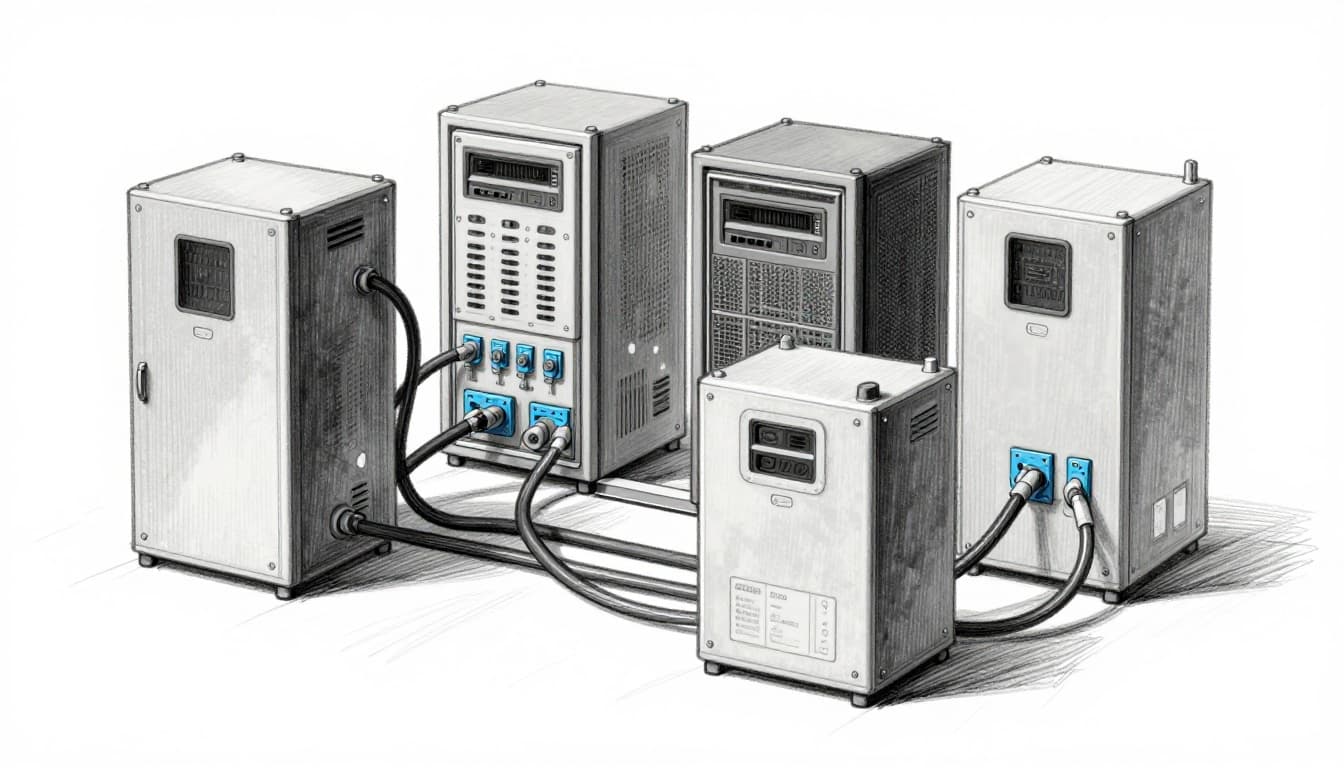
Below is a basic depiction of a rack-style backup setup.
Weigh the Strengths and Weaknesses Before Choosing One
For decision-making, the strengths and limits can be listed in a compliance-style way, because most buyers need practical constraints.
Strengths that commonly justify lead-acid batteries
Lead-acid batteries tend to offer:
- Low cost and wide availability in many regions.
- High surge current, which supports starting loads and short peak draws.
- Cold weather tolerance, which matters for outdoor and unheated use.
- Recyclability, with well-established collection and processing systems.
- Operational familiarity, which helps service teams and installers.
In addition, improvements such as carbon additives have been reported to raise cycle life. Realtime context indicates carbon approaches can support up to 3,642 cycles in certain tested cases, along with better charge acceptance.
Weaknesses that may limit lead-acid batteries
Key tradeoffs include:
- Weight, which can raise shipping and mounting requirements.
- Cycle limits for deep or frequent partial discharges, depending on how the battery is charged.
- Slower charging for many chemistries compared with some alternatives.
- Lower energy density, which can increase the number of cells or physical size needed.
- Sulfation risk, especially when users do not fully recharge after partial use.
If you compare backup systems, the decision often becomes cost vs runtime. For a structured comparison aimed at UPS environments, see lead acid vs lithium comparison.
Practical comparison for buying decisions
| Criteria | Lead-acid batteries | What you should expect |
|---|---|---|
| Upfront cost | Usually lower | Budget fit for many systems |
| Duty cycle | Best with proper charging | Partial charging patterns must be managed |
| Size/weight | Typically larger/heavier | Planning affects installation and mobility |
| Long standby | Works when maintained | Periodic charging and correct storage matter |
From a risk standpoint, you should also confirm the battery type matches the charger plan. A mismatched charger setting can shorten service life, especially for sealed designs.
Conclusion
Lead-acid batteries are simple by design, and they deliver reliable results in starts and backup power. Their construction, based on lead plates and sulfuric acid, still supports reversible charge and discharge chemistry that modern designs refine for better cycle life.
Because the market and recycling system remain mature, lead-acid batteries also stay practical for vehicles, industrial equipment, UPS racks, and emergency lighting. Even as lithium-ion expands, lead-acid continues to hold important ground where cost control and proven operation matter.
If your situation involves cold starts or backup duty, focus on the battery type, charging method, and discharge pattern. What has worked best for you in the field, and what caused premature failure?
Check local recycling options, then share your experience in the comments to help the next buyer make a cleaner choice.