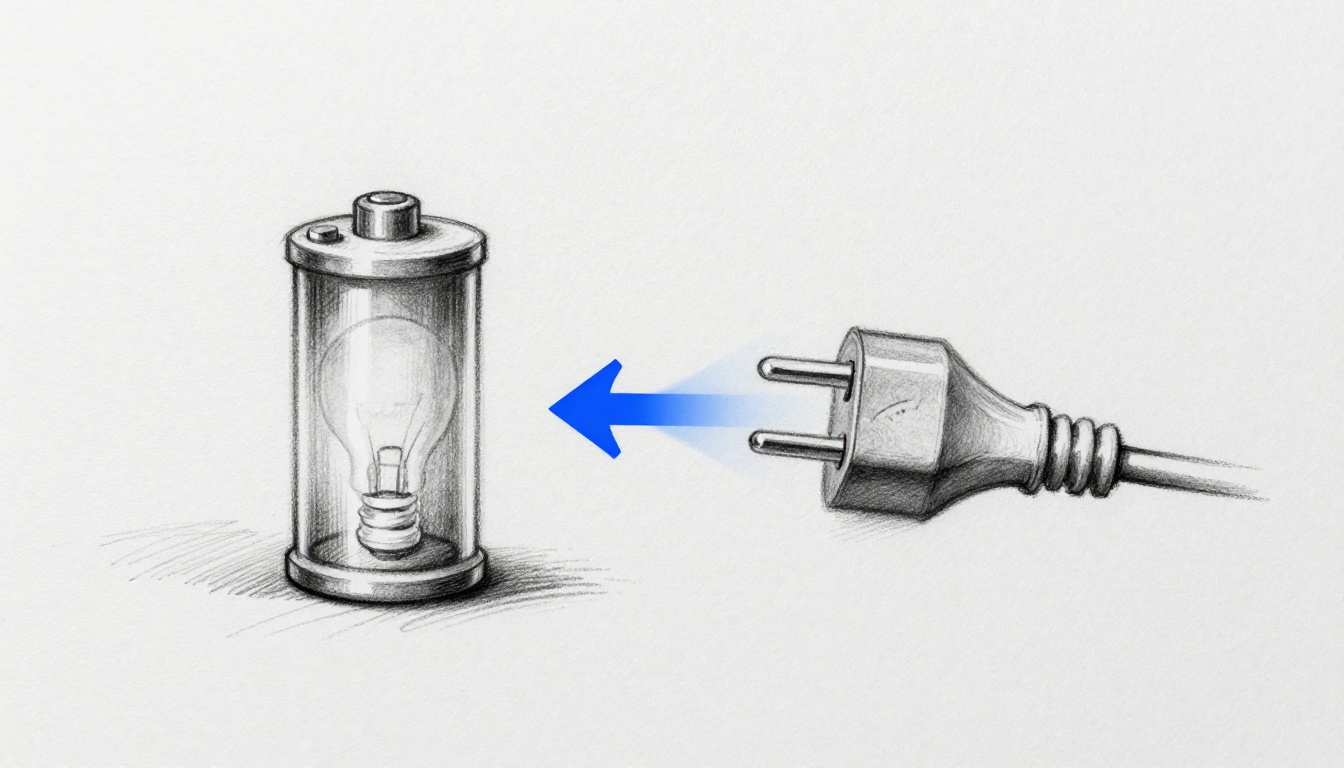
If you have ever mixed up energy and power, you are not alone. You might see kWh on an electric bill, then notice kW on a charger spec, and the terms start to feel interchangeable. They aren’t. The question is simple: What is the difference between energy and power? Energy is the total supply, power is the rate that supply gets used.
To reduce confusion, treat energy as the “amount” and power as the “speed.” Energy answers, “How much work can be done?” Power answers, “How fast that work happens?”
This article defines both terms with plain examples, then shows how they connect using a basic relationship. It also covers the most common mix-ups that lead to wrong expectations about bills, devices, and even fitness effort.
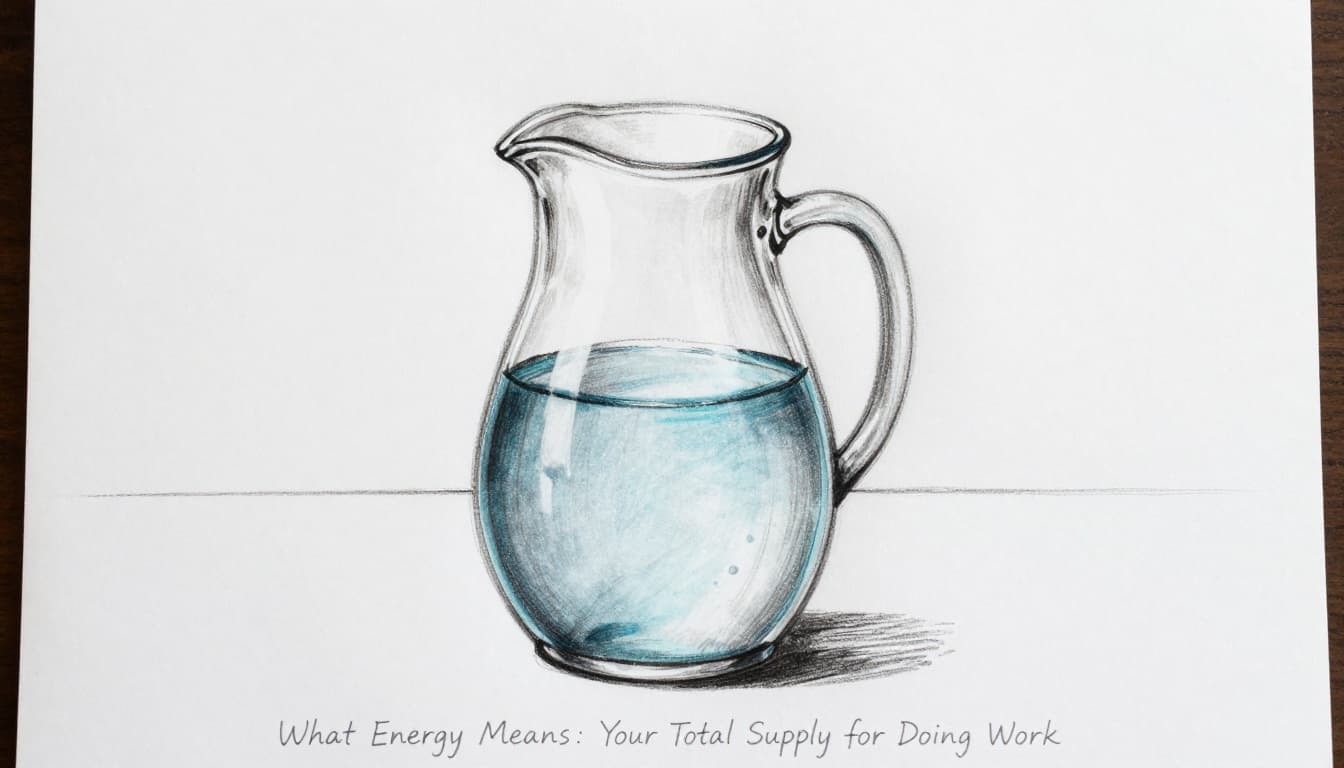
What Energy Means: Your Total Supply for Doing Work
Energy is the capacity to do work, or cause change. In practice, energy works like a stored quantity. Fuel stores energy, water stored behind a dam stores energy, and batteries store energy.
In the International System of Units (SI), energy uses the unit joule (J). One joule equals one newton-meter. In other words, it measures how much “push plus distance” is available to create change. Energy can also move between forms. For example, motion can turn into heat due to friction. That does not remove the energy, it changes its form.
A useful way to keep the definition stable is to treat energy like total water in a jug. The jug holds a fixed amount. If you tilt the jug, you do not create more water. You only change how quickly the water leaves.
That “amount” framing matters because many everyday numbers refer to totals. Food calories track a total energy amount. Battery ratings often point to stored energy capacity. When you understand energy, you can better estimate what a system can do over time, not just how strongly it starts.
For example, lifting a box up to the same height requires the same energy amount. Whether you lift it slowly or quickly, the energy target stays the same. The method may require different power, but the energy needed to reach the height does not change.
For a reference-style explanation of energy as a capacity to do work, you can review Britannica’s energy overview.
Common Forms of Energy You Encounter Daily
Energy does not appear in only one form. In real systems, energy shows up as different types, based on where it sits and how it can be used. For the purpose of the difference between energy and power, the key requirement is this: forms of energy still measure “total amount,” not “how fast.”
Common forms you will likely encounter include the following.
Kinetic energy: This is energy of motion. A moving car has kinetic energy, and it changes when the car speeds up or slows down. Even so, the amount is still an energy quantity.
Potential energy: This is energy stored by position. A raised weight has potential energy because it can fall and do work. If you raise it higher, the stored energy increases.
Thermal energy: This is energy tied to temperature. Hot coffee holds thermal energy. When it cools, that energy transfers into the air and your cup.
Chemical energy: This is stored in bonds, and it releases when reactions occur. Food and batteries both carry chemical energy.
If a phone battery lists an energy capacity, it is pointing at stored energy. When the phone discharges, that stored energy turns into electrical energy flow, then into heat, light, and motion. Power controls the discharge rate, but energy controls the total “fuel” available.
As a reference, you can see how Energy Education describes energy vs. power using everyday analogies and basic definitions.
Power Explained: The Speed of Using Energy
Power is the rate of doing work, or the rate of transferring energy. If energy tells you how much is available, power tells you how quickly that available energy gets used.
In SI units, power uses the unit watt (W). One watt equals 1 joule per second (1 J/s). Therefore, two systems can have the same energy amount but different power, simply based on how fast they deliver that energy to the task.
The speed analogy remains the controlling idea. If you drive two cars using the same total fuel amount, the total distance may still end up similar. However, the car with higher power reaches higher speed sooner and performs acceleration work faster. The energy amount does not change, but the rate of using it does.
In everyday terms, consider lifting a box. If you lift it in 5 seconds, you need more power than if you lift it in 20 seconds. The energy used to reach the same height stays the same. The power changes because the time changes.
Lighting provides a quick check. A 60 W bulb uses 60 joules per second while it is on. If it runs for 1 hour, the total energy use equals power times time. The power rating describes the rate during operation, not the total by itself.
For an industry-focused explanation that distinguishes the two, see Tigo Energy’s energy vs. power post.

How Power Shows Up in Tech and Machines
Specifications in tech often list power because power affects performance. In many cases, marketing also uses power numbers because they signal speed, output, and response time. Still, the legal distinction remains: power is rate, energy is amount.
Common examples include the following.
Solar panels: A panel might show a rated output like “300 W max.” That figure is power. Your real daily production is best understood as energy, such as daily kilowatt-hours (kWh), because weather and time control how much energy you actually get.
EV charging: Charging devices list power, like 7 kW for a common home charger, or higher values for fast chargers. The battery capacity lists energy, like tens of kWh. Faster chargers can reduce charging time, but they still transfer a fixed energy total into the battery.
Engines and horsepower: Engine ratings often use horsepower as a power indicator. Higher power supports faster acceleration under similar conditions. Still, driving a longer trip depends on energy use, which comes from the fuel amount and efficiency.
To align with how many modern systems report “capacity versus rate,” you can also review Power vs energy in EV and power systems.
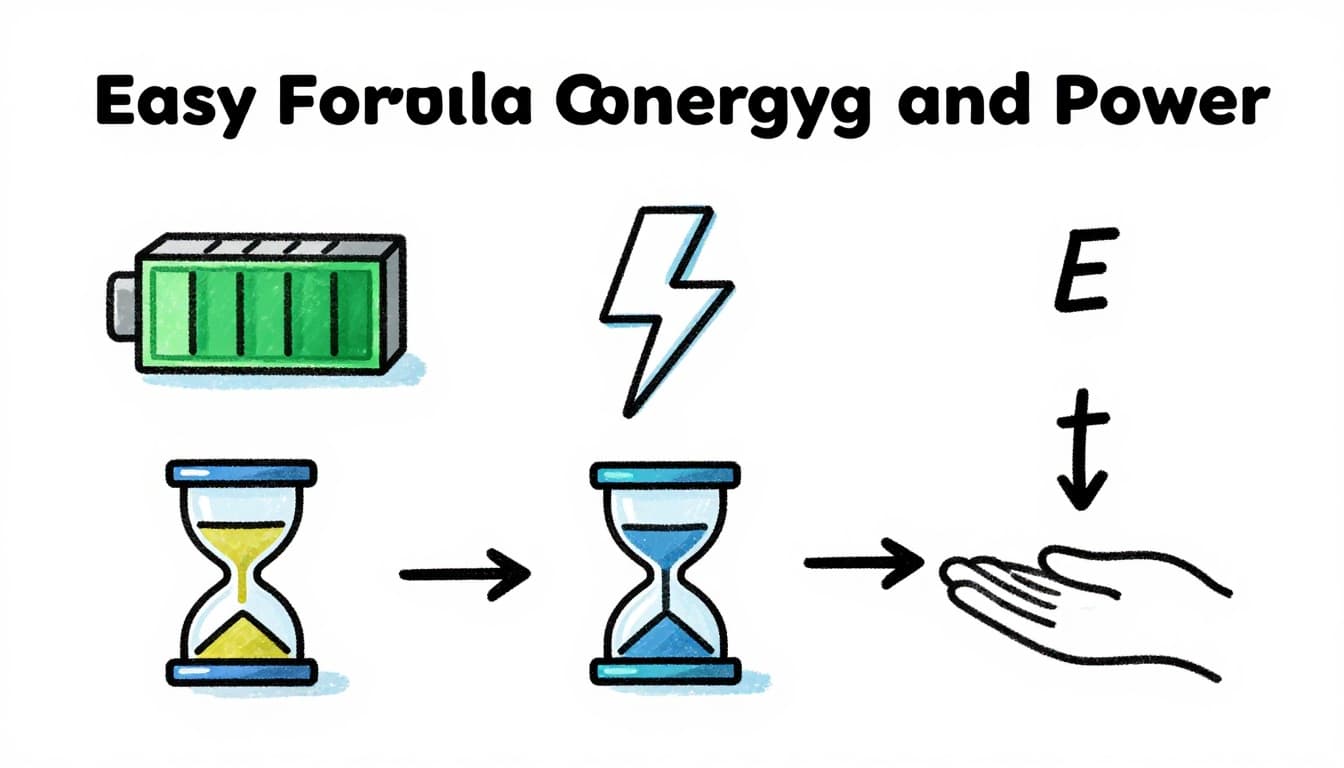
The Easy Formula Connecting Energy and Power
Because power is a rate, it connects energy and time through a straightforward relationship. In policy terms, these relationships govern how calculations shall be performed.
- Power formula: P = E / t
- Energy formula: E = P × t
Where:
- P is power in watts (W)
- E is energy in joules (J)
- t is time in seconds (s)
A simple calculation supports the link. If E = 100 J is used over t = 10 s, then P = 100/10 = 10 W. In the reverse direction, if you know the power and time, you can compute the total energy.
Water flow provides an intuitive alignment. The jug contains energy as total water volume. The pouring speed represents power. The bowl fills with the energy total, which equals flow rate times time.
Electricity bills also enforce this distinction. Your bill charges for energy (commonly in kWh), not for power (kW). A home might pay different amounts based on how long devices run, even if the device watt rating never changes.
One practical example uses a common light bulb. Suppose a bulb is rated 60 W and runs for 1 hour. The energy can be expressed in joules and kilojoules for clarity.
Here is a quick table showing the energy effect of time.
The following table summarizes a bulb energy calculation.
| Device rating | Time | Total energy used |
|---|---|---|
| 60 W | 1 hour | 216,000 J (216 kJ) |
| 10 W | 10 hours | 360,000 J (360 kJ) |
Takeaway: High power for a short time may use less energy than lower power for longer time. That is the core reason “watts” and “kWh” should never be treated as the same number.
For electricity cost context in the US during March 2026, the average residential rate is 17.24 cents per kWh (as reported from EIA-based reporting via Choose Energy). That rate affects how energy use converts into dollars, while power rating alone cannot.
Finally, when you compare devices, you should match “energy with energy” and “power with power.” If an ad lists power but you need energy over a day, you must apply time.
Real-World Examples That Highlight the Difference
When the terms are applied correctly, the difference between energy and power becomes obvious in daily life. The easiest route is to compare cases where time or rate changes while the energy goal stays similar.
Lifting a box, different speeds
If you lift a box to the same height, the energy needed for that height should remain the same. However, the power required changes with how quickly you lift it. A faster lift means more power during the same energy task.
Batteries, capacity vs discharge rate
A battery has a stored energy capacity. For example, a device might store enough energy to run for a certain time. A high-power load can drain the battery faster. However, that behavior reflects power demand, not a change in total stored energy capacity.
Fitness, calories vs intensity
In fitness terms, “calories burned” tracks energy. If you burn the same calories over two workouts, the total energy transfer is similar. Yet the intense workout often requires more power because it does the same energy work in less time.
Renewables, peak power vs daily energy
Solar panels may list peak power under ideal conditions. Grid planning depends on daily or monthly energy totals, because sun hours and clouds control time. Peak power does not guarantee peak energy for the day.
For EV planning, this distinction matters in real charging schedules. Battery capacity controls how far you can go. Charging power controls how quickly you can refill that capacity.
To cross-check common definitions used in education materials, you can also consult energy and power difference explanations.
Common Mistakes People Make and How to Avoid Them
Most confusion comes from treating “rate” and “amount” as if they were synonyms. Because that error can show up in bills and shopping, it shall be corrected early.
Mistake: “Energy and power are the same.”
This is incorrect. Energy is the total amount of work available. Power is how fast that work is used. If you call both by the same name, then your calculations and expectations will fail.
Mistake: “More power always means more energy.”
More power means energy can be used faster, but total energy depends on time. A 100 W device running 10 seconds uses far less energy than a 10 W device running 10 hours.
Here is a short example to keep the rule enforceable:
- A 100 W device for 1 minute uses less energy than a 10 W device for 10 minutes if the total energy is computed from power times time.
- The correct method always multiplies by the operating duration.
Mistake: “A high-watt bulb costs more.”
A bulb’s watt rating helps you estimate cost only when you also include run time. Electricity bills usually charge for energy, often in kWh. Therefore, two bulbs with different watts can cost the same if their kWh usage matches.
Mistake: “EV range depends on charging power alone.”
Charging power affects time to refill. EV range depends on energy stored in the battery, plus efficiency and driving conditions. A fast charger does not expand the stored energy capacity. It only changes the refill rate.
If you keep one rule, it should be this:
Power sets the pace, energy sets the total. Time decides the final amount used.
Conclusion
The difference between energy and power comes down to one operational split. Energy is the total capacity to do work, measured in joules (J) or kilowatt-hours (kWh). Power is the rate of using that energy, measured in watts (W) or kilowatts (kW).
When you apply P = E/t and E = P × t, most confusion disappears. You also gain better control over what bills reflect, because utility costs usually track energy over time.
Your next step should be practical. Pick a device, note its watts, then estimate how many hours it runs. Then convert that result into energy, and verify whether the expectation matches the math.