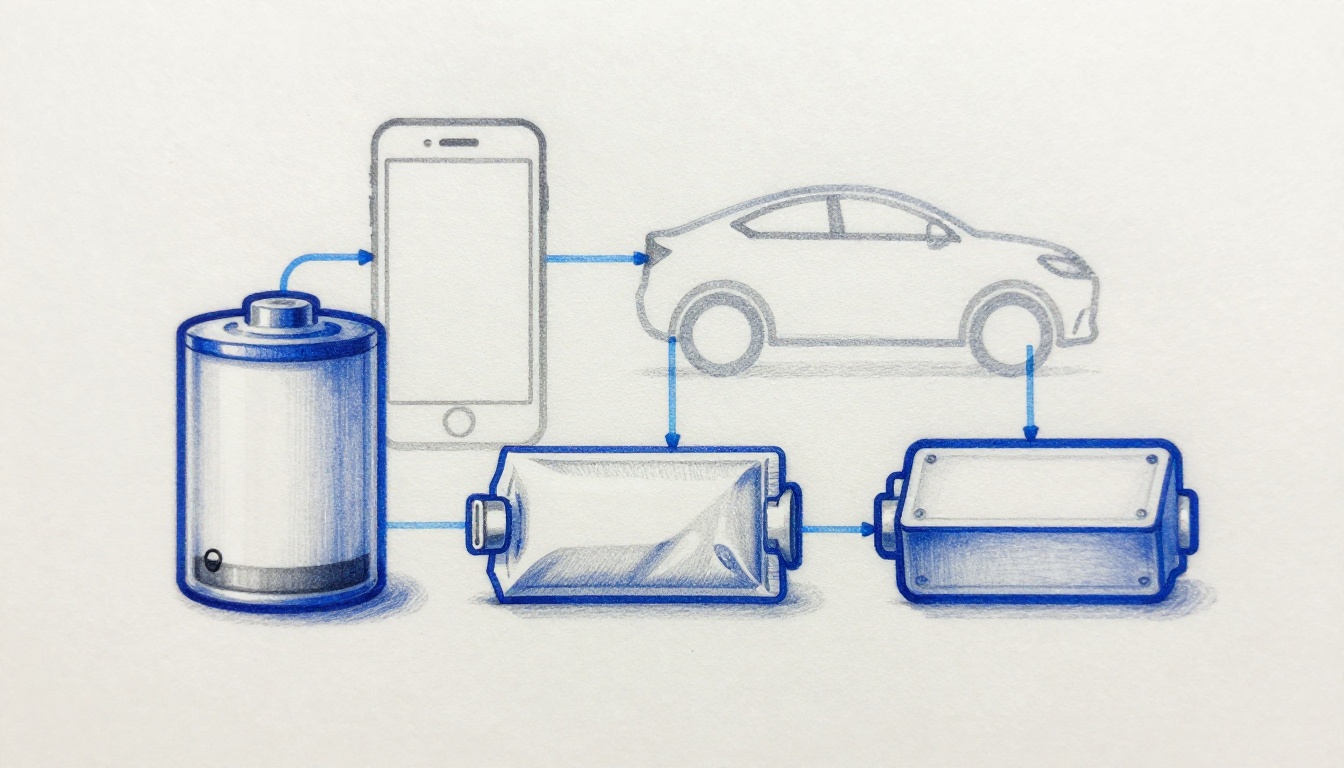
A phone that dies at 2% is not a minor inconvenience. An EV that charges slowly in winter is a planning failure. In both cases, the issue traces back to battery types performance comparison choices you rarely get to see up close.
Because battery performance depends on chemistry, size, and how the system manages heat, weight, and wear, two “battery packs” can feel nothing alike. Comparing battery types performance helps you pick the right option for phones, tools, cars, and home backup.
In 2026, the main market story still runs on lithium-ion, but sodium-ion and solid-state keep moving from lab claims to pilot projects. Next, the contenders are laid out in plain terms, then compared head-to-head by energy, life, charge speed, safety, cost, temperature handling, and eco impact.
Meet the Contenders: Key Battery Types and Their Strengths
To reduce ambiguity, this section treats each chemistry as a battery type. Real products may vary by brand, pack design, and control electronics, but the performance direction is typically consistent.
Lithium-ion (Li-ion) remains the default for consumer electronics and most EVs. In 2026, it generally delivers high energy density, and it scales well to modern pack designs. Typical pros include strong run time per weight and solid recharge behavior. Main cons include heat sensitivity and fire risk if damaged.
Nickel-metal hydride (NiMH) is best treated as a reliability option with strong tolerance to rough conditions. It still appears in hybrids and some tools. Pros include good safety behavior and stable performance across a wide temperature spread. Cons include lower energy density than Li-ion, which can mean more weight for the same capacity.
Alkaline batteries are the practical choice for remotes and low-drain gadgets that accept replacement. Pros include low upfront cost and long shelf storage for non-recharge use. Cons are built in: they are typically single-use, and performance drops as voltage sags under load.
Lead-acid covers car starters and many backup systems. The chemistry is inexpensive and well understood. Pros include affordability and high availability. Cons include lower energy density and sensitivity to deep discharge, plus the need for proper handling due to lead content.
Sodium-ion is rising because sodium is cheaper and easier to source than lithium. In 2026, it shows up in grid storage pilots and budget-oriented mobility experiments. Pros include cost stability, good safety behavior, and longer cycle life in many designs. Cons include generally lower energy density than Li-ion, which can increase pack size.
Solid-state targets the safety and life gap by replacing liquid components with solid conductors. In 2026, the market still faces cost and scale limits, but testing keeps expanding. Pros include strong safety performance and the potential for long cycle life. Cons include higher cost and tight manufacturing requirements.
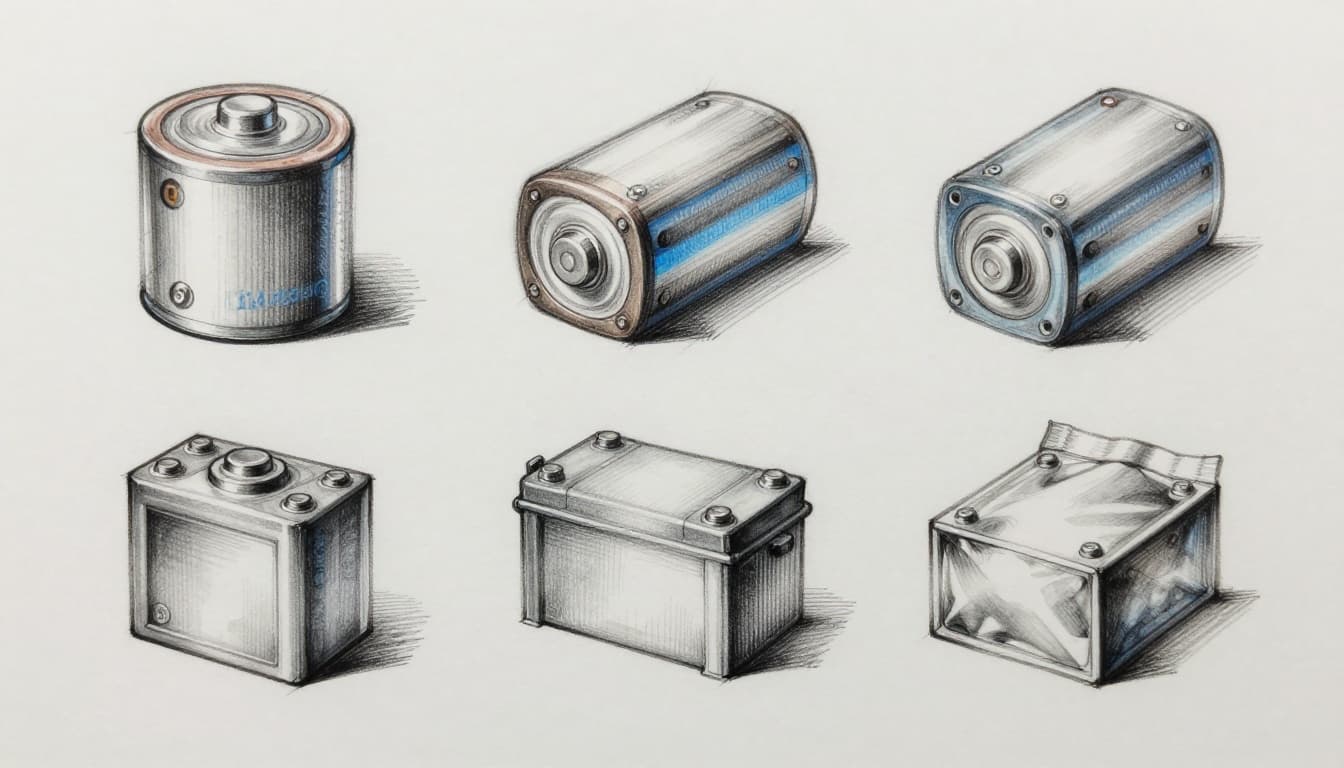
For EVs and major systems, this chemistry story also intersects with pack choices like cell format, cooling method, and charging control. For a broader 2026 view of where EV battery work is heading, see MIT Technology Review’s coverage of what’s next for EV batteries in 2026.
Lithium-Ion: The Everyday Powerhouse
Li-ion is the main reason modern devices can stay thin and still run long. In practical terms, it balances energy density with workable charging speed and manufacturing maturity.
From a performance standpoint, Li-ion commonly supports:
- Higher energy density (often around 250 Wh/kg and higher in modern chemistries).
- Sufficient cycle life for years of daily use (roughly hundreds to a few thousand cycles, depending on charging habits).
- Good efficiency for recharging (often around the mid to high 90s as a system target).
However, heat control remains an operational requirement. If the pack overheats, materials can degrade faster. In extreme fault events, thermal runaway risk exists. For that reason, most Li-ion devices rely on battery management systems (BMS) that limit current, manage temperature, and prevent unsafe charge states.
As a real-world anchor, Li-ion dominates the EV fleet because pack energy matters. More energy per weight usually means more range, or less mass for the same range. For 2026 context on how this chemistry supports EV life and performance, see Tesla battery chemistry and lithium-ion battery life factors.
In short, Li-ion is usually the best default when you want compact size and strong everyday recharge behavior, provided you accept heat and fault management constraints.
NiMH and Lead-Acid: Reliable Old-School Options
NiMH and lead-acid often get dismissed as “legacy,” yet performance outcomes can still be acceptable, especially when safety and cost limits matter more than weight.
NiMH performance comparisons usually show a different priority order:
- Power behavior stays reliable under real-world stress, including temperature swings.
- Cycle performance can remain stable with proper charge use.
- Safety characteristics are generally strong because the chemistry does not rely on flammable liquid components.
For example, some hybrid systems and older tool ecosystems used NiMH because it could withstand outdoor use patterns better than many alternatives. In addition, NiMH can perform in colder settings where other chemistries must reduce power.
Lead-acid, on the other hand, is budget-first. It is widely used because supply chains are established and the cost per battery unit is low. When vehicle makers select lead-acid for starters, the logic typically centers on:
- quick starting power,
- straightforward service,
- and predictable replacement economics.
Lead-acid also shows a strong environmental advantage through recycling. Many regions recover and recycle lead in controlled systems, and lead-acid recyclability tends to be far better than disposal options for many consumer chemistries.
Still, lead-acid has operational limits. It does not like deep discharge cycles, and it tends to lose usable capacity if repeatedly drained too far.
Emerging Stars: Sodium-Ion and Solid-State
Sodium-ion is positioned as a practical cost and safety improvement over time. It can avoid some of the rare-material pressure seen in lithium supply chains. In 2026, this matters because stationary storage and grid needs prefer predictable pricing more than maximum energy density.
When you compare sodium-ion versus lithium-ion batteries, the trade is clear:
- sodium-ion can bring cost and safety edges,
- while lithium-ion retains advantage where tight mass and volume constraints dominate.
For an element-level view of why sodium can be cheaper while lithium can still win on density, see Sodium vs Lithium: battery chemistry advantage.
Solid-state is the safety-focused “next step” in many development roadmaps. The core concept is to reduce or remove liquid electrolytes, which can reduce certain failure pathways. In addition, solid-state designs can target longer cycle life by improving interface stability.
In March 2026, reporting indicates solid-state EV batteries with very high range targets are moving toward more real testing and supplier scaling. For example, see solid-state EV batteries with 800 miles of range become a reality.
For readers, the operational takeaway is not “replace everything today.” Instead, solid-state often represents the safety and longevity direction for the next product cycles, while sodium-ion often represents cost-effective storage and expanding mobility roles.
Performance Breakdown: How They Compare Head-to-Head
A battery types performance comparison only becomes useful when it links to measurable outcomes. Therefore, the comparison below uses common metrics that map to user experience: energy density, cycle life, charge speed, safety, cost, temperature range, and eco impact.
The figures reflect typical 2026 averages and ranges reported across industry summaries. Your results will vary by pack design, BMS limits, and charging behavior.
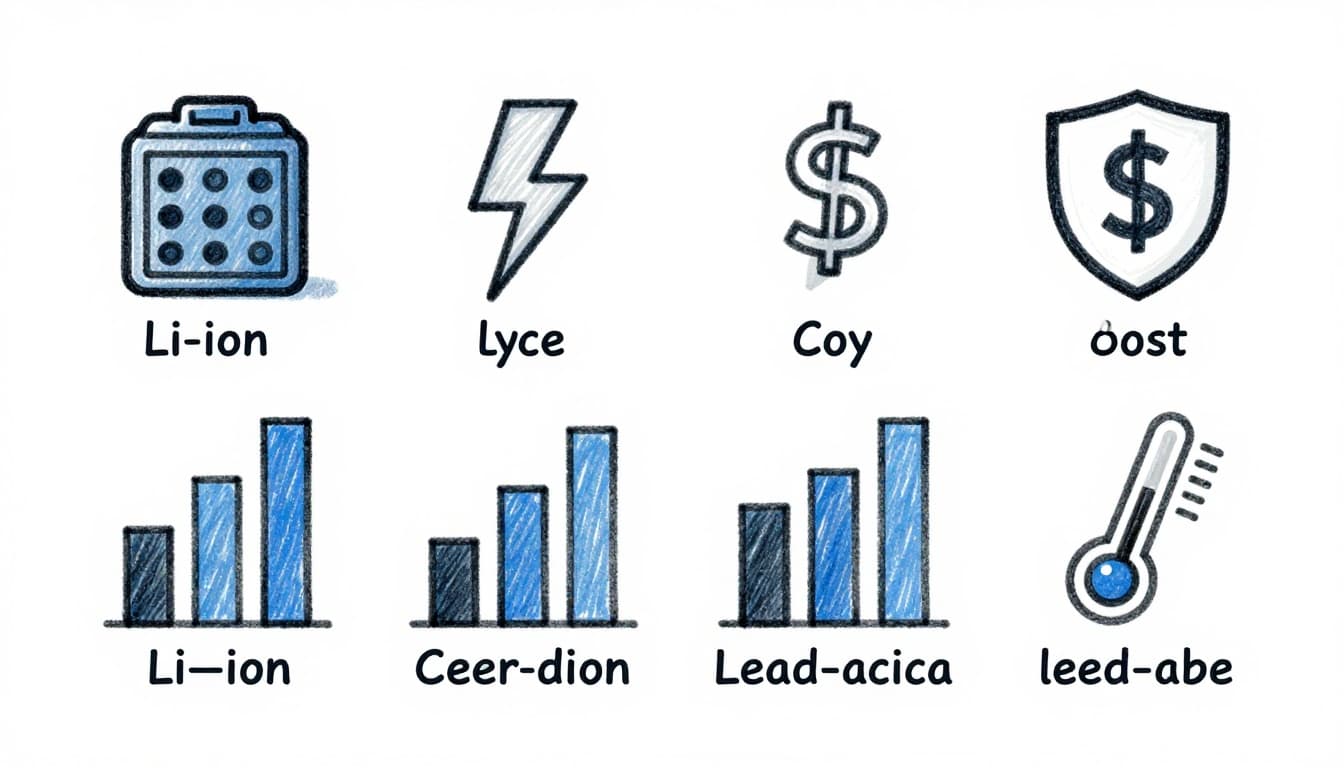
| Battery Type | Energy Density (Wh/kg) | Cycle Life (Typical) | Charge Speed (to ~80%) | Safety Profile | Cost (Typical, $/kWh) | Temp Range (Typical) | Eco Impact Notes |
|---|---|---|---|---|---|---|---|
| Li-ion | 250-300 | 1,000-2,000 | 30-60 min | Good, but heat faults matter | $100-150 | -20°C to 60°C | Mining impact; recycling improving |
| NiMH | 60-120 | 1,000-2,000 | 1-2 hours | Very safe | $200-300 | -50°C to 85°C | Lower rare-material pressure |
| Alkaline | 100-150 | 0 (single-use) | N/A | Safe, no recharge | $0.50-1 | 0°C to 50°C | High waste, hard recycling |
| Lead-acid | 30-50 | 200-500 | 8-12 hours | Safe, but acid risk | $50-100 | -20°C to 50°C | Often recyclable, but lead handling needed |
| Sodium-ion | 150-200 | 2,000-4,000 | 15-30 min | Excellent (no rare metals) | $50-80 | -20°C to 60°C | Lower mining harm; still improving recycling |
| Solid-state | 350-500 | 1,000-5,000 | 10-20 min | Best, no liquid | $200+ | -30°C to 80°C | Potentially less rare-material use |
The biggest “winner” depends on the target use. For weight-limited gear, density dominates. For long duty cycles, cycle life dominates. For homes and sites where fault risk matters, safety dominates.
Energy Density and Power Punch
Energy density measures how much usable energy a battery stores per unit weight. In plain terms, higher Wh/kg usually means a lighter device for the same range, or longer runtime for a fixed weight.
In 2026, solid-state and top Li-ion chemistries typically land at the higher end of the scale, with values often spanning 250 to 600+ Wh/kg depending on design maturity. Sodium-ion sits in the middle, generally above alkaline and lead-acid, but below the highest Li-ion and solid-state outcomes.
Alkaline and lead-acid are also limited by design history. They were built for affordability and serviceability, not for light weight per watt-hour. That means your tools or backup units can feel heavier for the same “usable energy.”
Therefore, when you pick batteries for phones, drones, cameras, and EV traction, energy density usually drives the choice. If the application has strict space constraints, the chemistry that can store more energy per mass tends to win.
On the other hand, if weight is not the controlling factor, the table becomes less intimidating. Sodium-ion can still deliver strong life and pricing. Lead-acid can still deliver acceptable starting performance. The key condition is whether the system can tolerate pack size.
Cycle Life: Durability Over Time
Cycle life indicates how many full charge-discharge rounds a battery can handle before capacity drops below usable levels. Therefore, cycle life maps directly to total ownership cost and maintenance schedules.
Solid-state is commonly described as having long life potential, with some summaries reaching up to a 20-year service goal under proper operation. Li-ion often places in the middle range to high range of cycle life in modern designs, with typical estimates between 500 and 5,000 cycles. NiMH also performs well for cycles, commonly targeting the higher end of “practical replacement intervals.”
Alkaline is not a fair comparison for cycle life, because it is usually one-time use. Lead-acid tends to be lower in cycle tolerance, with around 400 cycles being a common planning number for many starting and backup patterns.
In a budget model, cycle life matters most when replacement frequency is expensive. For home backup, workplace systems, or fleet assets, fewer replacements often outweigh slightly higher upfront costs.
For daily devices, cycle life also affects how harsh charging habits can be. If you frequently charge to full and then let the pack sit hot, you reduce lifetime. Thus, cycle life becomes partly a user policy issue, not just a chemistry issue.
Charge Speed and Efficiency
Charge speed is how fast a battery can accept power without overheating, safety throttling, or excessive degradation. Efficiency reflects how much input energy becomes stored energy.
In 2026, Li-ion commonly supports relatively fast charge windows, with systems often targeting about 30 to 60 minutes to reach around 80% under controlled conditions. Solid-state and sodium-ion can also offer fast top-ups, often around the 10 to 30 minute band depending on the device and charger pairing.
Alkaline loses practical ground here because it is disposable. Lead-acid typically charges slower, often because of chemistry limits and safe charging profiles, so it can take many hours for a full recovery.
Operationally, charge speed interacts with your routine. If you need quick phone recharges, Li-ion or modern equivalents will usually fit best. If you need predictable overnight backup charging, lead-acid can still work under established procedures.
Efficiency matters too. If a charger wastes more heat, your system needs more cooling. That adds cost and can reduce usable charge rates.
Safety and Temperature Toughness
Safety includes failure behavior under damage, abuse, and thermal stress. Temperature toughness includes how well the battery can operate across hot and cold ranges without losing performance or creating unsafe conditions.
Solid-state and sodium-ion typically earn the safety advantage in 2026 summaries because they reduce or avoid flammable liquid pathways. Li-ion remains safe in well-managed packs, but thermal runaway risk remains a planning topic when cells are damaged or abused. NiMH tends to be very safe in many use contexts, and it usually supports wide operating temperatures.
Temperature handling can decide outcomes in outdoor or emergency use. NiMH is often cited for strong cold and hot range tolerance. Solid-state also benefits from a wide operating window in many descriptions. Lead-acid can struggle in deep cold or repeated partial states, especially when not maintained under a charge protocol.
If your use case includes extreme temperatures, then “best” means “best within your temperature window.” Therefore, you should treat temperature specs as operational constraints, not marketing details.
Cost and Eco Footprint
Cost comparisons should include both upfront price and life cycle cost, because the cheapest option at purchase can be the most expensive after repeat replacements.
Lead-acid and alkaline typically win on upfront unit cost. Lead-acid is also budget-strong on a system basis, especially in cars and certain backups. Sodium-ion often targets a lower cost per kWh than many Li-ion approaches, with 30 to 40% less cost frequently cited in industry summaries. Solid-state usually starts with higher cost due to scale limits, while prices are expected to trend down as manufacturing improves.
Eco impact also needs clear boundaries. Lead-acid often has high recycling rates through established collection systems, which improves its overall material cycle performance. Alkaline is harder because disposal creates high waste, and recycling infrastructure is limited in many areas. Li-ion has mining impacts, but recycling is improving, and more rules now require end-of-life handling plans.
Sodium-ion’s eco profile often looks better on paper due to abundant sodium and fewer rare-metal needs. Still, you should treat eco claims as conditional on local recycling and recovery systems.
For procurement decisions, the safe compliance position is this: choose the battery type that fits the use case, then confirm service and recycling requirements in your location.
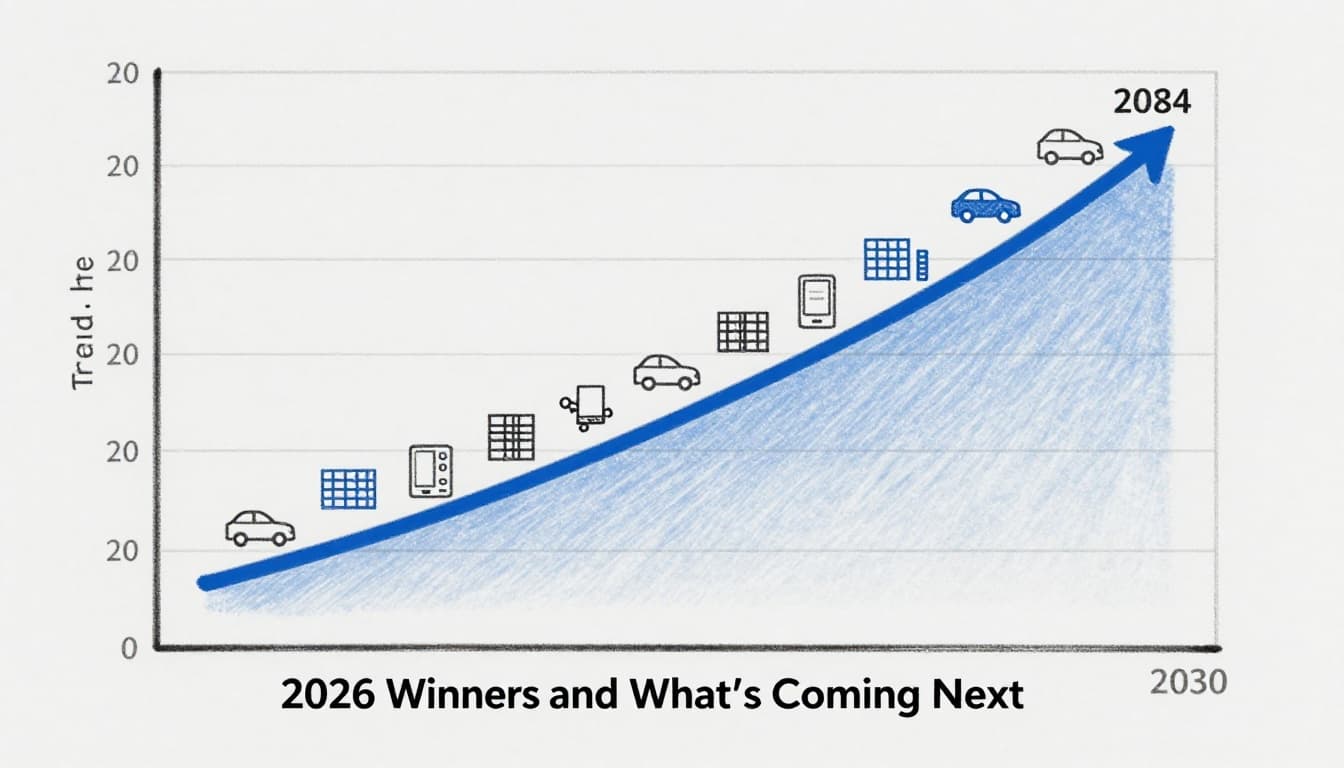
2026 Winners and What’s Coming Next
The 2026 “winners” do not form one universal ranking. Instead, performance leadership clusters by application type.
Li-ion continues to lead where high energy density and mature supply chains matter most, especially for EVs and portable devices. Even as new chemistries expand, Li-ion production scale remains a major advantage. However, safety pushes remain active, and safer Li-ion variants (including chemistry and pack design changes) continue to spread.
Solid-state is the safety-focused bet, and the testing ramp supports the expectation that real deployments can move faster than early lab timelines. Meanwhile, sodium-ion is positioned for value-driven roles, especially grid storage and cost-sensitive mobility, where pack size is less limiting.
Practical selection guidance for 2026 can be stated as follows:
- If the requirement is lowest upfront cost and established recycling, lead-acid is the default pick.
- If the requirement is long life and a strong safety case for storage or duty cycles, solid-state and sodium-ion are the primary candidates.
- If the requirement is compact runtime per weight and broad device fit, Li-ion remains the controlling option.
- If the requirement is simple single-use replacement for low drain devices, alkaline can still meet the need at minimal hassle.
In addition, the 2026 market trend includes more hybrid designs and more pack-level safety controls. The best next step for any buyer is to treat the battery type as one variable, then check charger matching, temperature behavior, and warranty terms.
Conclusion
Battery types performance comparison in 2026 is not about one chemistry that wins everywhere. Li-ion remains the most versatile leader for everyday electronics and EVs, largely due to its energy density and mature charging behavior.
Solid-state is moving toward a future where safety and long service life carry more weight than today’s cost hurdles. Sodium-ion is acting as the value and safety pick, especially for stationary storage where price and durability often outweigh size.
Choose the battery type based on your real constraints, budget, temperature, and how often you can maintain or replace it. Then document your battery woes in the comments so others can avoid the same failure modes, and share this with any EV owner facing winter charging limits.