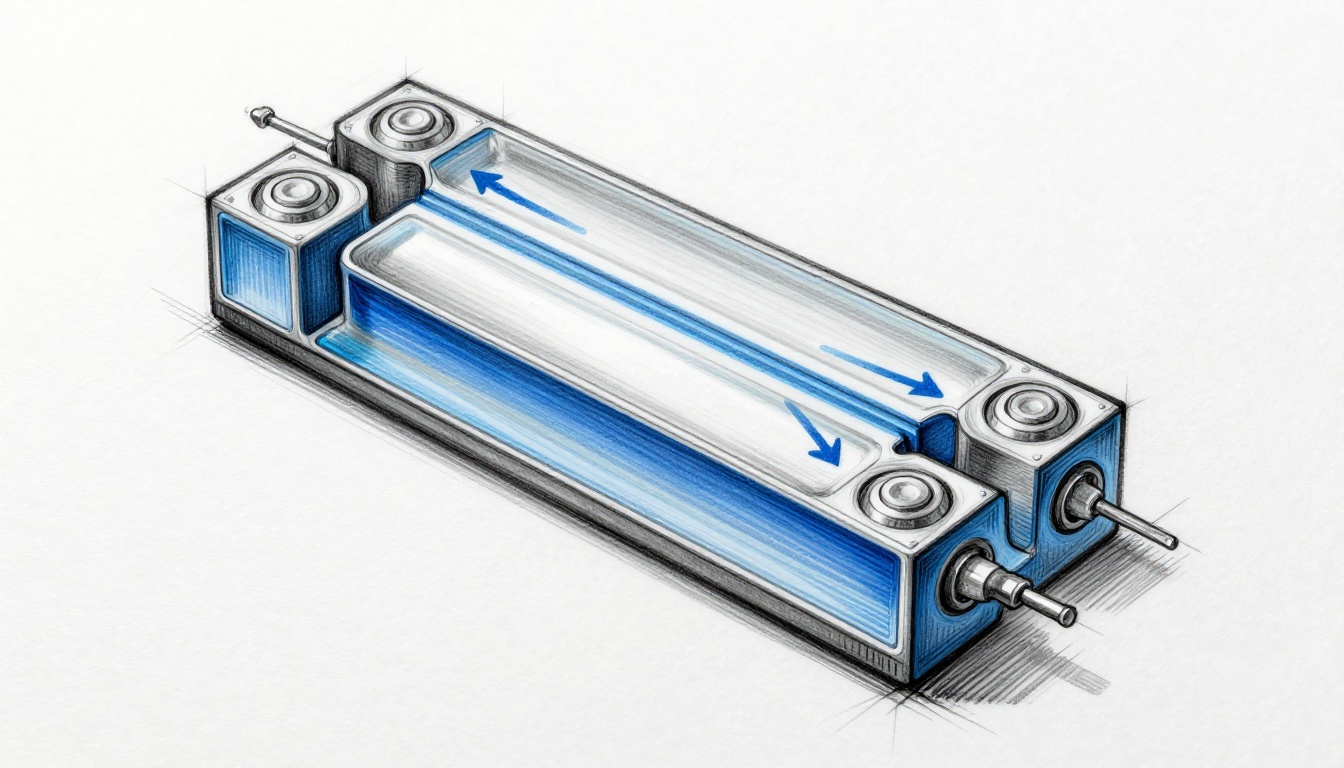
Lithium-ion batteries keep phones running all day and electric cars going hundreds of miles. Yet, most users never see what happens inside when the battery charges or powers a device. If you’ve ever wondered how lithium-ion batteries work, the answer depends on a few parts and a repeatable chemical routine.
This guide explains the process at an 8th-grade level, without unnecessary jargon. You’ll get a clear breakdown of battery components, then follow the flow during discharging and charging step by step. Safety and tradeoffs will also be covered, since lithium-ion cells must be handled with defined limits.
Then you can decide what matters most for the device you own, and why battery health is not a mystery.
Breaking Down the Core Components of a Lithium-Ion Battery
A lithium-ion battery cell is not a single container of energy. Instead, it is a controlled system where ions move through a safe path. Each part has a defined job, because mixing the roles would create shorts, heat, and failure risk. For a basic visual reference, the U.S. Department of Energy provides a plain explanation of these core parts in its overview: Department of Energy overview of battery parts.
In practical terms, you can treat a cell like a shuttle service with strict rules:
- Ions travel through internal material.
- Electrons travel through the outside circuit.
- A separator keeps the two sides apart.
- The battery pack then adds monitoring features so limits are not exceeded.
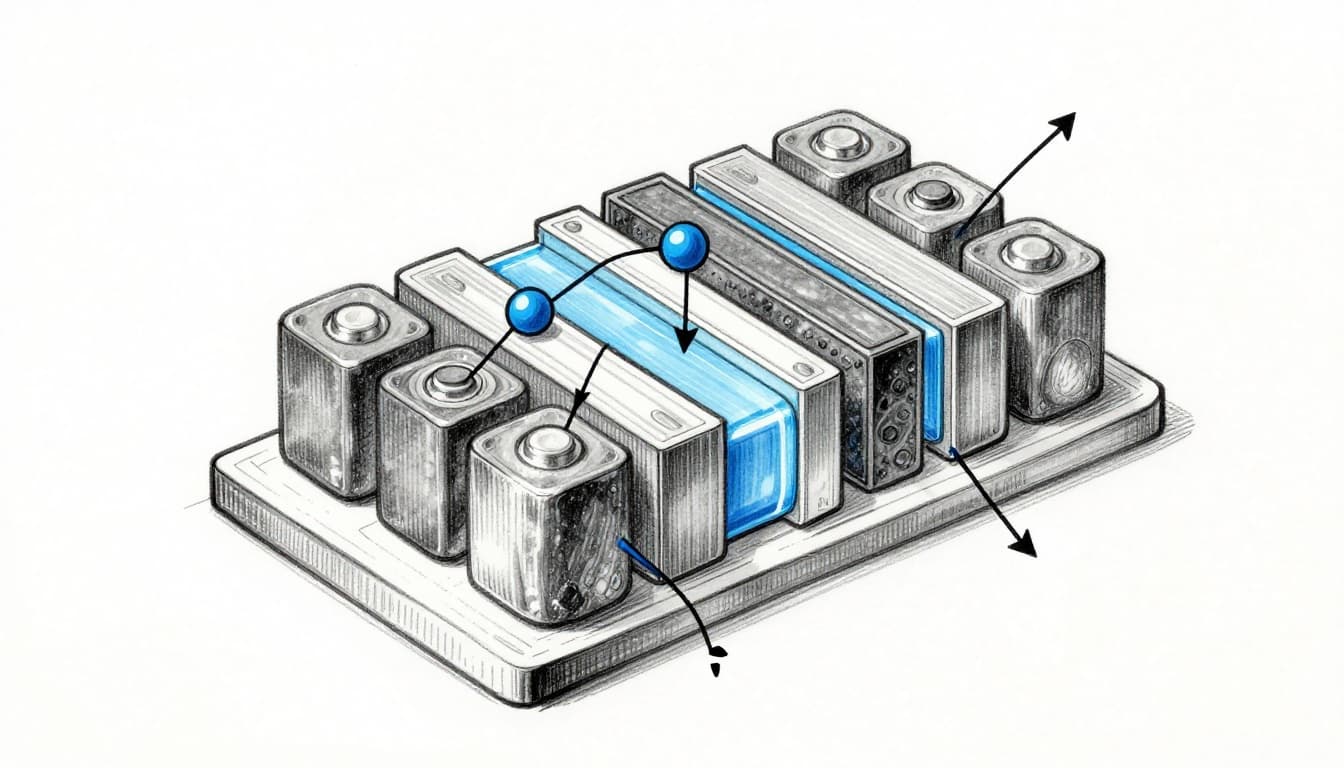
At the cell level, the main “lithium-ion battery components” are typically four layers or regions. A simple text diagram can look like this, from one side of the cell to the other:
Anode (graphite) → electrolyte (ion path) → separator (gap control) → cathode (metal oxide)
In addition, most real battery packs include sensors and control electronics. Those devices support safety by tracking temperature, voltage, and current, and by shutting down if a cell acts out of bounds. This is also why two batteries that look similar outside can behave differently under stress.
For another annotated breakdown of the internal structure, see The anatomy of a lithium-ion battery. The internal layout can vary by design, but the roles of anode, cathode, electrolyte, and separator remain the same.
The Anode: Your Battery’s Energy Storage Tank
The anode typically uses graphite, and it acts as the parking site for lithium ions. During charging, ions move into the graphite structure. During discharging, ions leave it.
This role can be explained as a controlled parking lot. When ions are parked, the battery holds stored energy. When the ions depart, the stored energy can do work for your device. The graphite does not “burn” or disappear during normal cycles. Instead, it supports repeated storage and release within defined limits.
Because ions need a stable host, the anode’s material and surface design matter. Over time, side reactions can reduce usable capacity, which is one reason batteries wear out even when they are not abused.
In summary, the anode is the energy storage tank on the negative side, where lithium ions enter and later exit.
The Cathode: Releasing Power When You Need It
The cathode operates as the opposite side of the cell. It is commonly a metal oxide material, such as lithium iron phosphate in many designs. That chemistry accepts or releases lithium ions as the battery cycles.
For practical understanding, treat the cathode like a gas station dispenser. It does not create energy from nothing. Instead, it releases energy that was stored earlier. When the battery sends power to a device, lithium ions end up at the cathode side. Meanwhile, the external circuit receives the usable electrical output.
Even so, the cathode is not unlimited. Heat, overcharge, or manufacturing defects can push the cell into unsafe conditions. Therefore, the battery system must apply limits and controls.
At a high level, the cathode is the energy release side on the positive side.
Electrolyte and Separator: The Traffic Cops Inside
The electrolyte is the medium that allows lithium ions to move. It is usually a liquid or gel that conducts ions, but it does not conduct electrons well. That difference matters, since electron flow is managed by the external circuit.
The separator is a thin sheet placed between anode and cathode. Its job is to prevent direct contact. If the anode and cathode touched, electrons could bypass the intended path and create a short. A short then creates rapid heat buildup, which increases failure and fire risk.
You can compare these parts to traffic control. The electrolyte provides a highway for ions. The separator acts like a guardrail that prevents a crash between the two sides.
Safety monitoring completes this layer. Modern battery packs use a Battery Management System (BMS) and sensors to detect abnormal conditions early. As a result, the chemistry can continue under controlled limits, instead of drifting into uncontrolled reactions.
Powering Your Devices: The Discharging Process Step by Step
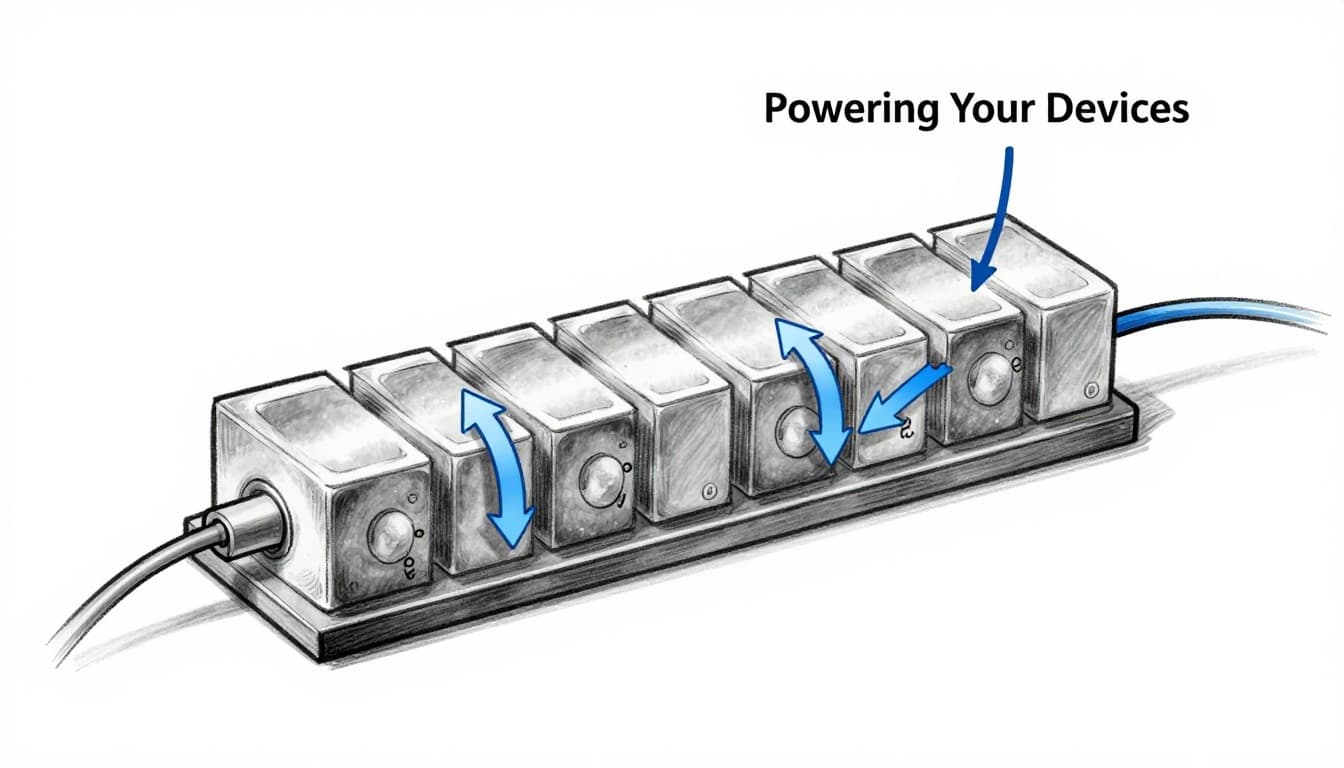
Discharging converts stored chemical energy into electrical energy. During this period, lithium-ion battery discharge is a planned series of moves, not a random event. A quick external reference that covers the same high-level sequence is how a lithium-ion battery works, including charging and discharging.
Here is the sequence as a simple story:
- Lithium ions leave the anode side.
- Ions move through the electrolyte toward the cathode.
- Electrons cannot travel through the electrolyte.
- Instead, electrons flow outside the cell through your circuit.
Because electrons cannot shortcut inside, they must take the long way through the device. That outside path is where useful work happens. If you are powering a phone, that includes the display, radio, processors, and other loads.
To make the separation clear, the separator forces the internal path to remain correct. It also prevents direct mixing of anode and cathode materials. Therefore, the cell avoids a direct chemical collision inside the housing.
Meanwhile, ions “shuttle” internally. The ions migrate toward the cathode, where they participate in the cathode’s chemical structure. At the same time, electrons take the scenic route through your wires and components. The end result is steady electrical output that your device can use.
A battery is considered more “full” when more lithium ions occupy the positions associated with the charged chemistry. As the battery discharges, the internal ion distribution shifts. Once the available reaction approaches its limit, output can drop, and the BMS typically steps in to prevent unsafe deep discharge.
The operational point is straightforward: ions move inside, electrons move outside, and the separator blocks the direct shortcut.
Reversing the Flow: How Charging Stores Energy Back Inside
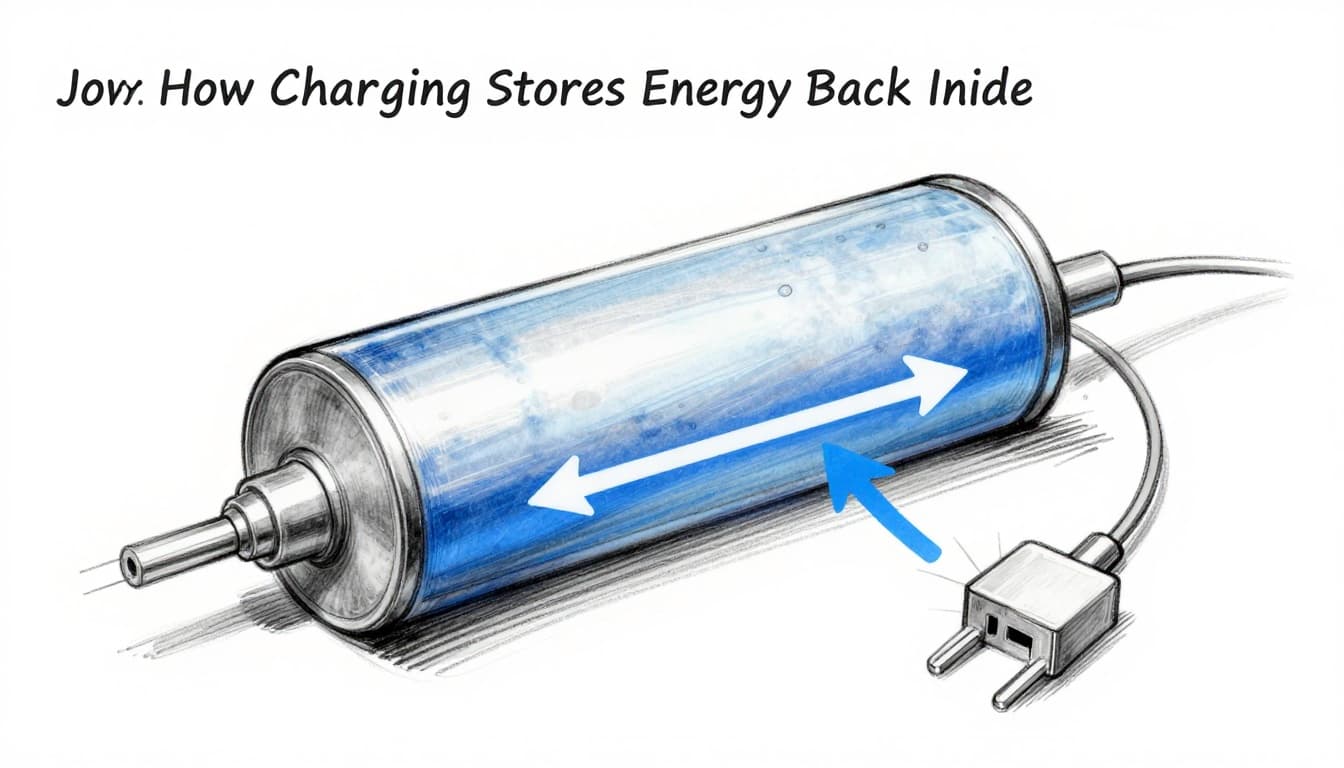
Charging reverses the discharging routine. It does not “add electrons” in a magical way. Instead, the charger applies a controlled electrical push that changes how ions distribute inside the cell.
In the charging direction, electrons are driven through the external circuit from the charger toward the cell. The charger controls the current and voltage so the cell does not exceed safe limits. As electrons reach the cathode side through the external connections, they support a reaction that pulls lithium ions back through the electrolyte.
In plain terms, it works like returning mail to the correct address. During discharge, ions left their “home” and ended up on the cathode side. During charge, ions travel back toward the anode’s storage sites. As the ions re-enter the anode structure, the battery can supply energy again later.
Most charging routines use staged control, because too much current or too high voltage can cause unwanted side reactions. Those side reactions can reduce capacity and increase heat. Therefore, charging is not only about “powering up.” It is also about staying within defined operating windows.
For a practical, step-focused description of how lithium-ion batteries charge, including common current and voltage control ideas, review how lithium-ion batteries charge.
Safety is part of the procedure. Fast charging applies higher stress, so modern packs rely on BMS limits, temperature sensing, and cell balancing where needed. The goal is to store energy efficiently without pushing the cell into conditions linked to thermal runaway.
In short, charging stores energy by shifting ions back to their charged positions, while the charger regulates electrical input.
Why Choose Lithium-Ion: Benefits, Downsides, and What’s Next
Lithium-ion batteries remain the default choice for many portable devices and electric vehicles because they provide strong performance per unit weight. At the same time, these cells carry defined risks. Therefore, buyers should consider both advantages and disadvantages when selecting a device or battery system.
In current market discussions, the main stated benefits include high energy density and the ability to recharge many times. A compact summary of common pros and cons is also covered by advantages and disadvantages of lithium-ion batteries. While sources may differ by design details, the tradeoff themes stay consistent.
The main limitations usually fall into three categories:
- Cycle aging: capacity drops after many charge and discharge cycles.
- Sensitivity to temperature: heat accelerates wear, and cold can reduce usable power.
- Safety failure modes: under fault conditions, overheating can lead to thermal runaway.
Thermal runaway, in operational terms, refers to a chain reaction where heat buildup accelerates further chemical breakdown. In March 2026 reporting, safety prevention focuses on smart BMS monitoring, better cooling and insulation, and standards that test for runaway behavior and cell-to-cell fire spread control. Therefore, safer packs often include more monitoring and thermal design, rather than relying on chemistry alone.
Meanwhile, ongoing research continues to target longer life, lower heat during charging, and improved performance in cold conditions. Some advances discussed in March 2026 include efforts around higher energy density materials, and continued movement toward solid-state or solid-like architectures. However, these trends do not mean every product on the shelf offers those benefits. Each device still depends on its specific design and testing results.
Top Advantages That Make Them Unbeatable for Portables
Lithium-ion advantages generally remain tied to measurable performance and repeat use. For typical consumer devices, the strongest benefits include the following:
- High energy per weight: laptops, phones, and power banks stay light.
- Rechargeable cycles: many products support hundreds of charge cycles.
- Low self-discharge: batteries lose less energy when idle.
- Pack-level control: BMS limits can make operation more consistent.
For example, you can charge a smartphone, use it for hours, and recharge it again without changing batteries. That cycle usefulness is one reason lithium-ion has become the standard for portable power.
Common Drawbacks and How to Avoid Them
Despite the benefits, lithium-ion batteries do not act like wear-free power supplies. Their disadvantages are usually linked to stress and time.
Key drawbacks include:
- Capacity fade after repeated cycles.
- Heat sensitivity, especially during charging and heavy use.
- Higher cost than some older battery types.
- Risk in fault conditions, including short circuits or damaged cells.
To reduce avoidable wear, the operational best practices are consistent across reputable guidance: avoid extreme temperatures, avoid prolonged storage at full charge, and use chargers that match the device’s requirements. Also note that leaving a battery in a hot car or charging it under poor ventilation increases thermal risk.
In other words, the battery will degrade anyway. However, controlled use can slow the rate of loss.
If a pack shows swelling, leakage, or unusual heat, continued use should stop. A damaged lithium-ion cell must be treated as a safety hazard, not a performance problem.
Exciting Advances Pushing Batteries Further
In March 2026 updates, researchers and manufacturers continue to push on two main fronts: better energy storage and safer behavior during faults. Reports discuss improvements in energy density targets, as well as manufacturing changes that reduce internal resistance and may support faster charging with less heat.
Safety remains a major driver. Thermal runaway prevention approaches in 2026 emphasize early detection, insulation barriers, cooling methods, and standards that require runaway testing and limits on propagation.
For readers, the practical takeaway is simple: newer packs can include better monitors and thermal controls. As a result, today’s lithium-ion devices often operate with more safeguards than older generations.
Conclusion
Lithium-ion batteries work because ions and electrons follow different routes. During discharging, lithium ions move through the electrolyte toward the cathode, while electrons flow outside the cell to power your device. During charging, the charger reverses the energy flow by driving electrons through the external circuit while ions return to the anode.
Across the benefits and downsides, the strongest theme is control. Lithium-ion chemistry can deliver high performance, but safety depends on monitoring, temperature limits, and pack design. When those controls are present, lithium-ion becomes reliable enough for everyday use.
Given the hook about phones lasting all day and electric cars traveling far, the next step is practical. Check your device battery health when that data is available, and reduce unnecessary heat exposure. If you want more context for your next purchase, compare battery chemistry and BMS features rather than only the advertised capacity.
How lithium-ion batteries work is not a puzzle, it is a procedure. Once you know the procedure, battery life decisions become easier and more predictable.