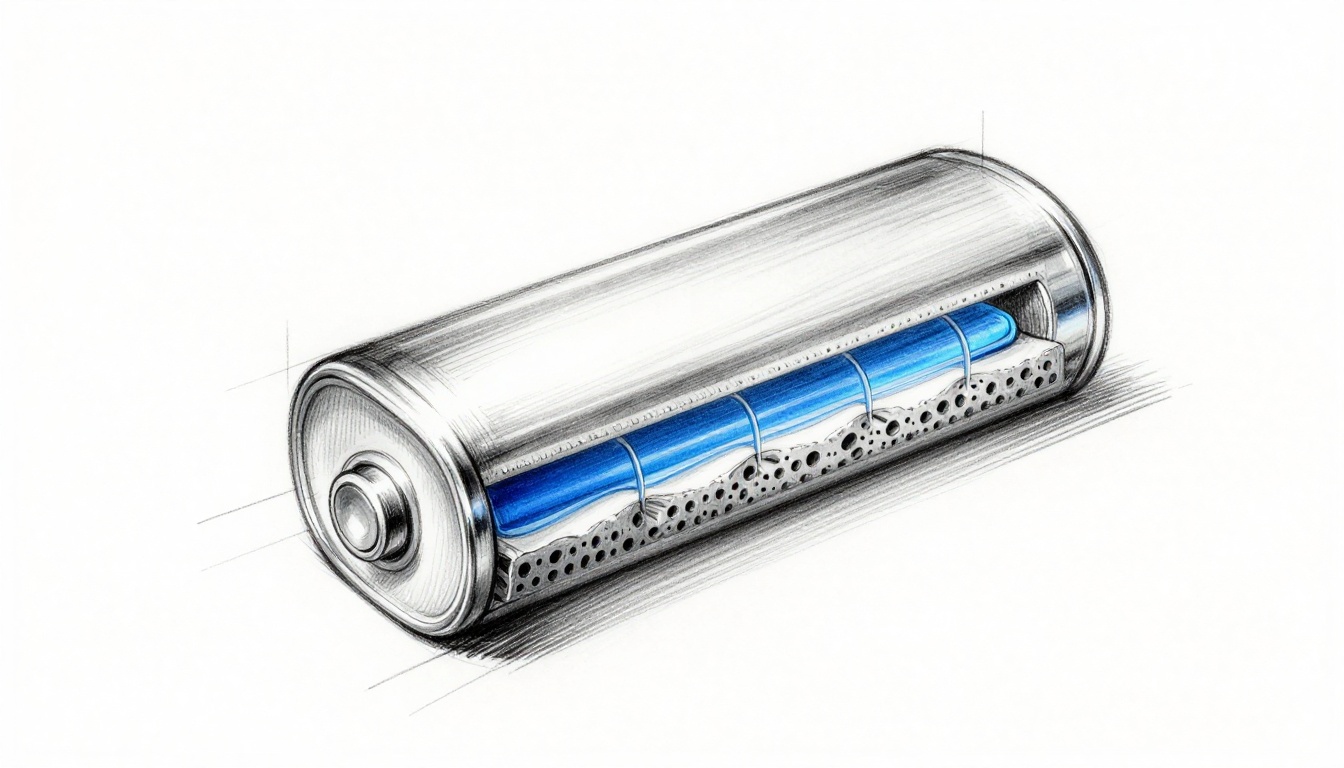
Your phone, scooter, and electric car may look simple from the outside, but the power source inside follows a strict internal design. Most modern batteries are lithium-ion battery systems, and their performance depends on a set of tightly matched parts. Ever wondered what makes your phone battery tick, even after hundreds of charge cycles?
This guide explains the key components inside a battery in plain terms, with the focus on lithium-ion battery parts that control energy storage, safe operation, and long-term stability. You’ll see how the anode and cathode store and release charge, how the battery electrolyte and battery separator move ions while limiting dangerous contact, and how current collectors, binders, and casing support efficient electron flow. Then, you’ll get a clear picture of how all parts work together during charging and discharging, so you can better judge battery design claims and basic safety concerns.
For a high-level walkthrough of the lithium-ion chemistry flow, see lithium-ion battery chemistry basics.
Anode and Cathode: The Energy Storage Power Duo
In a lithium-ion cell, energy does not appear by magic. Instead, it is stored as lithium ions move between two electrodes, while electrons take a separate route through the external circuit. The battery anode and battery cathode are the two “active” surfaces that control that movement.
When the cell discharges, lithium ions leave the anode and travel through the electrolyte toward the cathode. At the same time, electrons move through the external path, providing usable current. During charging, the direction reverses, which is why these parts must survive both chemical “load” cycles.
In practical terms, the anode and cathode can be treated like two sides of a locked filing system. Ions cross an internal pathway, electrons complete the loop outside, and the materials decide how much energy can be stored and how safely that storage can be repeated. Material choices also affect power output, heat, and how fast capacity fades.
Common cathode material families also show up in supplier overviews of lithium-ion battery composition, including the recurring four-part split of electrodes, electrolyte, and separator. For a condensed reference, see lithium-ion battery composition.
What Makes the Anode Tick
The anode is the negative electrode in lithium-ion cells. For most mainstream designs, the most common anode material is graphite, because it can host lithium ions and maintain a stable structure over many cycles.
During discharge, lithium ions move out of the anode. This action creates a charge imbalance that drives electrons to flow through your device’s circuit. Meanwhile, the anode’s internal structure must remain conductive and mechanically stable, or performance will drop.
Inside the electrode, graphite does not stand alone. A binder holds particles together, conductive additives can improve electron pathways, and the electrode coating must adhere to the current collector. If these layers fail, ions may still move, but the cell loses efficiency and may heat up.
To frame the internal behavior in simple terms, the anode can be treated as a starting platform for lithium ions. When charging, lithium ions return and get stored there again, and the system repeats this cycle many times.
Safety matters here because rechargeables depend on reversibility. If the anode structure breaks down, side reactions can increase, and that can lead to faster capacity loss or, in worst cases, unsafe conditions.
Cathode Choices That Boost Performance
The cathode acts as the positive electrode, and it largely determines practical capacity and cell voltage. Typical cathode materials include lithium cobalt oxide (LCO), lithium nickel-based oxides (often called NMC or NCA in product literature), and lithium iron phosphate (LiFePO4).
In everyday outcomes, cathode chemistry can influence how long a battery lasts under repeated cycling. It can also affect thermal behavior, since cathode stability matters when the cell ages or experiences stress.
The following table summarizes a simplified comparison of two widely referenced options. Exact performance depends on cell design, electrolyte choice, and charge limits.
| Cathode material | Common strengths | Common tradeoffs | Typical fit |
|---|---|---|---|
| Lithium cobalt oxide (LCO) | Higher energy density | Lower thermal tolerance | Thin, high-capacity consumer cells |
| Lithium iron phosphate (LiFePO4) | Strong cycle life, safer behavior | Lower energy density | Long-life packs, many EV and power backup uses |
For readers who want a practical material overview, a helpful reference is battery anode and cathode materials.
To translate these differences into real life, consider laptop use patterns. A pack built for deep cycling and heat tolerance tends to keep usable capacity longer, even if it weighs more. That outcome often traces back to cathode stability and how side reactions are controlled.
Material tradeoff summary (general):
- Energy density vs. longevity: LCO systems often prioritize higher energy, while LiFePO4 systems often prioritize durability.
- Thermal behavior vs. performance limits: Safer cathodes may allow higher sustained cycling within more conservative charge rules.
Electrolyte and Separator: Pathways for Safe Power Flow
After the anode and cathode establish the chemistry, the next issue is survival. Two electrodes that can react must not touch directly. That separation must happen while still allowing lithium ions to travel.
This requirement creates the functional pairing of battery electrolyte and battery separator. The electrolyte provides the medium where ions can move. The separator provides physical isolation so electrons cannot short across the cell.
For many designs, the separator is a thin porous polymer film. The electrolyte wets it, and ions pass through the pores. Electrons do not pass, because the separator blocks electronic conduction.
These roles must work together because any mismatch can raise internal resistance, increase heat, or increase short-circuit risk. If a separator fails under stress, the cell can lose control of current paths.
Research and technical explainers frequently describe the separator as an isolator that still permits ionic movement when soaked with electrolyte. See the function of the separator for a clear description of this purpose.
Electrolyte: The Ion Superhighway
The battery electrolyte typically contains a lithium salt dissolved in an organic solvent. Its main duty is to provide a low-friction path for lithium ions between electrodes.
During charging, lithium ions move from the cathode region toward the anode region. During discharge, the ions move back. The ions shift location, and that shift forces electrons to flow through the external circuit in the right direction for powering a load.
Electrolytes also influence safety. For example, leak risk, flammability, and stability against high voltage all matter. That is one reason many industry roadmaps include safer electrolyte forms, including gel-like electrolytes and solid-state concepts.
In 2026 discussions, solid-state batteries keep appearing in product announcements. The key operational idea remains similar: provide ion transport while limiting runaway reactions. Even so, mainstream consumer devices still rely heavily on liquid electrolyte systems.
Separator: Preventing Disaster Inside
The battery separator functions like a fence with gates. It prevents direct contact between anode and cathode materials, while its pores allow lithium ions to pass.
If the separator is too thick, the cell may see higher internal resistance. If it is too thin, it may offer less margin against damage. As a result, separator thickness and pore structure can affect power capability and aging behavior.
Separator design also includes mechanical robustness. During manufacturing, the separator must handle winding or stacking stresses. During use, it must tolerate expansion, vibration, and repeated cycling.
From a safety standpoint, the separator is a boundary condition. When it stays intact, the cell can keep operating within design limits. When it fails, internal short circuits become possible, and that can quickly create thermal risk.
Current Collectors, Binders, and Casing: The Support Team
The active electrodes do not float inside a cell. They attach to conductive structures, held in place by material systems that manage both chemistry and mechanics. In addition, a battery pack needs monitoring and protection to remain within safe electrical and thermal thresholds.
These supporting parts often decide how well the battery converts chemistry into stable current over time. They also influence whether the cell can tolerate abuse and heat.
Current collectors, binders, casing, and battery management systems operate in different layers. Still, they work as a coordinated set.
Current Collectors and Additives: Electron Highways
The battery current collectors are thin metal foils that collect electrons from electrode materials. In typical designs, copper often connects with the anode side, and aluminum often connects with the cathode side.
Electrode materials like graphite and cathode powders must connect electrically to these foils. For that purpose, binders help hold active particles to each other and to the current collector. Conductive additives can fill gaps and reduce internal resistance.
Binders also affect aging. For example, adhesive strength under heat cycling can help maintain contact. If contact breaks, the electrode’s effective capacity can fall, even if the chemistry remains unchanged.
For binder-focused background, see lithium battery binders types. That reference supports the idea that adhesives control structure stability and electrochemical performance.
Casing and BMS: Guardians of Battery Health
The battery casing provides physical protection and containment. It helps prevent leaks from reaching nearby parts. It also supports the cell structure in the presence of pressure, vibration, and handling.
Most packs include a BMS (battery management system). The BMS monitors cell voltage, current, and temperature. It then controls charging and discharging to reduce uneven stress across cells, especially in larger packs like those used in electric vehicles.
BMS balancing matters because cells may age at slightly different rates. Without balancing and control logic, one cell can reach unsafe limits earlier. The pack may reduce performance, or it may shut down to protect users and property.
In solid-state concepts, casing and monitoring still remain mandatory. Even if electrolytes change, the operational requirement does not disappear: safe current, safe voltage, and safe temperature must be enforced.
How All These Parts Team Up to Power Your World
Charging and discharging follow a consistent internal workflow, and that workflow depends on every component discussed above.
During charging, the charger applies power and drives lithium ions toward the anode. The cathode stores lithium, the electrolyte carries the ions through the separator-controlled pathway, and electrons move through the external circuit to complete the charge loop. The cell converts electrical input into chemical storage.
During discharge, the process reverses. Lithium ions move from the anode to the cathode through the electrolyte-filled separator. Electrons then flow outward through the device or load, providing current for operation.
At a system level, how batteries work internally can be visualized as two parallel routes:
- Ion route: anode to cathode, through electrolyte and separator.
- Electron route: external circuit, starting at current collectors.
Alkaline batteries mainly rely on different chemistries and do not behave like rechargeable lithium-ion designs. Lead-acid systems also use different internal materials and typically support high current with different maintenance needs. Lithium-ion dominates many modern products because it offers favorable energy per weight and supports repeated charging.
Looking forward to 2026, many improvements aim at higher-capacity cathodes, better electrolyte stability, and safer separator designs. Solid-state and near-solid approaches also remain a major direction, because reduced flammability and improved stability are ongoing goals.
Conclusion: The “Inside Team” Behind Battery Performance
The key components inside a battery work as a controlled system, not as a random set of parts. The anode and cathode store and release energy, the electrolyte transports ions, and the separator prevents direct shorting. Current collectors then guide electron flow, binders help the electrode structure stay intact, and the battery casing with a BMS manages safety in real packs.
If you only remember one idea, it should be this: battery performance and safety are defined by how well the components cooperate under repeated cycling. That fact also explains why two batteries with similar “size” can behave very differently over time.
Share what you’ve seen, like a phone pack that degraded quickly or an EV pack that held capacity longer. Then, consider this question for your next replacement purchase: are you selecting based on chemistry fit and use pattern, or only on the stated capacity?