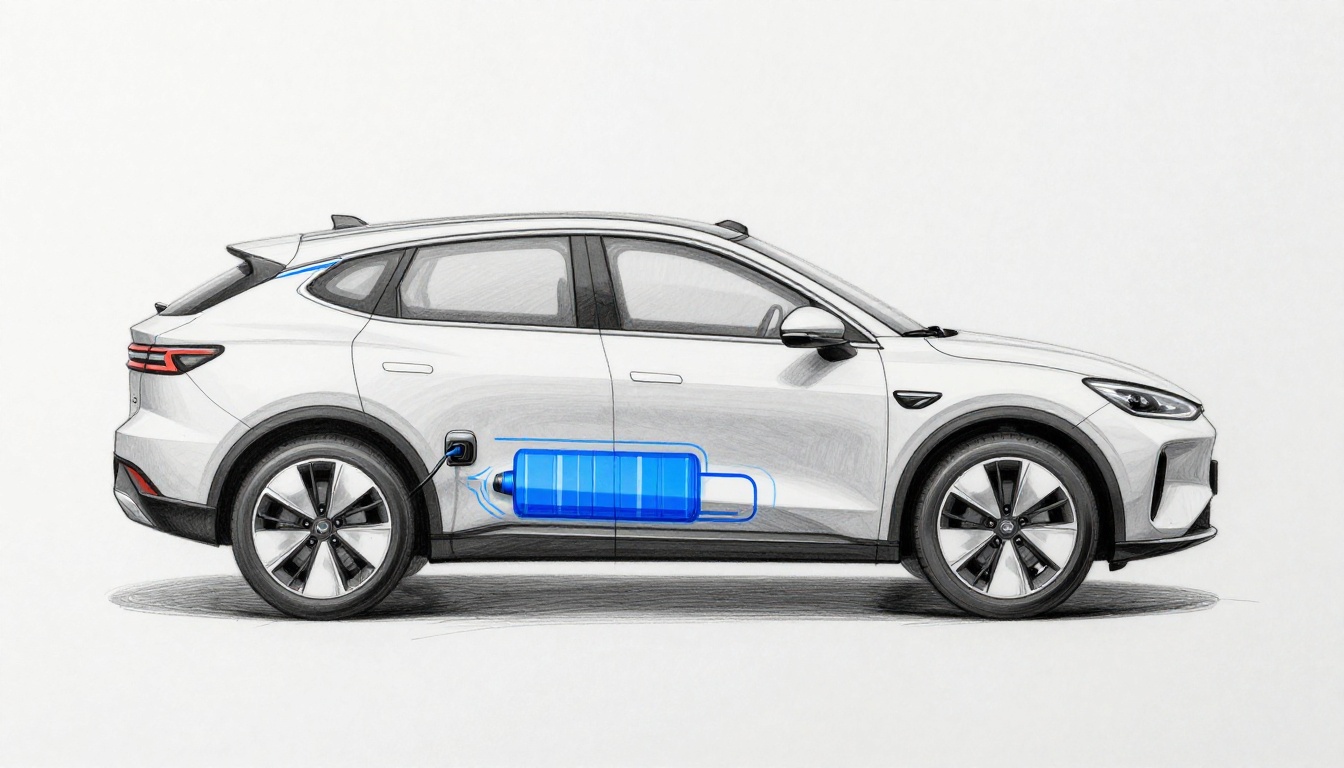
Silent acceleration, smooth starts, and no engine noise come with a condition. Your batteries in electric vehicles must store energy, manage it safely, and deliver it on demand. In practice, that battery pack becomes the vehicle’s main energy source, feeding electricity to the drive motor through controlled power electronics.
Because EV systems run on electricity, battery performance affects range, charging time, and long-term upkeep. The chemistry inside the pack matters, and so does the way the pack is built and protected. In addition, charging habits can slow wear, while heat and extremes can increase stress.
This guide explains how EV batteries work, what types of batteries power today’s models, and how energy moves from cells to the wheels. It also covers charging methods and best practices, safety systems that reduce risk, and 2026 trends shaping what you might buy next. What happens inside that battery when you plug in, drive, and park?
What Types of Batteries Power Today’s Electric Vehicles?
Most passenger EVs use lithium-ion battery packs. However, the lithium-ion “label” still covers different chemistries and different cell formats. Therefore, you should treat “battery type” as more than a single number on a spec sheet.
In broad terms, EV battery chemistries differ in how they trade off energy density (range potential), cost, charging behavior, and safety. For background on major chemistries and how they compare, see all major EV battery chemistries explained by InsideEVs.
Cell shape also matters for manufacturing and cooling design. Common EV cell formats include:
- Cylindrical cells: typically strong for power and cooling layouts.
- Prismatic cells: often dense, with efficient pack packaging.
- Pouch cells: flexible shape, which can help pack design.
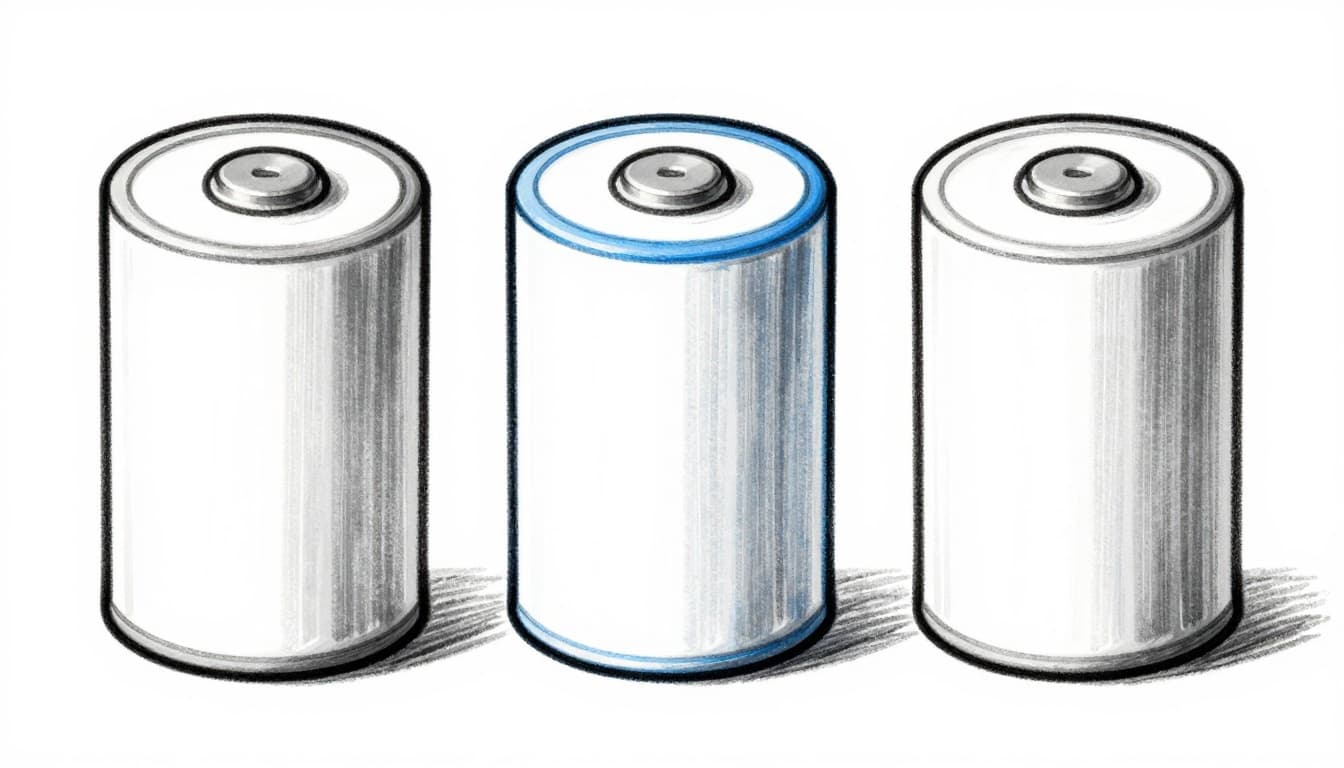
For 2026 models in the US market, three categories dominate real-world shopping decisions. LFP (lithium iron phosphate) supports long life and lower fire risk. Nickel-based packs (often NCA or NMC variants) prioritize energy density and range. Sodium-ion packs are newer, and they often target lower cost and better cold-weather behavior.
Lithium Iron Phosphate (LFP) Batteries: Built for Everyday Reliability
LFP batteries use lithium, iron, and phosphate in their cathode. That chemistry tends to be stable, which usually improves safety margins and extends cycle life. In operational terms, LFP packs often allow frequent daily charging with less penalty than many nickel designs.
Because LFP offers lower energy density, the pack must weigh a bit more for the same range target. Still, many drivers accept that trade for lower cost and predictable ownership. For example, LFP popularity increased as automakers aimed at mass-market pricing, and as battery manufacturing scaled.
A key operational point concerns charging. Many LFP systems can accept charging up to full state-of-charge (100%) more comfortably than nickel-based packs. Therefore, if your routine includes topping off at night, LFP often fits the pattern.
Typical benefits you may see in 2026 LFP-equipped vehicles include:
- Long cycle life for daily driving use.
- Lower fire risk under many fault scenarios, compared to common nickel chemistries.
- Strong consistency across seasons, especially when thermal management is well designed.
Some LFP packs also support faster everyday charging profiles at the pack level, even if the vehicle’s peak DC fast charge limits still apply. Brands like Tesla and Ford have used LFP in various trims and model years, and General Motors has also announced LFP use for future North American strategy.
Compared to nickel-based batteries, the main limitation remains range per weight. Even so, for drivers who charge at home, the practical impact can be minimal.
Nickel-Based Batteries: Maximizing Range for Long Trips
Nickel-based EV batteries typically use cathodes built around nickel compounds, often with cobalt and sometimes aluminum (commonly described as NMC or NCA). These chemistries usually provide higher energy density, which supports more range for the same packaging volume.
Because weight and space constrain EV design, nickel-based packs often fit vehicles aimed at long-range performance. As a result, many long-distance trims and highway-focused models historically leaned toward NMC or NCA variants.
However, nickel-based batteries can be more sensitive to how they charge. For long-term health, many manufacturers recommend avoiding extended high state-of-charge. In common practice, drivers use a charge ceiling around 80% for routine use, and they charge closer to 100% only when trips require it.
When a nickel-based pack is charged to a high level, it increases stress on the cells over time. Therefore, a charging policy that uses 80% most days helps preserve capacity. For a deeper comparison of why drivers often use different rules for LFP versus nickel, see LFP vs NMC battery in electric cars, including 2026 comparison details.
Real-world driving can still be simple. You can charge to 80% at home, then use DC fast charging during travel if the vehicle supports it. Also, modern battery management systems limit current and temperature during fast charging, so the battery pack stays within safe limits.
In short, nickel-based batteries usually reduce the penalty of long distance. Still, they generally require more disciplined charging habits for maximum lifespan.
Sodium-Ion Batteries: The Affordable Newcomer Shaking Things Up
Sodium-ion batteries replace some lithium content with sodium. The main operational value is cost reduction potential, because sodium is generally more available than lithium. In addition, sodium-ion chemistries can show good behavior in cold conditions, which can matter for drivers in northern states.
In 2026, sodium-ion is no longer a lab-only topic. CATL has introduced sodium-ion platforms, and the goal is to expand options for lower-cost EVs and fleet use. This matters because fleets often prioritize predictable charging schedules and total cost of ownership.
Sodium-ion also aims to reduce reliance on scarce materials. While nickel and cobalt supply chains can fluctuate, sodium-ion can shift the supply risk profile. That is a supply-chain argument, but it still impacts car prices and availability.
There are also practical constraints. Sodium-ion energy density can be lower than the best nickel-based packs, so some implementations may target shorter-range duty cycles. However, if your driving pattern matches the vehicle’s range goals, that constraint may be acceptable.
Fast charging behavior depends on the specific cell design and the pack’s thermal limits. In many cases, sodium-ion systems aim for stable performance at low temperatures. Therefore, cold-weather range loss may be reduced compared to certain lithium-ion chemistries.
Sodium-ion is still scaling. As manufacturing improves, you may see better pack designs, improved cold handling, and more consistent fast charging experiences. For buyers in 2026, the deciding factor often comes down to total price and daily route fit.
How Do EV Batteries Store Energy and Send It to the Wheels?
An EV battery pack stores energy inside individual cells. Each cell uses a chemistry where lithium ions move between materials. When you charge, the ions move one way. When you drive, the ions move back.
A simple way to view this process is like a water tank system. During charging, the system fills by moving ions into a “stored” chemical state. During driving, the system drains by releasing ions through an electrical path. The battery management system coordinates that movement and controls power limits.
Inside a lithium-ion cell, the core parts are:
- Cathode: the positive electrode material.
- Anode: the negative electrode material.
- Electrolyte: the medium that allows ion movement.
- Separator: the barrier that prevents short circuits.
When the EV charges, the battery’s charging controller pushes electrical energy into the cells. Ions shift toward the anode side, and chemical potential increases. During driving, the motor control system draws electrical current. That current causes ions to travel back through the circuit, and the battery converts that stored chemical energy into electricity.
Energy density plays a major role in range. In plain terms, higher energy density means more usable energy per unit weight and volume. That is why nickel-based packs often support longer range, while LFP packs often need more mass for the same miles.
Placement is also part of “how it works” in the real world. Many EVs place the battery pack under the floor. That low placement lowers the vehicle’s center of gravity. As a result, the car can handle better in many conditions, and crash structures can surround the pack for protection.
Charging Your EV Battery: Methods and Best Practices for Long Life
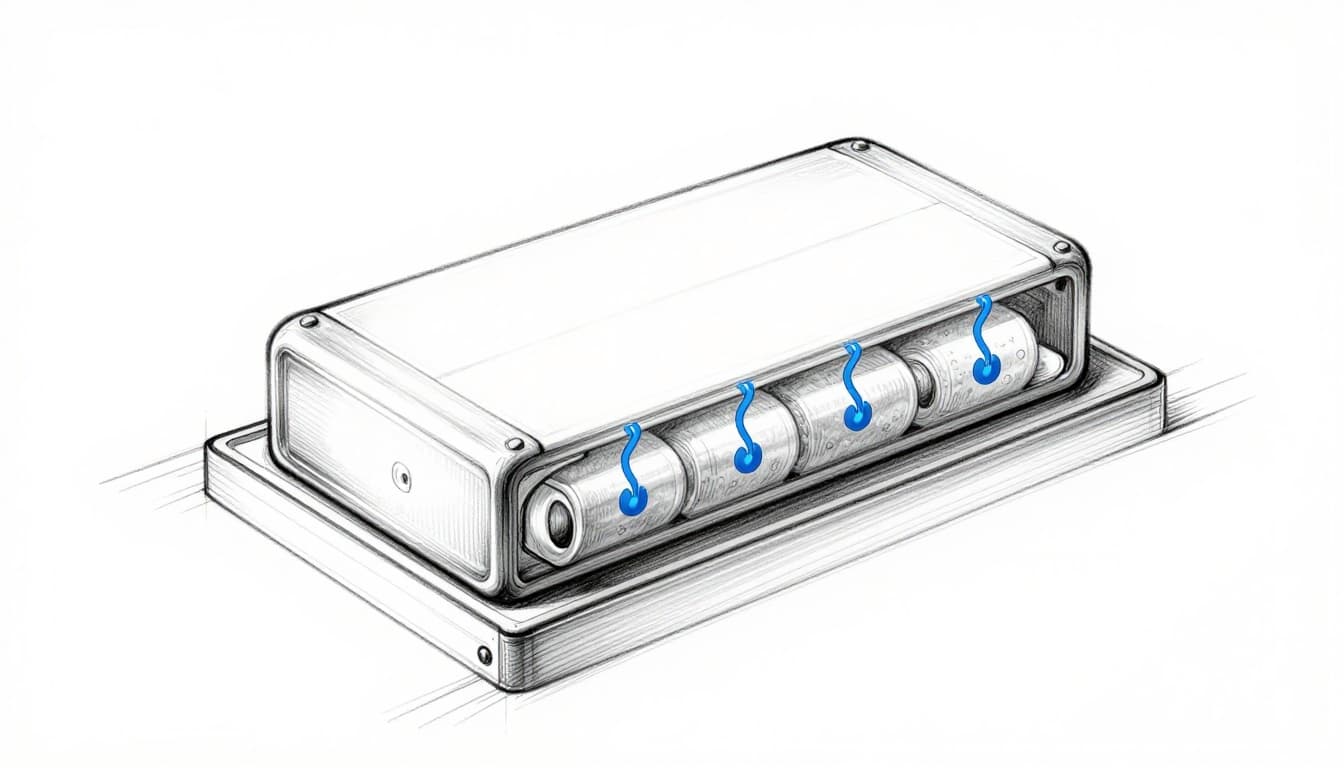
EV battery charging methods generally follow three levels. The differences are mainly about how much power flows to the pack, and how quickly the system can safely raise energy.
- Home charging (Level 1) uses a standard household outlet. It is slow, but it can support overnight charging.
- Level 2 uses a dedicated charger (often a 240-volt circuit). It typically covers daily needs for many drivers.
- DC fast charging bypasses the onboard charger and sends high power directly to the battery through the vehicle’s charging system.
Exact charge rates depend on vehicle model and pack limits, yet the trend is consistent. More power means faster charge, and the battery must manage heat to protect cell health.
Chemistry also changes the best practice. As a baseline rule, many nickel-based packs do better with routine charging below full. By contrast, LFP packs often tolerate full charging more often, because their chemistry is more stable.
To support long life, EV manufacturers and owners typically use operational habits like the following. These are not “limits” you ignore. They are the default rules that reduce stress:
- Avoid daily 100% charging on nickel-based packs when not needed. Use it for trip days only.
- Prefer 20% to 80% as a common routine window, especially when you have home charging.
- Limit extreme heat exposure. Park in shade when practical, and avoid leaving the car at high state-of-charge in hot weather.
- Use DC fast charging for travel, not as your only plan.
- Let the pack cool or warm when the car suggests it. Thermal limits reduce both charging speed and cell wear.
Battery capacity typically declines over time. In many modern EVs, you should expect meaningful capacity retention over years when the pack is managed correctly. Many warranties reflect roughly 8-10 years for capacity coverage, and well-managed packs often keep higher capacity than poorly managed use.
Home vs. Public Charging: Which Fits Your Routine?
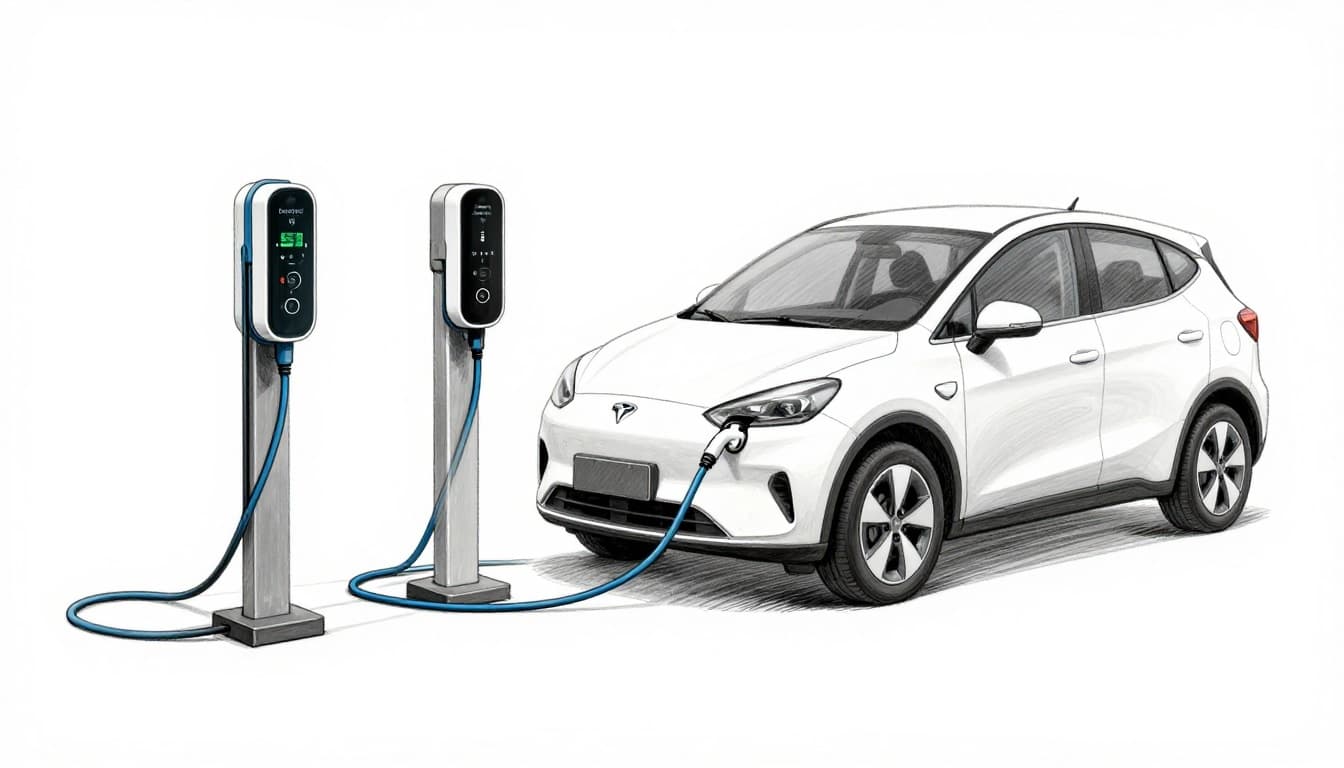
Home charging is usually the operational best option because it can support steady, controlled energy delivery. Also, you can schedule charging off-peak hours when utilities offer lower rates. Over time, that can reduce total cost while keeping the pack healthier.
Public charging still serves a clear function. When you live farther from chargers, or when work schedules create unusual mileage patterns, you will rely on Level 2 public stations and fast chargers. In those cases, a practical approach is to plan routine charging at home and use public charging to close gaps.
DC fast charging is generally higher stress than home charging. Therefore, it should be used for trips and urgent needs. If you repeatedly fast charge from a very high state-of-charge, the battery control system may reduce charge speed and apply extra thermal controls.
Smart Habits to Keep Your Battery Healthy for Years
Battery health is a controlled outcome. You may not eliminate all aging, but you can reduce avoidable stressors. Accordingly, owners should follow habits that match chemistry and local conditions.
For nickel-based vehicles, the operational expectation remains simple: maintain a lower daily cap, especially when you do not need full range. Many drivers use 80% as the standard ceiling, then switch to 100% only when the commute or travel needs it.
For LFP vehicles, the policy can be more flexible. Many systems tolerate more frequent full charging. Still, the pack still benefits from avoiding prolonged high state-of-charge in high heat. Therefore, even with LFP, you should still plan parking and charging schedules with temperature in mind.
For sodium-ion, the expectation usually centers on stable performance in colder periods. If a vehicle supports it, charging during cold weather still requires thermal management. Therefore, do not assume “cold is fine,” because the pack may still need time to reach a charging-ready temperature.
Finally, keep the car’s built-in battery management features enabled. Many vehicles offer heat or preconditioning modes for better fast-charging access. If the owner manual recommends a setting, it should be treated as a compliance requirement for best results.
Safety Features That Make EV Batteries Safer Than Gas Engines
Battery safety in EVs depends on layers. Those layers include electrical monitoring, thermal control, mechanical protection, and cell design. Therefore, safety is not a single feature, but a system of constraints.
Key safety controls usually include:
- Battery Management System (BMS): monitors cell voltage, temperature, and charge current limits.
- Thermal management: cooling plates, refrigerant loops, or other pack heat-control designs.
- Cell separators and construction: reduce internal short circuit risk.
- Pack-level shielding: structural design and crash isolation around the modules.
In addition, safety outcomes can be compared using incident reporting and multi-source analyses. For an example of technical risk analysis, see NIST’s technical note on lithium-ion battery fire risk. The purpose of such analysis is to quantify risk drivers using available data, not to sensationalize individual events.
Real-world practice also supports the safety architecture. EV packs include redundant monitoring and protection logic. When a fault occurs, the BMS typically limits power flow and triggers protective states. As a result, the vehicle reduces the chance that a minor problem grows into a larger failure.
This safety posture generally differs from gasoline engines. Gasoline fire risk can come from leaks, ignition sources, and vapor accumulation. EVs remove the fuel tank and combustion process, but they still require strong electrical safeguards, thermal safeguards, and robust physical protection around the battery.
What’s Next for Batteries in Electric Vehicles?
The next generation of EV batteries in 2026 and beyond focuses on faster charging, higher capacity potential, and improved safety under real use. Several directions show up across research and pilot products.
One trend involves silicon-based anodes. Silicon can store more lithium than graphite, which may increase capacity. The constraint remains cycle life and stability, because silicon can expand during charge cycles. Research continues to refine materials and solid-state approaches. For a technical review on silicon-based anodes in solid-state batteries, see Mechanisms and applications of silicon-based anodes in solid state batteries (RSC).
Another trend is improved electrolyte design, including semi-solid systems and more mature solid-state concepts. Solid-state aims to reduce flammability risk and enable tighter packaging. However, mass production timelines have historically moved slower than early hype. Therefore, the practical path remains incremental upgrades, cell chemistry refinements, and better manufacturing controls.
A third ongoing trend is sodium-ion scaling. If cost targets hold and manufacturing improves, sodium-ion could support more affordable EV options, especially for urban duty cycles and cold-weather routes.
In short, 2026 progress is about fewer tradeoffs. Drivers want quicker charging, more range, and stable ownership costs, while safety stays non-negotiable.
Conclusion
Batteries in electric vehicles do far more than “store power.” They run the chemistry that creates usable electricity, and they enforce limits through the BMS. Battery type determines range potential, charging comfort, and day-to-day ownership rules.
Your charging habits and your climate also determine how the pack ages. When those factors align with the chemistry, you usually get more capacity retention and fewer surprises.
If you want the clearest answer for your needs, test drive a vehicle with the battery chemistry you’re considering. Then, share your biggest question, because which tradeoff matters most to you, range, cost, or charging speed?