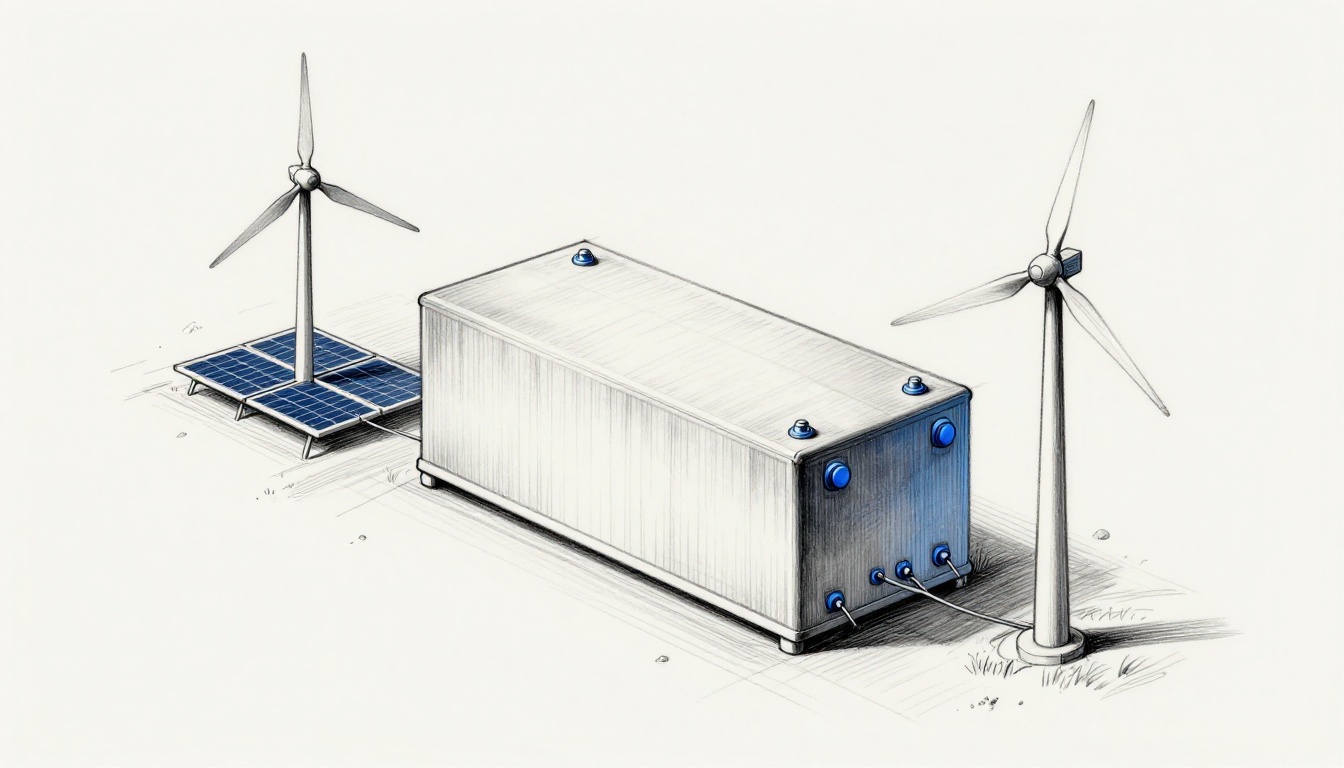
Batteries have become one of the main reasons solar and wind can send power on demand, not just when weather cooperates. As of 2026, global battery storage installations are forecast to reach about 297 GWh, even with slowdowns in some regions. In the United States, the buildout has moved from pilot scale into grid-scale planning, with over 40 GW installed by late March 2026.
In operational terms, batteries in renewable energy systems store extra electricity when production exceeds use. They then deliver that stored energy later, when output drops. This design directly reduces the on-off behavior of solar and wind, which otherwise forces grids to rely on slower, more polluting backup power.
Because of this, batteries now show up in utility programs, industrial sites, and homes. They also support grid rules that require stable frequency and quick response during stress.
The sections below cover how batteries fix intermittency, which battery types are leading, what major U.S. projects already demonstrate, and which constraints could affect the next phase. Ready to see how batteries make clean energy work for everyone, starting with the on-off problem?
How Batteries Fix the On-Off Problem of Solar and Wind
Solar output changes by the hour, not the minute. Wind output changes faster than most people expect. Even when forecasts perform well, actual conditions still shift, cloud cover arrives, and gust patterns change. As a result, the grid can face a mismatch between supply and demand.
In this context, batteries act like controlled energy storage units. When a renewable plant produces more power than the system can use right then, the batteries charge. When demand rises, or production falls, the batteries discharge. Therefore, batteries convert variable generation into dispatchable electricity.
A simple way to picture this is a lunchbox with a locked lid. Solar and wind “pack” energy during surplus periods. Then the grid “opens the lid” later, instead of depending on backup generation to fill gaps. For deeper background on storage applications in renewables, see renewable energy storage basics from the Battery Council International (BCI).
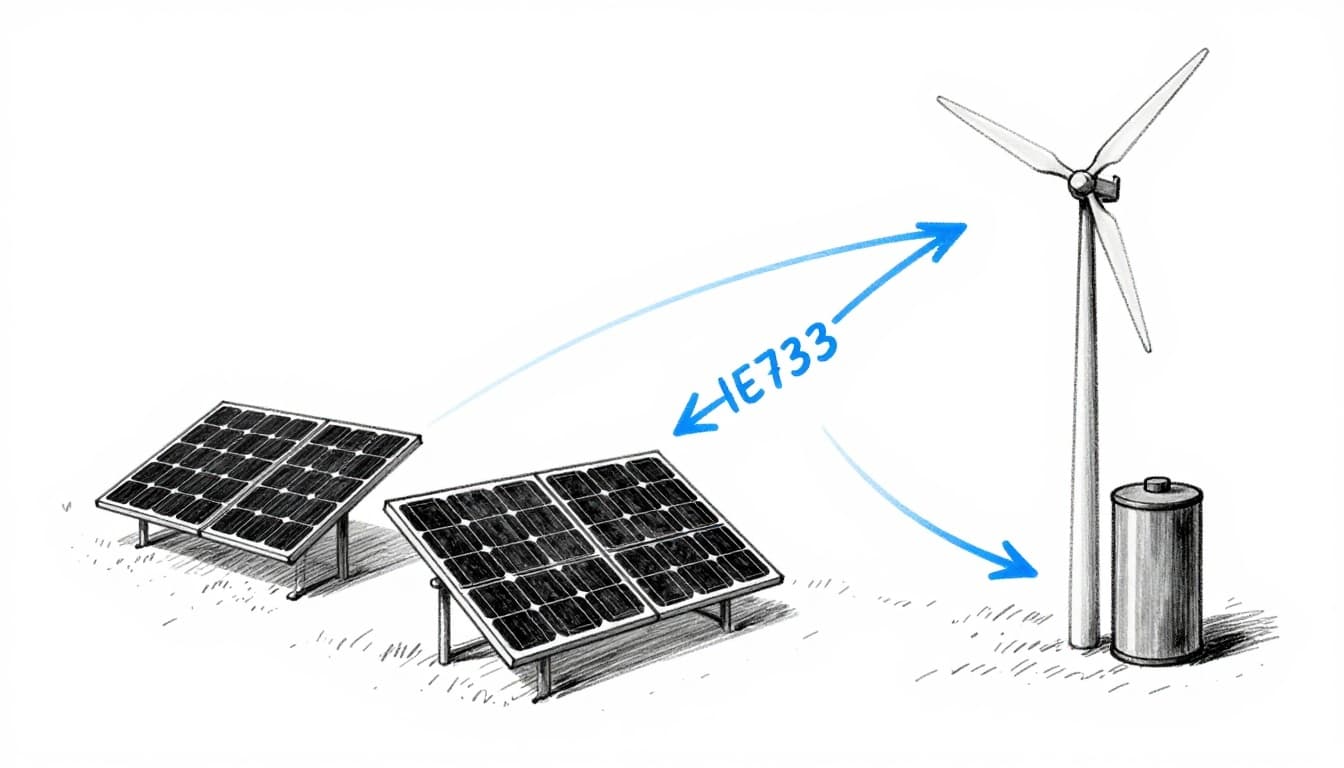
In addition to energy shifting, batteries supply grid services that protect system stability. Frequency control and fast power response reduce the stress caused by rapid renewable changes. The battery system does not need to generate “new” energy. It only needs to move energy in time.
Growth also follows these operational needs. In 2025, the U.S. added a record 15 GW of battery power capacity, and the pace remained strong into 2026 planning. For 2026, forecasts call for about 24 GW of new utility-scale battery capacity, with Texas, California, and Arizona doing most of the work. Some projections place total U.S. storage near 45 GW by 2026. This scale matters, because grid operators can only reduce reliance on backup resources if enough storage exists across peak times.
Finally, batteries increasingly support co-location strategies. The battery sits next to solar, wind, or both, so it can capture local surplus and release it during local peaks. In short, batteries reduce waste, increase renewable use, and lower the risk of “grid jams.”
Storing Surplus Power to Avoid Waste
When renewable generation exceeds demand, electricity does not disappear. Instead, the system must manage it through curtailment, grid constraints, or slower dispatch options. Batteries reduce that loss by capturing surplus and storing it for later.
A typical operating sequence runs as follows. During midday, solar output rises. If electricity demand stays flat, the grid receives more power than it can use immediately. At that point, storage systems charge. Later, after sunset or during sudden cloud events, batteries discharge to cover the shortfall.
The value comes from timing. Electricity prices and grid needs often differ across the day. Storage can buy low in surplus periods and supply when power becomes scarce. In other words, batteries enable both grid balancing and market-based arbitrage, subject to local market rules.
For utility planners, this “soak and release” function supports renewable targets without expanding fossil generation. For consumers and facilities, the same function can reduce peak power purchases, especially when demand charges apply.
A practical example follows the day-night pattern. A solar plant produces more than local loads between late morning and early afternoon. Instead of exporting the surplus at poor value, the battery stores a portion. Then, in the evening ramp, the battery provides power during the highest demand window.
This is the core reason storage deployments cluster in solar-heavy states. California, Arizona, and Nevada, for instance, pair large solar builds with substantial storage capacity. Their goal remains consistent: store energy during surplus hours, then release it during evening peaks.
Providing Backup During Peaks and Blackouts
Batteries also provide backup power in the grid sense, not only in the “lights stay on” home sense. In many operating situations, the grid must respond within seconds. Renewables alone cannot always provide that immediate cushion, because weather-driven output can change abruptly.
When demand spikes, or when a generator trips offline, the system experiences a sudden imbalance. Battery systems can respond quickly, reducing frequency swings and stabilizing the network. Therefore, batteries can act like fast-reacting reserves.
This matters most during extreme events and peak periods. During hot weather, air conditioning drives sharp demand rises. If solar output falls due to cloud cover, grid stress can increase. Storage can supply the missing power until slower reserves come online.
From a planning perspective, battery duration also matters. A shorter duration battery may handle a quick imbalance. A longer duration battery can cover longer gaps that otherwise trigger more expensive dispatch. In many U.S. interconnection and planning cases, storage becomes a formal part of resource adequacy and peak reliability.
Industrial users often value this reliability. Data centers and manufacturing facilities can face costly downtime. They also operate with strict power quality requirements. Batteries, when integrated through hybrid energy management systems, can support ride-through power and reduce exposure to outages.
Where do real deployments fit? U.S. markets include large solar-plus-storage builds, as well as standalone storage for grid services. One recent example includes major work in California, where developers plan large battery projects to support evening demand and reduce reliance on older peaker plants.
For broader international context on why batteries bridge supply-demand gaps, see Battery Energy Storage Systems as a key to renewable power supply-demand gaps from IRENA.
Leading Battery Types Bringing Renewables to Life
Battery selection controls the system’s cost, safety profile, and usable duration. For renewable integration, grid operators typically require high round-trip efficiency, fast response, and a predictable degradation curve.
In most current projects, lithium-ion chemistry dominates because it offers high power density and has reached large-scale manufacturing. However, renewable systems also create demand for different storage “shapes.” Some grid services require short bursts. Others need multi-hour energy shifting. Some applications value long cycle life more than initial cost.
For that reason, multiple battery types now compete and co-exist. A policy-driven buildout often treats battery projects like a portfolio. Each technology fills a different performance gap.
As a high-level technical reference, the general category of grid-scale battery technologies and their trade-offs is summarized in Battery technologies for grid-scale energy storage (Nature Reviews Clean Technology).
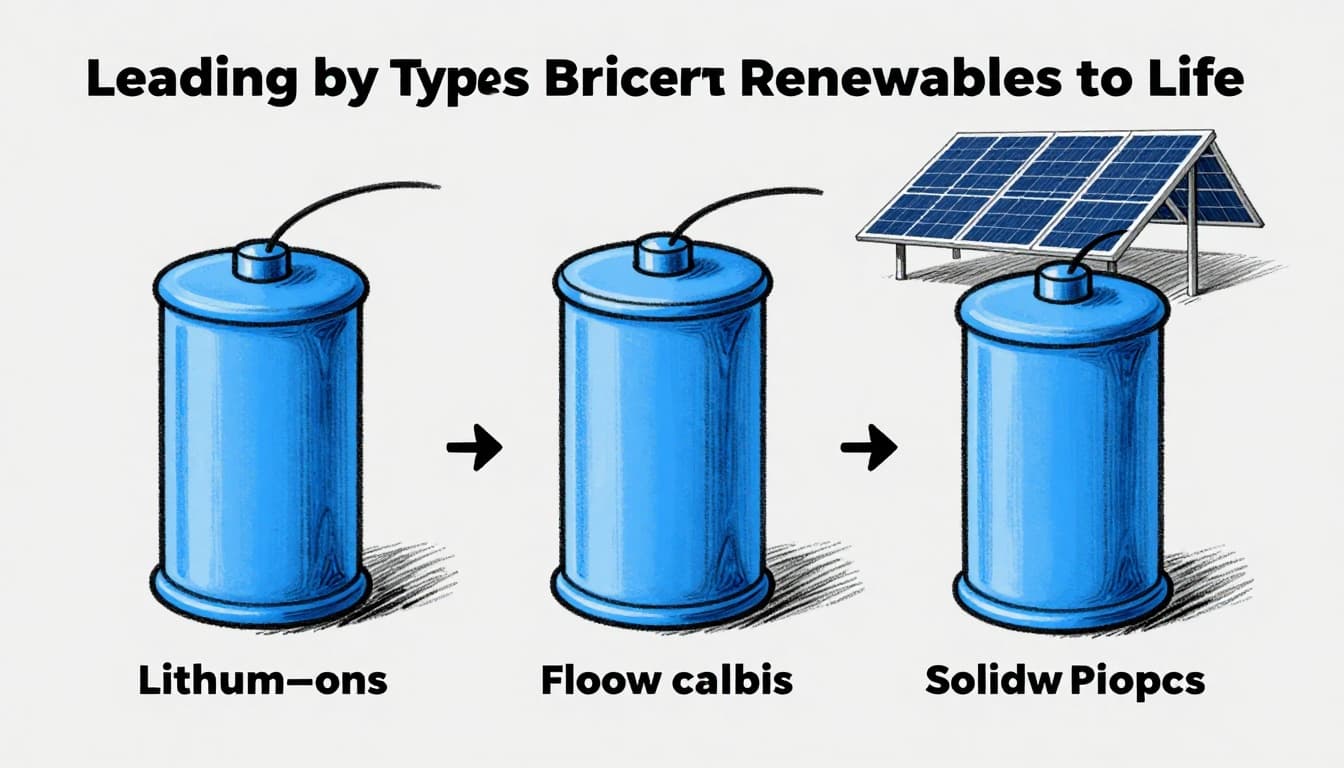
Below is a simple comparison. Actual performance depends on design choices, thermal controls, and system engineering.
| Battery type | Typical strength in renewable use | Common trade-off |
|---|---|---|
| Lithium-ion | Fast response, strong efficiency for 1 to 4 hour needs | Supply and safety requirements vary by design |
| Flow batteries | Longer-duration shifting (often more hours) | Higher system complexity and footprint |
| Solid-state (emerging) | Potential safety and long life goals | Commercial scale and cost are still advancing |
Lithium-Ion: Reliable Workhorse for Most Projects
Lithium-ion batteries are the default choice in most current utility-scale and behind-the-meter deployments. The system benefits arise from mature manufacturing, high energy density, and proven performance across large sites.
In practical terms, lithium-ion suits renewable pairing because it can charge quickly and discharge quickly. Grid operators can also ramp output fast when grid frequency and demand require it. This speed reduces the need for more operating reserves that would otherwise sit idle.
Another operational reason includes cost reduction. Over the past decade, manufacturing scale and supply chain learning have lowered prices for many lithium-ion systems. As a result, batteries can meet many project economics without requiring long “payback fantasies.”
That said, procurement still carries risk. Supply constraints, cell chemistry variation, and safety and fire code compliance requirements influence project timelines. Also, lithium-ion degradation depends on temperature and cycling patterns, so system controllers and cooling plans must be disciplined.
Where this shows up for renewable energy systems is straightforward. Solar-plus-storage projects often need predictable evening discharge. Lithium-ion designs handle those dispatch windows reliably. For home and commercial solar, lithium-ion also supports power backup and time-of-use savings.
Next-Gen Options Like Flow and Solid-State Batteries
Flow batteries target longer energy duration by using liquid electrolytes stored in separate tanks. This architecture can support longer discharge periods without scaling all energy storage into the cell stack. For grids where multi-hour coverage matters, flow can offer a different cost and performance balance.
Solid-state batteries aim to improve safety by replacing liquid components with solid materials. The outcome sought includes lower fire risk and potentially longer cycle life. Still, commercial scale depends on manufacturing maturity, cost curves, and qualification by grid operators and utilities.
Sodium-ion systems also receive attention in the grid and industrial context. Sodium can reduce reliance on some lithium supply chains, although project design and performance remain under active development.
From a policy and procurement standpoint, emerging chemistries also face regulatory and project qualification constraints. Fire safety rules, transport rules, and interconnection studies can require proof of performance across cycles. Therefore, adoption often begins in specific use cases, such as sites that require longer duration, stricter safety requirements, or supply chain diversification.
The system trend remains consistent. Grid planning increasingly treats battery technology as a mix, not a single product. Sooner or later, many utilities will deploy more than one battery chemistry across different locational needs and time horizons.
Batteries in Action: Big Projects and Grid Wins
Battery performance must survive real operating days, not only lab tests. U.S. deployments now show batteries acting as both grid stabilizers and renewable enablers, especially where solar and wind capacity grows faster than traditional dispatch resources.
One consistent theme appears in project pipelines: co-located storage grows fastest in areas with high renewable penetration and tight transmission constraints. When new solar or wind comes online, storage captures surplus and releases it during evening peaks.
In the U.S., 2025 installations set a record pace. For 2026, projects plan for large additions, with a majority expected to land in a small set of states. Texas remains a major driver, as does California and Arizona.
For a concrete project example in California, Arevon began construction on its Cormorant Energy Storage Project (250 MW / 1,000 MWh). This scale supports long evening discharge and reduces the need for additional fossil peakers in the region. Construction updates for this project are covered by Cormorant energy storage project coverage from PRNewswire.
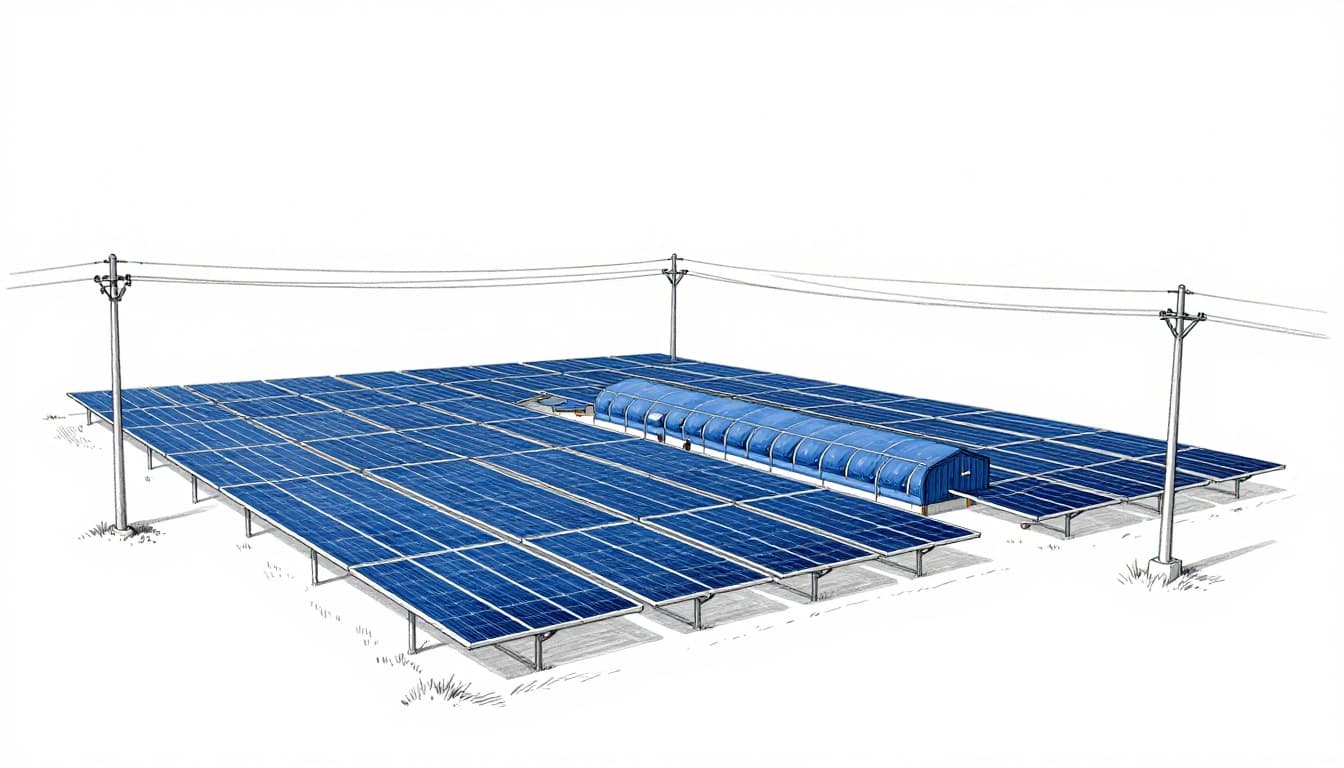
In operating terms, grid wins usually fall into three categories:
- Peak shaving: Batteries reduce the highest demand hours, lowering system stress.
- Reliability support: Batteries provide fast response during generator outages or sudden demand rises.
- Lower curtailment: Batteries capture renewable surplus that would otherwise spill or force generators offline.
These outcomes translate into money and planning certainty. When storage handles peak risk, utilities can delay or reduce new peaker buildouts. They can also reduce the operational cost of running marginal units for a few hours.
At the system level, projections show sustained growth. One set of U.S. forecasts points to 24.3 GW of new battery storage capacity in 2026, with total U.S. storage potentially reaching around 45 GW. These additions support renewable growth and data center growth at the same time.
Standout US Projects Transforming Local Grids
Major regions already treat batteries as part of the “standard build.” California continues to expand solar-plus-storage plans to meet long-term clean power goals. Arizona and Nevada follow a similar logic, since they experience strong solar output during daytime and steep evening demand ramps.
Texas operates a different grid profile, but the need stays the same. ERCOT peak conditions can drive extreme demand. Batteries paired with solar can capture surplus at midday, then discharge during high-demand periods. Large new projects under development include multiple gigawatt-scale facilities across Texas.
In addition, industrial users increasingly value storage for both economics and reliability. A solar-plus-storage installation can reduce peak purchased power. Backup capability can also reduce downtime risk during short interruptions. This pattern appears across commercial real estate, manufacturing, and logistics, not just in utility programs.
Even when storage does not directly “stop” a blackout, it can reduce the probability and severity of cascading events. That operational benefit matters when grids face multiple stressors, like heat waves, transmission limits, and rapid renewable output changes.
Proven Ways Batteries Stabilize and Save Money
Batteries stabilize the grid because they can deliver power quickly, then absorb power when needed. This behavior supports grid stability requirements set by system operators and utilities.
From a cost standpoint, batteries may reduce several types of expense at once. They can lower the need for expensive peak energy, reduce curtailment losses, and offer grid services that have direct market value.
Key benefits often include:
- Peak shaving: Reducing power draw during the most expensive hours.
- Blackout protection: Providing short-term ride-through power for critical loads.
- Arbitrage savings: Charging during lower-priced periods and discharging when prices rise.
- System upgrade deferral: Helping manage congestion without immediate new transmission, depending on local conditions.
Market rules and interconnection constraints control the full financial outcome. Still, the overall trend is consistent. Storage reduces waste and improves dispatch control, which makes more renewable generation usable.
The economic case also improves as policies and project pipelines mature. The U.S. added 57.6 GWh of new battery energy storage in 2025, with home storage growing faster than many observers expected. This momentum supports the planning environment for 2026 and beyond, even when procurement costs and compliance steps still affect schedules.
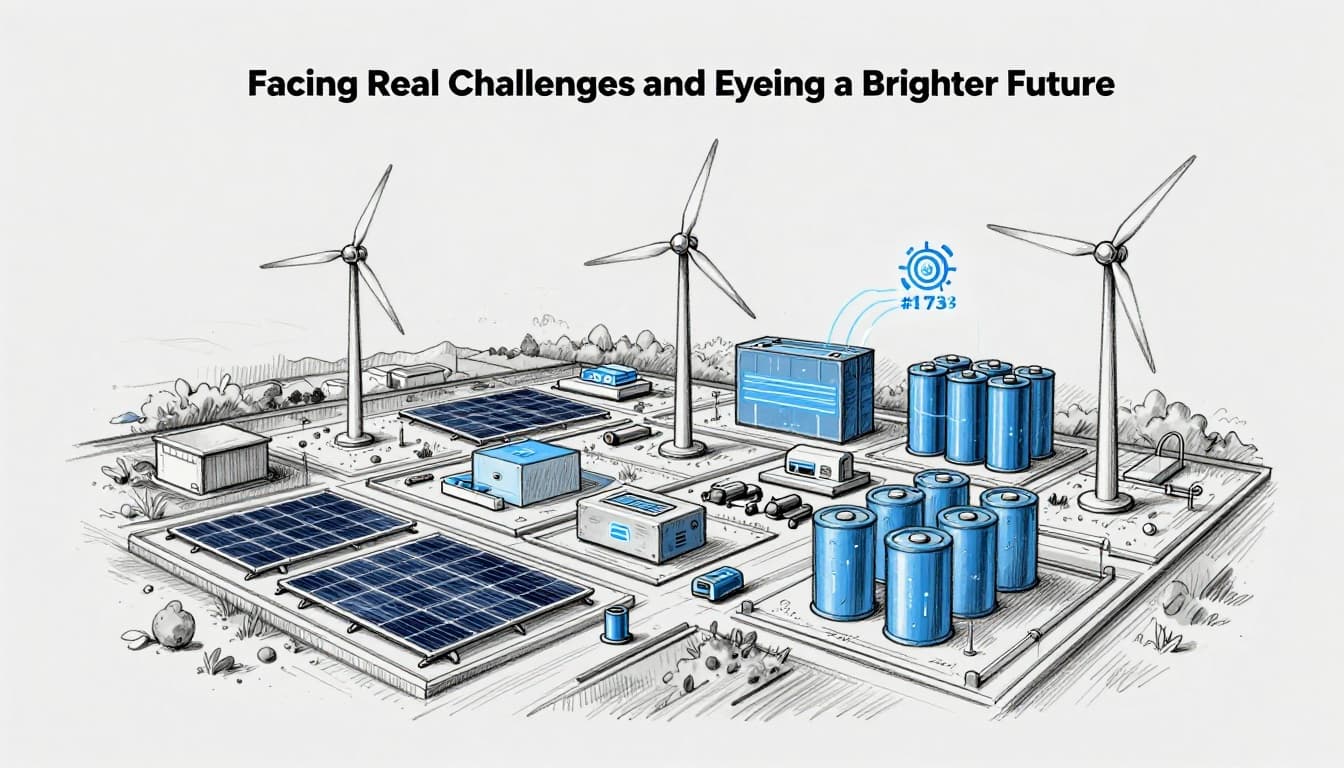
Facing Real Challenges and Eyeing a Brighter Future
Even though batteries make renewables more reliable, implementation still involves risk management. Upfront costs remain a key barrier. While costs have declined, total project cost includes interconnection studies, controls, safety systems, and permitting.
Recycling also creates an operational challenge. End-of-life batteries must be handled with care due to chemistry and safety requirements. Recycling routes can be complex, and recovery value depends on the battery chemistry and condition. The industry generally aims for higher recovery rates, but the system needs time to scale.
Supply chain timing and policy certainty can also affect deployment. Battery cell availability, transport requirements, and rule changes can impact timelines. In some markets, policy uncertainty can disrupt contracting and procurement plans even when projects are technically ready.
At a global level, there is also evidence of pacing shifts. The forecast for 2026 global grid-scale battery storage indicates 297 GWh, which represents a small decline from 305 GWh in 2025. One reported factor includes slower growth in China after changes related to solar-plus-storage pairing rules.
Still, the longer-term direction remains clear. Many grids cannot reach high renewable shares without storage. Batteries now perform multiple functions, and that reduces the need for separate solutions for energy shifting and reliability support.
Tackling Costs, Recycling, and Supply Issues
Cost pressure remains the first operational concern. A battery project requires capital, and owners must manage financing terms, interconnection timelines, and warranty conditions. Even with falling cell prices, the project’s total bill includes system integration and grid studies.
Recycling adds a second constraint. Battery recycling processes must manage hazardous materials and separate valuable components. Another challenge lies in sorting and preparing batteries for recycling based on their chemistry. For a practical look at recycling technologies and the operational hurdles, see Future of EV Battery Recycling: Technologies and Challenges from AZo Cleantech.
Supply issues can also matter. Some years show tighter supply for certain cell types. In addition, policy uncertainty can complicate procurement. When rules shift, developers may pause or re-scope projects until certainty improves.
A common operational theme is that uncertainty affects project finance. When investors face unclear future rules for incentives and interconnection, they may delay final investment decisions. Therefore, policy and market design become as important as the chemistry itself.
What to Expect by 2030 and Beyond
By 2030, most credible planning scenarios expect battery storage to remain a central grid resource. The main shift will likely occur in system design, not only in total capacity.
First, battery duration needs will expand. More projects will target not only fast response but also longer energy shifting to cover extended low-renewable periods. This change favors a broader mix of technologies, including longer-duration options.
Second, co-location strategies will likely mature. Batteries will increasingly operate as part of an energy management system that coordinates solar, storage, load, and grid signals. This coordination reduces waste and improves dispatch.
Third, policy rules will likely refine how grids use storage. Interconnection rules, grid services qualification, and performance measurement will become more standard. As those frameworks stabilize, project timelines should become more predictable.
The overall expectation remains positive. Even with global pacing differences, the U.S. buildout has strong momentum, supported by high renewable growth needs and rising demand from data centers and electrification. Batteries may not solve every constraint alone, but they provide a practical tool for making clean power work on real schedules.
Conclusion
Batteries play a direct role in renewable energy systems by storing surplus power and delivering it when solar and wind cannot. This function reduces curtailment and supports grid stability, because the battery system can respond quickly to changing conditions.
In 2025, the U.S. added a record 15 GW of battery power capacity. In 2026, forecasts point to about 24 GW more utility-scale storage and continued growth toward roughly 45 GW total. Meanwhile, global installations are forecast to reach around 297 GWh in 2026, despite regional slowdowns.
The technology mix is also expanding. Lithium-ion remains the main workhorse, while flow and solid-state options gain ground for specific duration and safety goals.
If the opening claim holds, it is because batteries translate variable renewables into reliable power. With batteries, solar and wind aren’t just dreams; they’re powering our world today.
For your next step, review how your local grid uses storage, then support policies that reward reliability and safe recycling. And if you own solar, consider whether a storage add-on matches your peak hours and backup needs. Ready to see clean energy act like dependable power, not an unpredictable supply?