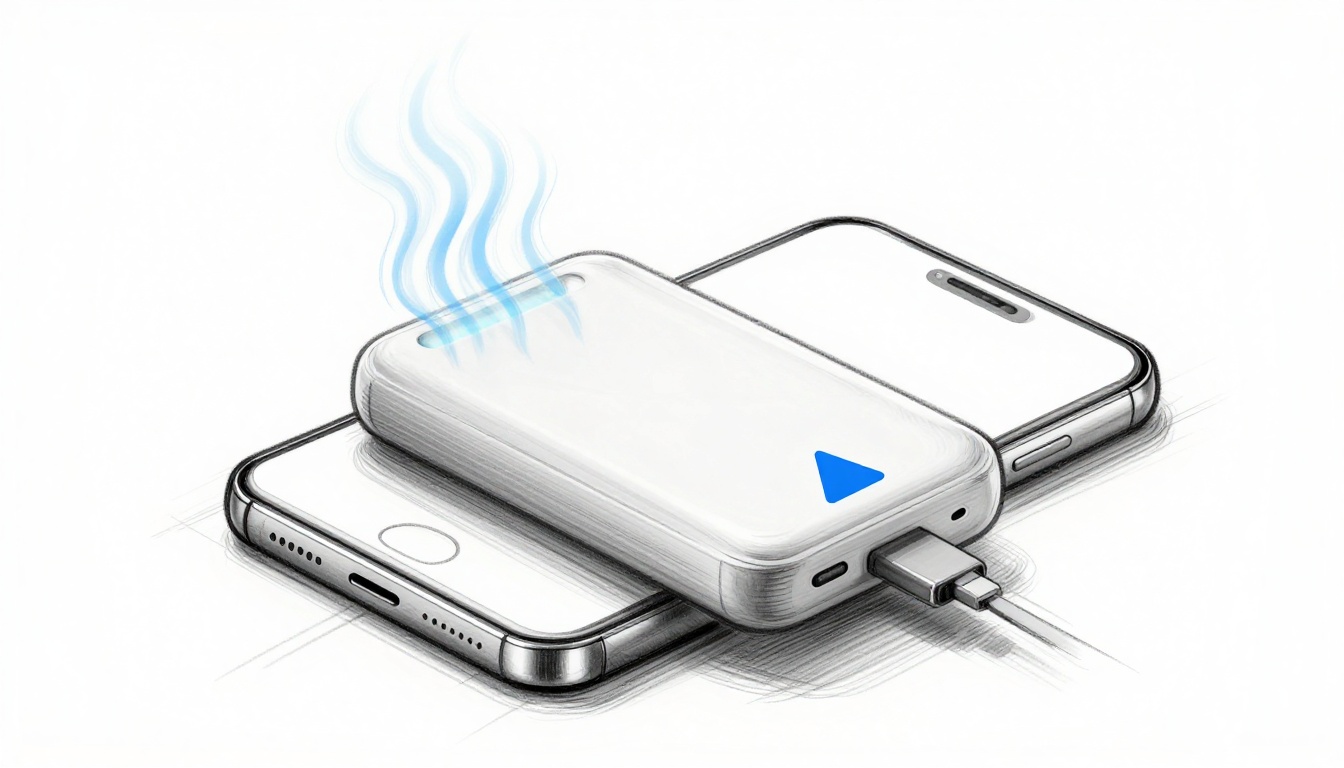
A swollen battery can look “offline,” but it may still be active inside. If your phone, laptop, or power bank gets unusually hot and then the casing bulges, you should treat it as a safety incident, not a cosmetic issue. In the US, lithium-ion battery fires have risen sharply in recent years, including a reported 162% increase over two years (insurance data summarized in 2026 reporting).
Because lithium-ion batteries can fail through gas buildup and then escalate into thermal runaway, the outcome can include fire, toxic smoke, and rapid device destruction. This guide explains why battery overheating causes swelling, how the process starts, which devices face higher exposure, and what you can do to prevent battery swelling early.
What Goes Wrong Inside: The Science of Heat and Swelling
Battery overheating and battery swelling typically share the same starting point: internal stress that turns into heat, gas, and structural damage. In simple terms, your battery is a sealed chemistry system. When the chemistry gets pushed outside safe limits, internal reactions accelerate. After that, swelling can follow because gas forms where there should be none.
A plain-language process model is below. It is meant for understanding, not for repair decisions.
- Ions move during use
When the battery charges or discharges, lithium ions travel between the anode and cathode through the electrolyte. - The SEI layer may break down
Over time, heat, and stress can damage the solid electrolyte interphase (SEI) layer. When that layer degrades, side reactions become more likely. - Electrolyte decomposition produces gas (outgassing)
As internal temperatures rise, the electrolyte can decompose. That decomposition generates gas species, which increase pressure inside the cell. In many summaries of battery chemistry failure, carbon dioxide is among the gases discussed. - Electrodes can expand, sometimes up to ~20%
Gas does not only sit in free space. It can also push on electrodes and separators, leading to electrode and pouch expansion. This is one reason a phone battery may look “puffy” behind the screen. - Thermal runaway may start a chain reaction
If heat generation outpaces heat removal, the battery can enter thermal runaway. Then the battery keeps heating itself, which increases decomposition, which produces more gas, which increases temperature further.
For a mental diagram, picture a balloon inside a hard bag. First, the balloon inflates slowly. Then the bag flexes. Finally, if the balloon material keeps reacting faster, pressure and heat rise together until failure occurs.
A peer-reviewed review on the mechanisms and mitigation of thermal runaway summarizes these categories in more formal terms, including how heat triggers exothermic reactions and why propagation can occur. See Thermal Runaway in Lithium-Ion Batteries review.
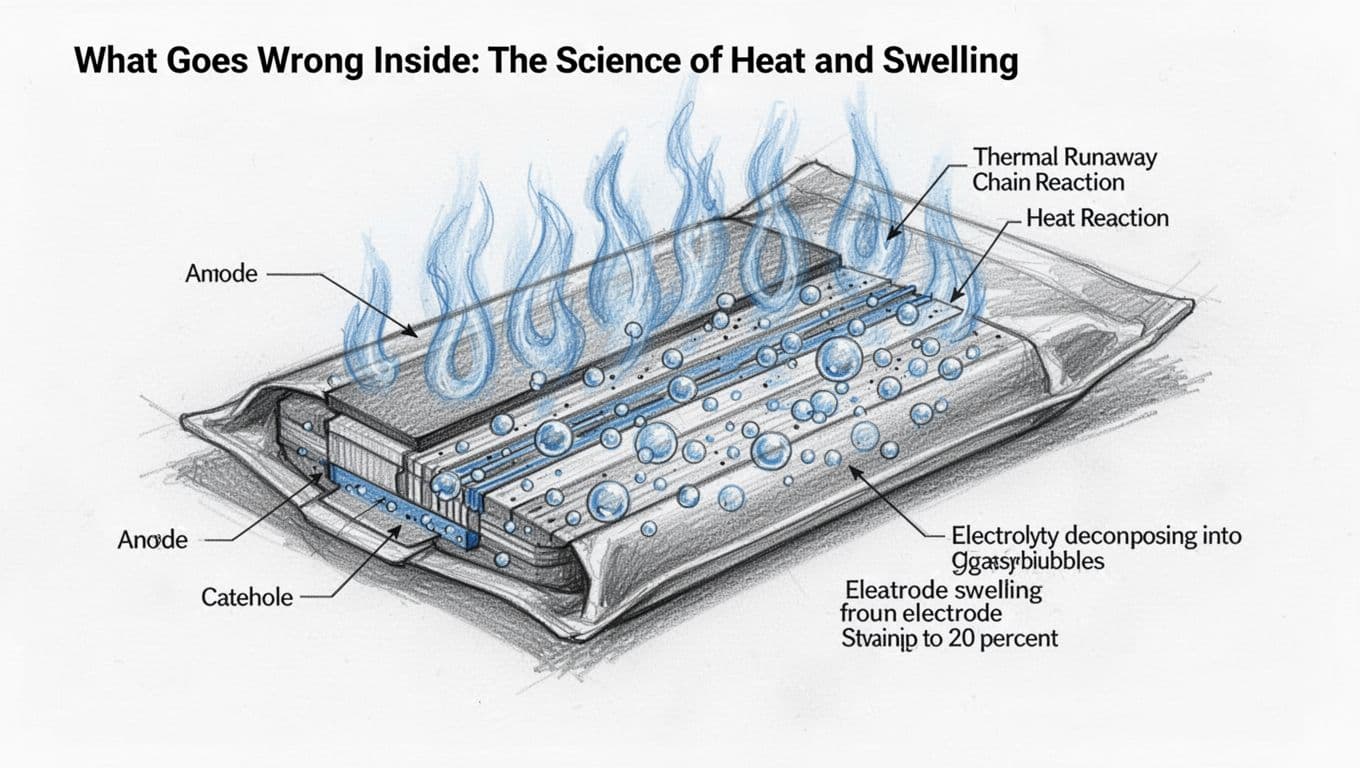
In practice, swelling is often a visible indicator that the internal pressure state has already changed. However, the absence of visible swelling does not mean the cell is safe.
Overcharging and Over-Discharging: Habits That Build Dangerous Pressure
Overcharging and over-discharging can both drive the battery toward the same failure outcome: more internal stress, more gas, and less control over heat. For most consumer devices, the safety design relies on a battery management system (BMS). That system should limit charge and prevent unsafe discharge levels. When charging behavior, component quality, or protective circuitry fails, the limits may not hold.
Overcharging generally means the charger or device keeps pushing energy beyond what the chemistry can safely accept. In that condition, the anode and cathode can lose structural stability. As the battery chemistry runs hotter and less efficiently, gas-forming side reactions become more likely. Then swelling can appear.
Over-discharging is the inverse risk. If the battery is drained too far, the cell can become chemically imbalanced. Later, when you recharge it, reactions can become unstable. In some failures, the battery then “heats up during recharge,” which can be followed by bulging.
If you need an operational example, this pattern commonly appears as “overnight charging” plus a warm device at unplug time. Another operational scenario appears after a long period of storage at high state-of-charge, then a sudden charge attempt.
Ever left your phone plugged in all night? The obligation is not to fear charging, but to avoid unnecessary heat exposure and repeated stress cycles.
As a risk-management measure, you should also treat persistent charging faults as disqualifying. A recurring warning message, a charger that runs hot, or a cable that causes intermittent charging should trigger removal from service. Battery chemistry responds poorly to inconsistent charge control.
For additional consumer-level context on why swelling occurs and how prevention strategies fit everyday use, refer to Battery swelling causes and prevention.
How Wrong Chargers Make Things Worse
A mismatched or low-quality charger can create charge behavior outside the intended profile. Voltage mismatch can cause heating at the battery terminals and inside the device. In addition, cheap chargers may regulate poorly under load, which may force the BMS to work outside normal margins.
This condition is often reported as quick heat spikes during charging. Users sometimes notice the device becomes hot within minutes, even when the battery is not heavily used.
In contrast, a properly matched charger plus a functioning BMS should cut power when limits are reached. However, the BMS is a safety layer, not an unlimited shield. If a charger generates high ripple current, or if the device’s charging path is defective, the safety layer can still be overwhelmed.
Operational directive: for charging, you should use manufacturer-approved power supplies when available, and you should stop using any charger that causes heat.
High Heat and Fast Charging: When Temperatures Spike Out of Control
Heat accelerates battery failure mechanisms. When temperature rises, chemical reactions speed up. That means side reactions can generate gas faster, the SEI layer can degrade faster, and internal resistance may increase over time. As a result, battery overheating causes progress from “warm” to “unsafe” sooner than expected.
Fast charging adds another factor. Fast charging increases current and heat inside the battery and surrounding components. Even if the device uses thermal sensors, the battery still experiences higher internal gradients. If you also add ambient heat, the margin shrinks.
In hot cars, reported cabin temperatures can reach levels where device surface cooling becomes less effective. When a device sits in direct sun, it may exceed safe operating temperatures even before charging begins. Over time, repeated exposure can also condition the battery toward earlier failure.
Thermal abuse does not require intentional harm. It can come from using a phone while charging, gaming during charge, or running video calls in a warm environment. Each scenario adds heat generation from the device electronics, and then charging adds another heat source.
Separately, uneven coatings and internal cell construction issues can create hot spots. Hot spots are the main reason some cells fail even when the average temperature seems “only warm.”
In pouch-style phone cells, swelling may be visible because the pouch can expand outward. Some devices also use tighter enclosure designs, which can force pressure into the housing. Users then see case lifting, bulging backs, or screen edge movement.
Also, the US fire risk has been rising, with 2017 to 2022 reporting over 25,000 lithium-ion battery fires. This aligns with real-world growth in fast-charging devices and more frequent use in warm settings. The safe conclusion is that increased charging stress plus heat exposure increases the likelihood of bad outcomes.
The Role of Your Environment
Environment control functions as a safety requirement. A battery that works under mild conditions may fail under heat and then show swelling.
Examples of high-risk conditions include the following.
- Charging in direct sun, especially with thick cases that trap heat
- Leaving a device on a car dashboard near vents
- Using high-drain apps (gaming, navigation, camera recording) while charging
- Storing a battery pack in a warm drawer or near heat sources
- Using in humid settings where device cooling can suffer
The operational obligation is simple: reduce heat input and allow heat removal. If the device feels hot enough to be uncomfortable, you should stop charging and remove it from the load.
For a structured consumer overview on swelling triggers tied to heat and aging, see Lithium battery swelling guide. That source also emphasizes that swelling often follows heat and time-related stress.
Physical Damage, Age, and Factory Flaws: The Sneaky Long-Term Risks
Overheating and swelling do not only happen from charging. Physical damage can cause internal short circuits, and those shorts can generate intense heat. Also, age can degrade the chemistry until gas production becomes more likely even under normal use.
Physical damage includes punctures, drops, and crush impacts. When a device drops, the impact can shift internal layers. That can tear the separator or deform electrode structures. If the separator fails, localized short circuits can occur. Those shorts can heat the cell rapidly, then accelerate electrolyte decomposition and gas formation.
Age adds a slow path. Even without visible harm, lithium-ion cells lose performance. Degraded chemicals create more internal resistance and more side reactions. As SEI layers thicken or break down, the battery becomes more likely to generate gas under stress. That is why older batteries are prone to swelling.
Factory flaws represent a different category. Manufacturing processes must control materials purity, sealing, and electrode assembly. If a cell has a weak seal, moisture ingress can accelerate internal reactions. If impurities exist, unwanted reactions can raise internal gas generation. If internal components have burrs or alignment issues, the risk can increase.
In consumer terms, this means that two batteries of the same model can fail at different times. Some failures show up early, which can point to build defects, while other failures appear after years, which points to wear and cycling stress.
Storage rules also matter. Leaving a device unused for months is not automatically dangerous. However, leaving a device unused while at a very high or very low charge state can stress the cell. Then, the next charge event may trigger internal reactions.
Why Older Batteries Are Prone to Swelling
Older batteries experience a higher internal “background failure rate.” That background rate comes from chemical changes that occur even when a battery sits idle. Over time, side reactions and SEI layer evolution can produce gas precursors. Then, when you charge or fast-charge, the reactions can cross a safety threshold.
Also, older cells may have higher internal resistance. Higher resistance means more internal heat at the same current. Since heat increases reaction speed, the cell can reach runaway conditions faster than a newer battery.
Operational directive: if a battery is near end-of-life symptoms, you should not interpret swelling as a one-time anomaly. Swelling indicates an ongoing internal condition. Continuing to use the device can increase the risk of escalation.
Devices on the Front Lines and What to Watch For
The most visible swelling cases often come from devices that use thin enclosures and pouch cells, including phones and some laptops. Yet risk also applies to power banks, e-bikes, EV systems, and drones that use pouch-style lithium-ion cells. In addition, micromobility devices have been linked to high fire exposure in recent reporting.
A typical user timeline is not always consistent, but the signs are often similar. In many incidents, users first report heat, then unusual battery drain, then physical case changes. Later, there may be hissing, odor, smoke, or visible bulging.
Common indicators include these.
- Unusual warmth during charging or light use
- Bulging case, lifted screen edges, or warped back cover
- A rapid battery drop (drain faster than normal)
- A crackling or hissing sound (gas venting risk)
- A strong sweet, sour, or “chemical” smell near the device
When swelling occurs, the device enclosure may become part of the failure path. Pressure can push on contacts and seals, which can worsen heat control.
For a visual reference of what swollen phone batteries can look like, and why the shape change occurs, consult Why is your old phone battery swollen. This resource also helps confirm that screen lifting and bulging backs are common warning signs.
For quick decision support, the table below summarizes what users may observe.
| Sign you notice | What it commonly indicates | Immediate action |
|---|---|---|
| Warm to hot while charging | Increased internal resistance or side reactions | Stop charging, move to safe area |
| Bulging phone back or lifted screen | Gas buildup and pouch expansion | Do not puncture, stop use |
| Fast drain after a short charge | Degraded chemistry, unsafe discharge behavior | Back up data, power off safely |
| Hissing, odor, smoke | Venting or active failure | Evacuate area if needed, call local guidance |
After identifying signs, the obligation shifts to safety and containment. If a battery is swollen, you should not keep testing it. You should also avoid compressing it, since that can force damage deeper into the cell stack.
As a final safety requirement, treat disposal and recycling as a non-negotiable handling step. Follow local rules and use authorized battery collection channels when possible.
Conclusion: Overheat and Swelling Are the Same Warning, Not Two Separate Problems
The core cause behind battery overheating and why batteries swell is internal stress that generates heat and then gas. Overcharging, over-discharging, fast charging under heat, physical damage, age-related chemistry shifts, and manufacturing defects can all push the battery into that same dangerous path. When the process escalates, thermal runaway can turn a small failure into a full safety event.
If you detect heat plus case changes, you should treat the situation as active risk. Stop charging, power down when safe, and arrange proper battery handling or recycling through approved channels. Waiting for “normal behavior” can increase exposure.
If you have already seen bulging on a phone, power bank, or laptop, share what happened in the comments, including whether the battery was charging, hot, or damaged first.