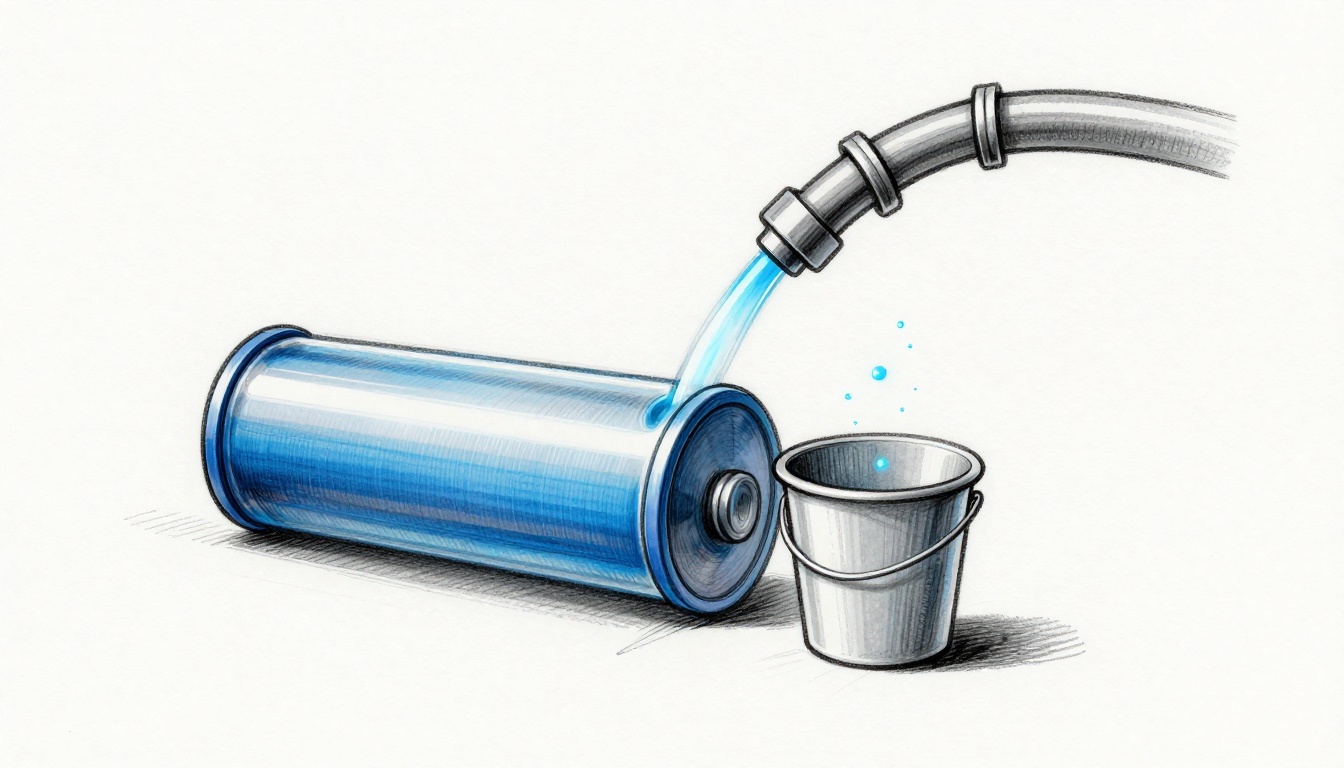
If your phone dies mid-day even though you “charged it,” the cause is usually one missing idea: the battery label is not telling the full story. Similarly, a flashlight that flickers when you expect steady light often fails because the battery cannot deliver what the device needs. In plain terms, electric charge simple, what is voltage, and battery capacity explained are three separate facts that must be read together.
This guide explains each term using everyday analogies like hoses and buckets. Then it ties them to real labels you see on batteries, from AA cells to electric cars. You will also learn what to check when comparing batteries so you can avoid waste.
Electric Charge: The Tiny Particles Powering Everything Around You
Electric charge refers to the amount of electrons (the negative charge carriers) that exist and can move. In practical battery terms, the label does not usually list coulombs. Instead, the label often uses amp-hours (Ah) or milliamp-hours (mAh) as a charge amount proxy.
A simple mental model applies. Imagine electrons as small marbles inside a tube. When the circuit provides a path, the marbles can roll. Those marbles are the electric charge. Their quantity sets an upper limit on how much electricity you can draw before the battery runs low.
Because most consumer battery labels use mAh and Ah, it helps to treat them as “how many marbles you start with.” A larger number means more starting charge, assuming similar conditions.
A key constraint still applies: charge alone does not guarantee results. Charge needs a push to move through the circuit. Without that push, charge cannot do work in the device.
For battery units and conversions, see this guide on mAh vs. Ah conversions.
Bottom line: charge answers “how much electricity is available,” not “how hard it can drive.”
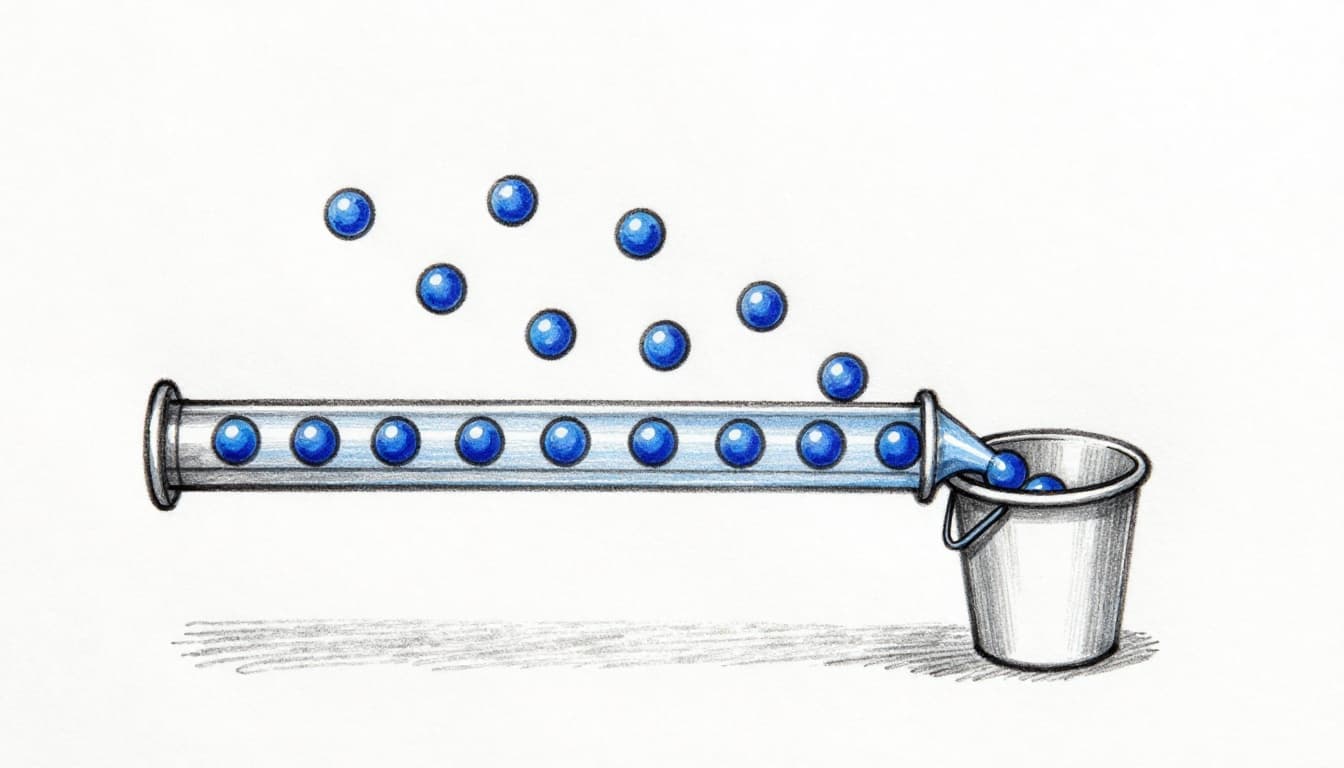
Spot Charge in Action with Everyday Examples
Charge ratings explain “how long” under a given demand, but they do not define the demand. For example, a typical flashlight uses a certain draw. A typical phone uses a different draw. Both consume charge, just at different rates.
Below are practical comparisons.
- AA batteries (~2 to 3 Ah each): enough charge for several hours of flashlight use, depending on LED power and temperature.
- Phone batteries (often around 5,291 mAh on average as of early 2026): enough charge for a full day of mixed use, assuming typical screen time and radio use.
- Electric vehicle packs: these contain massive total charge. When manufacturers describe capacity in the tens of kWh, they are describing stored energy, which corresponds to how much charge can be moved at usable voltage levels.
So, charge is the supply count. The device load determines how fast the count is used.
Voltage: The Pressure That Pushes Charge to Work
Voltage answers a different question than charge. Voltage is the push that drives electric charge through a circuit. In everyday terms, treat voltage as water pressure in a hose. More pressure can push water farther, and it can drive flow through a higher-resistance path.
Voltage is measured in volts (V). Battery labels commonly show it. For example, many AA batteries are 1.5V. Car batteries are often 12V. Modern electric vehicles use much higher pack voltages, often in the hundreds of volts range.
Higher voltage can help current move with less loss for a given power target. That matters for real devices because power transfer depends on both push (voltage) and charge availability (capacity). In simple terms, your device needs a push strong enough to move charge through its internal parts.
However, voltage does not automatically mean “more runtime.” Runtime still depends on how much stored charge the battery contains and how much the device draws.

See Voltage Differences in Batteries You Know
Voltage ratings often stay steady while you use a device, but the actual behavior depends on chemistry. Lithium packs typically maintain voltage under load longer than many lead-acid systems, which can sag as the battery discharges.
One operational example is common. Your car starts reliably because the car system and battery chemistry provide the needed voltage to crank the engine. A phone battery can show a small voltage dip under load, yet it still operates normally until the battery approaches low state.
Here is a quick scan of common voltage examples.
| Battery example | Nominal voltage | Typical use |
|---|---|---|
| AA alkaline | 1.5V | flashlights, remotes |
| Single lithium-ion cell | 3.7V | phones, power tools |
| Car lead-acid battery | 12V | starting and accessories |
| EV battery pack (typical) | ~400V | electric drive systems |
For deeper context on energy vs. capacity across battery types, consult Battery Specs Explained: Voltage (V), Capacity (Ah), Energy (kWh) Guide.
Battery Capacity: Figuring Out How Long Your Power Lasts
Battery capacity defines how much electricity the battery can store and later deliver. In everyday terms, capacity is your bucket size. A larger bucket can hold more marbles before it runs out.
For consumer batteries, capacity is usually stated in mAh (milliamp-hours) or Ah (amp-hours). A power pack with higher mAh generally supports longer operation, but only if the device draws similar current and uses the battery at the intended voltage.
Capacity is not a measure of “speed” by itself. A larger bucket does not help if the device demands more power than the battery can provide for its voltage and current limits. So capacity should be compared with the device’s draw and the battery’s voltage rating.
Also, capacity comparisons should follow the same unit rules. mAh is one charge-based unit. Ah is the same idea, just scaled by 1,000. For conversion methods, refer to Understanding mAh vs. Ah: Convert Battery Capacity Units Easily.
Finally, capacity is not the whole energy story. A small, high-voltage battery can sometimes store more total energy than a larger, low-voltage battery. If the comparison does not include voltage, it may mislead.
For a plain comparison between mAh and Wh, see Battery Capacities: What is the Difference Between mAh and Wh Explained.

Compare Capacities Across Devices for Smarter Choices
Comparing capacities becomes simpler when you keep two rules:
- Check the device’s expected battery voltage.
- Compare capacity under similar voltage, or compare energy when available.
Here are common label patterns you may see.
- Phone battery (for example, ~4,000 to 5,300 mAh): supports a full day of apps, calls, and screen use.
- Power tool battery (often 1.5 to 4 Ah): supports shorter high-draw tasks like cutting, then recharges quickly.
- EV packs: manufacturers often present energy in kWh rather than Ah, because power and range depend heavily on voltage and load.
A practical warning applies. Higher mAh usually helps, but it does not automatically produce longer runtime if the device draws more power, or if voltage differs across battery families.
How Voltage, Capacity, and Charge Combine for Real Power
Voltage and capacity do not act alone. Together, they determine how much usable energy a battery can provide. For this reason, battery labels can look confusing at first. They break the total story into partial measurements.
A common simple energy relation uses watt-hours (Wh) as the combined measure:
- watt-hours approximate (capacity in Ah) × (voltage in V)
This gives a rough way to compare energy content. Consider a phone example. If a battery is near 4 Ah and near 3.7 V, then energy is around:
- 4 Ah × 3.7 V ≈ 14.8 Wh
Another valid configuration could use a different voltage and capacity, yet deliver similar Wh. For instance, 12V × 200 Ah can also land near the same energy scale. The device will still draw power based on its own needs.
Current, sometimes shown as amps, acts like flow rate. Power, the rate of using energy, depends on current and voltage. A simplified relationship often used in practice is:
- power (watts) ≈ voltage × amps
That means runtime depends on both stored energy and the device’s draw. If voltage drops under load, power can drop too. If capacity is low, the energy runs out sooner.
To align battery shopping with how devices actually run, the energy viewpoint matters. As one plain guide states, watt-hours give a better energy picture than mAh alone, see mAh vs Wh: A Simple Guide to Battery Life.
Gotcha: using mAh alone can mislead when comparing batteries with different voltage ratings.
Here is a short comparison that supports that operational logic.
| Term | Unit you’ll see | What it predicts |
|---|---|---|
| Charge | mAh or Ah | “how much supply remains” |
| Voltage | V | “how hard the push is” |
| Capacity (storage view) | mAh or Ah | “how big the bucket is” |
| Energy (combined) | Wh, sometimes kWh | “how long the device can run” |
If you want a safe training tool for the cause-and-effect relationships, try a circuit and battery energy simulator such as PhET’s battery and electricity interactive activities.
Quick Math and Misconceptions to Master Batteries
Most confusion comes from mixing terms that describe different parts of the system.
First misconception: “Capacity equals runtime.” Capacity helps, but runtime also depends on device demand. A higher-draw device can drain a battery quickly, even if mAh looks high.
Second misconception: “Voltage stays constant.” In practice, voltage can sag as the battery discharges, especially under heavy load. Device control systems can hide some effects, but the energy still depletes.
Third misconception: “All mAh labels mean the same thing.” They only mean a similar supply count if the battery voltage and load conditions match.
A short quick-check conversion can help. If a label provides mAh and voltage, you can approximate Wh:
- Wh ≈ (mAh × V) ÷ 1000
Example: 5,000 mAh at 3.7 V.
- (5000 × 3.7) ÷ 1000 ≈ 18.5 Wh
Next, a caution about EVs. US data trends as of March 2026 suggest average new BEV battery capacity around 63 kWh. That already accounts for voltage and design choices. For range planning, Wh and kWh-based energy descriptions typically fit better than Ah alone.
Here is a compact reference table to keep the terms separate.
| Quantity | Unit | Analogy | What changes it |
|---|---|---|---|
| Charge | mAh, Ah | marbles count | battery size and state of charge |
| Voltage | V | water pressure | chemistry, load, design limits |
| Capacity | Ah (storage) | bucket size | battery chemistry and design |
| Energy | Wh | total bucket value | voltage and capacity together |
Conclusion
Charge is the available supply, measured in mAh/Ah, and it answers “how many marbles remain.” Voltage is the push, measured in volts, and it answers “how strongly the battery can drive charge.” Capacity explains how large the storage bucket is, but it does not replace the combined energy view.
When you treat energy as the combined result of voltage and capacity, battery labels become comparable. The earlier flashlight and phone failures follow the same pattern: missing voltage push, missing stored supply, or both.
Next time you buy a battery, check the energy indicator when possible (Wh for small systems, kWh for EVs), then confirm the device voltage matches. Which device label do you plan to decode first, your phone, your flashlight, or your tool pack?