Finding dead batteries in a remote control after months of no use feels unfair, especially when the packaging still looked fine. In practice, batteries lose charge over time because of self-discharge, meaning power drains even when nothing draws it. Heat, storage habits, and battery type can make that drain faster.
This article explains what causes self-discharge at a practical, science level. Then it compares common chemistries (alkaline, lithium-ion, NiMH, and lead-acid). Next, it covers the key factors that worsen the loss, and it ends with storage steps you can apply right away. Finally, it includes what 2026 battery improvements may mean for slower self-discharge in the near future.
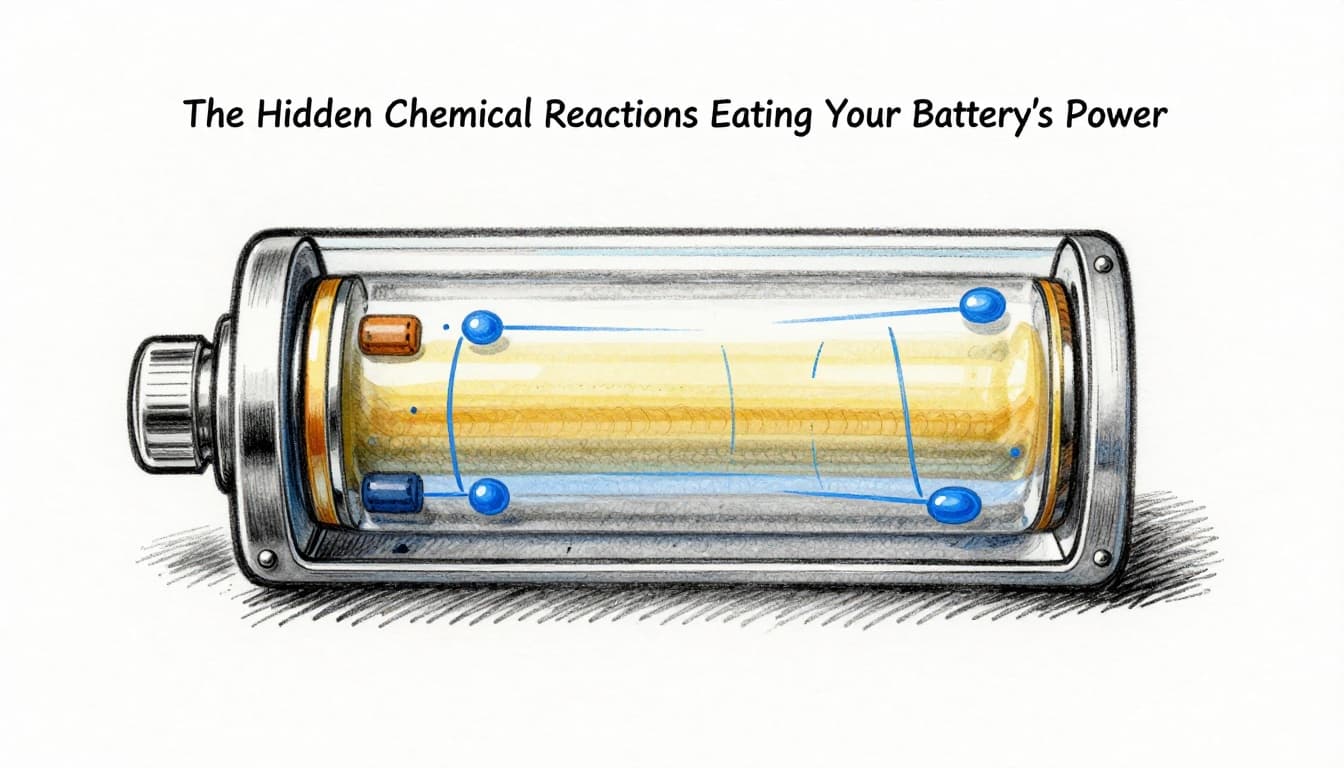
The Hidden Chemical Reactions Eating Your Battery’s Power
Self-discharge is, in plain terms, a slow “leak” inside the battery. No device needs to be on. Chemical processes still run, even while the battery sits idle. Over time, these processes reduce the usable charge.
Because batteries store energy through chemical reactions, they can also spend energy through unwanted side reactions. Those side reactions form new compounds inside the cell. Some reactions consume materials that otherwise support normal charge storage. As a result, the battery’s voltage drops sooner during use.
A related effect comes from ion movement and particle diffusion. Inside the cell, ions travel to maintain balance. However, some paths lead to losses rather than useful charging. Tiny currents can form locally, even without an external circuit. The battery becomes the “closed system” that still spends energy internally.
For lithium-ion batteries, one loss pathway is the growth of the SEI layer, or solid electrolyte interphase. This layer often starts as a protective film. However, it continues to grow as the battery ages. Each growth step can consume lithium and electrolyte, which reduces the charge the battery can later deliver.
If you need a mental model, think of a bucket with a slow pinhole leak. The leak may be hard to notice at first. Still, the water level drops steadily. With batteries, the “water level” is the charge you count on when you finally use the cell.
For deeper reading on the general concept of spontaneous discharge, see self-discharge explained on Wikipedia. For a more technical breakdown of mechanisms, Self-discharge of Batteries: Causes, Mechanisms and Remedies is also relevant.
Ion Movement and Trapped Charges
Within any rechargeable cell, charged particles travel between electrodes during operation. While the battery rests, that movement does not stop completely. Instead, ions diffuse and redistribute based on concentration and chemistry.
Some ions get trapped in places where they cannot help normal operation later. Others react with the electrolyte. These outcomes reduce the number of charge carriers available for the next use cycle.
You can interpret this as “lost time” inside the cell. The battery still follows the laws of chemistry. It does not wait for user demand. Even when idle, internal pathways encourage slow losses.
As a result, batteries can show two problems at the same time:
- The state of charge drops (you measure it as lower voltage).
- The capacity drops (you measure it as less runtime at the same load).
Both outcomes can appear even without external load.
In practical terms, this is why a phone battery may show a quick drop after sitting. It also explains why some rechargeable packs may feel weaker after months of storage.
SEI Layer Growth in Modern Batteries
For lithium-ion cells, the SEI layer is the recurring administrative record of battery aging. It forms to protect the electrodes from ongoing reactions. However, the protection is not permanent.
Heat and longer calendar time tend to increase SEI growth. Each new SEI “cycle” consumes lithium. It also uses electrolyte components that would otherwise support stable charging.
A simple way to visualize the process is a scab that keeps forming. The scab may protect briefly. Yet every time it rebuilds, it also signals damage under the surface. Eventually, the skin (SEI) thickens and the system performs worse.
Therefore, batteries can lose charge even if the battery never cycles. That is the core reason batteries lose charge over time. The loss comes from internal chemistry, not only from use.
To see related research coverage, researchers exploring self-discharge in EV batteries may provide helpful context.
Self-Discharge Showdown: Alkaline vs. Lithium-Ion vs. Others
Different battery types lose charge at different rates, mainly due to how stable their internal reactions are. In controlled conditions, alkaline cells tend to hold charge the longest. Most rechargeable chemistries lose charge faster while idle.
Also, storage behavior matters. Full or hot storage can push self-discharge higher. However, the type still sets the baseline.
The table below uses practical ranges reported for 2026-era behavior under room-like conditions, then notes common “worst-case” behavior.
| Battery type | Typical self-discharge while idle | What to expect in storage |
|---|---|---|
| Alkaline (AA/AAA) | 2–3% per year | Usually survives years in a drawer |
| Lithium-ion (rechargeable) | 1–3% per month | Noticeable drop after long storage |
| NiMH (rechargeable) | 10–15% per month, can reach 15–30% in harsh storage | Surprise drain, even unused |
| Lead-acid (car) | Often 10–15% quickly, then 10–15% per month; about 3% per month near 20°C | Fast early loss, then month-to-month decline |
Because alkaline self-discharge is low, it often supports emergency use. Meanwhile, many rechargeables trade higher idle loss for the benefit of recharging many times.
It’s also common to see rechargeable batteries lose charge faster after you fully charge them. Then internal side reactions can continue while the battery rests. After that, heat can raise the internal reaction rate.
If you want an additional comparison of self-discharge behavior across battery types, Self-Discharge Rates: Rechargeable Vs. Non-Rechargeable offers a general reference point.
Why Alkaline Batteries Win for Long-Term Storage
For items that you do not use often, alkaline cells usually win on storage. Smoke detectors, wall clocks, remotes, and basic flashlights often rely on years of standby time.
Given a typical 2–3% per year loss, a battery can remain usable for long periods. In many household cases, that translates into a multi-year shelf life if storage avoids heat and humidity.
In a compliance-style summary, alkaline cells can be treated as “low idle-drain assets” for long duration. They do not provide recharge cycles, but their chemistry is stable enough to reduce self-discharge.
The Fast Drainers: NiMH and Lead-Acid Realities
NiMH can behave much faster while idle. Even though NiMH rechargeables are common in some devices, they can lose charge quickly when fully charged. As a result, a pack may be ready at purchase, then weaker months later.
Lead-acid batteries also present a demanding schedule. Many lead-acid designs show a large drop early after charge. After that, they keep losing charge monthly unless kept on a proper maintenance plan.
In car terms, the battery is rarely “off.” The car also imposes loads. Still, even a parked vehicle can face ongoing losses from the battery’s internal reactions.
Meanwhile, storage heat can multiply the problem.
Temperature and Other Sneaky Factors Speeding Up the Drain
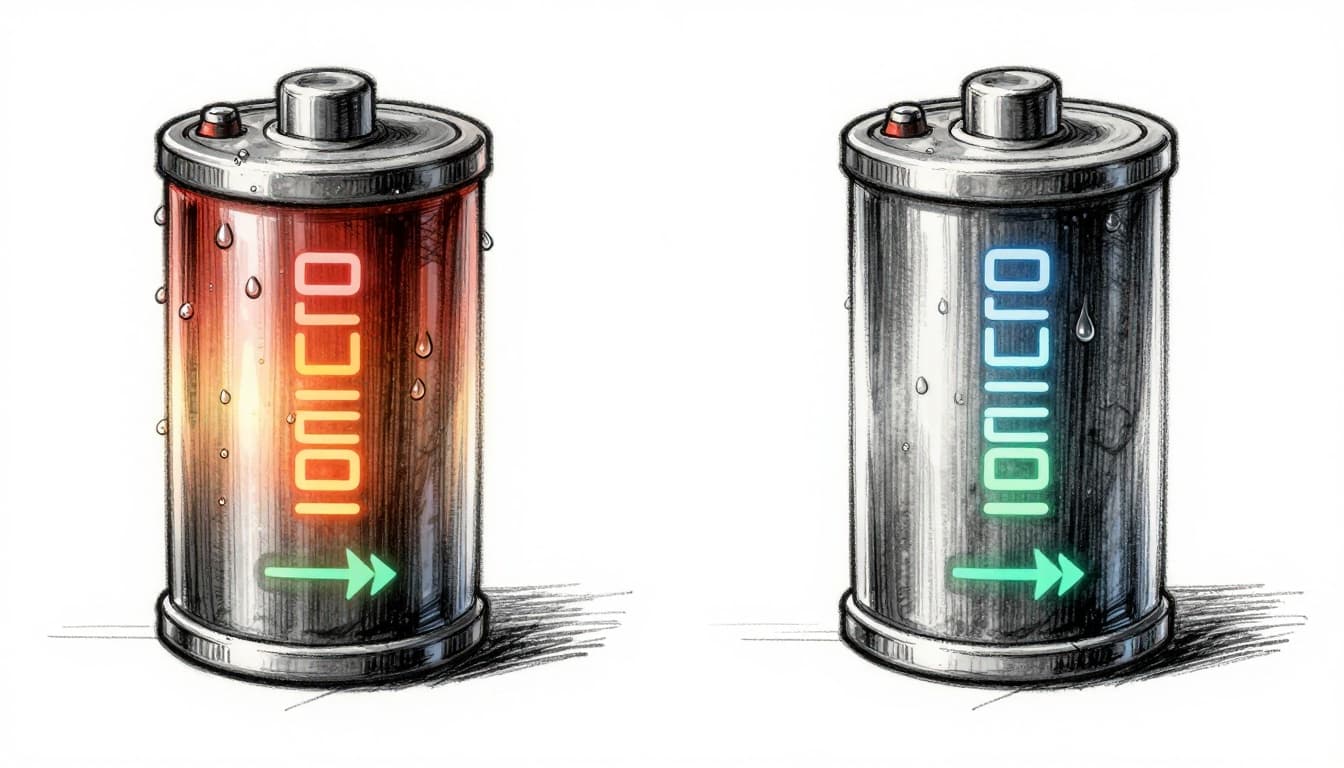
Temperature is the most common accelerant. Chemical reactions tend to speed up when materials get warmer. Therefore, self-discharge also speeds up with heat.
A practical rule works well for consumer batteries: avoid hot environments. Store batteries away from sun, heaters, and vehicle dashboards.
Cold conditions can slow reactions, which may sound beneficial. However, cold can also reduce battery output during use. So even if self-discharge slows down, the performance under load may still suffer.
Humidity causes corrosion. Corrosion can create internal leakage paths or harm terminals. In addition, humidity increases the risk of damaged seals and degradation.
Other factors that push self-discharge higher include:
- Storing batteries fully charged (more driving force for side reactions).
- Storing batteries near empty (different internal stress pathways).
- Using mixed brands or mixed ages in a device.
- Storing low-quality cells or damaged cells.
In addition, older batteries have less stable internal structures. That aging increases the rate of unwanted side reactions.
How Heat Turns Batteries into Power Hogs
Heat changes the reaction speed inside the battery. For many chemistries, reaction rates rise sharply with higher temperature.
As a result, a battery stored in a hot car can drain noticeably faster. In phone terms, summer heat can shorten the time you get per charge. The battery experiences more internal activity during calendar aging.
If you use a fast charger often, you should also consider storage timing. Charging and then parking the battery in heat can create a double stress condition.
Humidity and Cold’s Lesser-Known Toll
Humidity mainly acts through corrosion and contact problems. Moisture can attack metal surfaces. It can also increase the chance of partial shorts when terminals contact conductive surfaces.
Cold affects performance during use. It can reduce available voltage under load. For standby gear, this means a battery may test “okay” but fail under a real demand.
To reduce risk during storage, keep terminals protected and keep cells dry. Simple handling steps often matter more than complicated schedules.
Proven Storage Tricks to Slash Self-Discharge
A storage plan is an operational control. It sets the conditions that slow self-discharge. When you apply these steps, batteries tend to keep usable voltage for longer.
The goal is to reduce internal reaction stress. Also, the goal is to prevent corrosion and accidental shorts.
You can apply the steps below with minimal effort.
- Store rechargeables at 40–60% charge (room temperature). Avoid leaving them at 100% for months.
- Keep batteries in a cool, dry spot between about 50°F and 77°F (10°C to 25°C).
- Remove batteries from devices that sit unused for long periods. This reduces leakage through device circuits.
- Do not mix old and new batteries in the same device. Use consistent age and brand where possible.
- Use original packaging or a plastic case to keep terminals from touching metal.
- Cover exposed terminals with tape if batteries are loose. This reduces the risk of short circuits.
Some storage guidance also appears in EcoFlow’s battery storage safety guide. It supports the general approach of cool, dry storage and terminal protection.
For many households, these steps effectively double usable storage time compared with warm, humid, or device-installed storage.
Also, you should set a review schedule. Self-discharge is slow enough that “set and forget” can work. Still, checking every few months prevents last-minute failures.
2026 Breakthroughs Promising Batteries That Last
Battery research does not stop at capacity and charging speed. Calendar aging and self-discharge matter, especially for devices that may sit unused for months.
In 2026, solid-state designs remain a major direction. Solid electrolytes can reduce some failure pathways tied to liquid materials. This can improve safety and may support better long-term behavior under certain conditions.
At CES 2026, solid-state advancements were described for multiple use cases. The public claims emphasized improved safety, better performance, and improved operation across temperatures. However, these improvements did not translate into an immediate consumer fix that stops self-discharge for all batteries on day one.
Meanwhile, academic work continues on interfaces and lithium plating behavior. For example, anode-free lithium metal battery research in Nature describes approaches aimed at improving lifespan and handling issues tied to the solid electrolyte interphase.
Other research in Nature Communications explores electrolyte and solvation control for low-temperature battery stability, which can affect aging behavior over calendar time. You can review cryogenic Li||Cl2 battery research in Nature Communications for interface stability context.
In plain administrative terms, 2026 progress supports one expectation: future cells should reduce internal losses. Still, the current best method remains operational storage control. Heat avoidance and correct charge level remain the enforceable steps for now.
Conclusion
Batteries lose charge over time mainly due to self-discharge, which happens because internal chemical reactions keep running when the battery sits idle. For lithium-ion cells, ongoing SEI layer growth can consume charge-storing materials. Battery type also sets the baseline, since alkaline cells usually hold charge far longer than many rechargeables.
Heat and moisture raise the internal loss rate, so storage conditions often decide whether batteries survive until the next emergency. Applying a storage plan, including partial charge for rechargeables and cool, dry placement, reduces the drain you experience.
Before you leave the room, check what batteries you currently store. Then choose a storage routine that matches the chemistry. How long do AA batteries last in real storage, and what conditions shorten that timeline for you?