One reason EVs feel like they’re improving every year is simple: battery tech is moving faster than most other big industries. And if you’ve ever watched a phone battery go from “one day” to “two days,” you’ve already seen the pattern.
Now the stakes are higher. In 2026, the global battery market is heading toward about $174 billion, driven by electric cars, home energy storage, and power systems that need to stay stable. Batteries are getting better because the demand is huge, money is pouring in, and rules push companies to build more locally.
So why is battery technology improving rapidly right now? The answer comes down to four forces: demand, real chemistry wins, aggressive investment, and government pressure to secure supply.
The Huge Demand That’s Pushing Battery Makers to Innovate
Battery makers don’t improve just because they feel like it. They improve because other industries keep asking for more power, better safety, and lower cost.
Electric vehicles are the loudest signal. Global EV sales passed 9% growth in 2021 and kept climbing after that. By 2025, around 20.7 million electric vehicles were sold worldwide, and those cars keep pulling forward lithium-ion demand. Meanwhile, the overall battery market keeps expanding fast, with many forecasts pointing to 16% to 21% yearly growth.
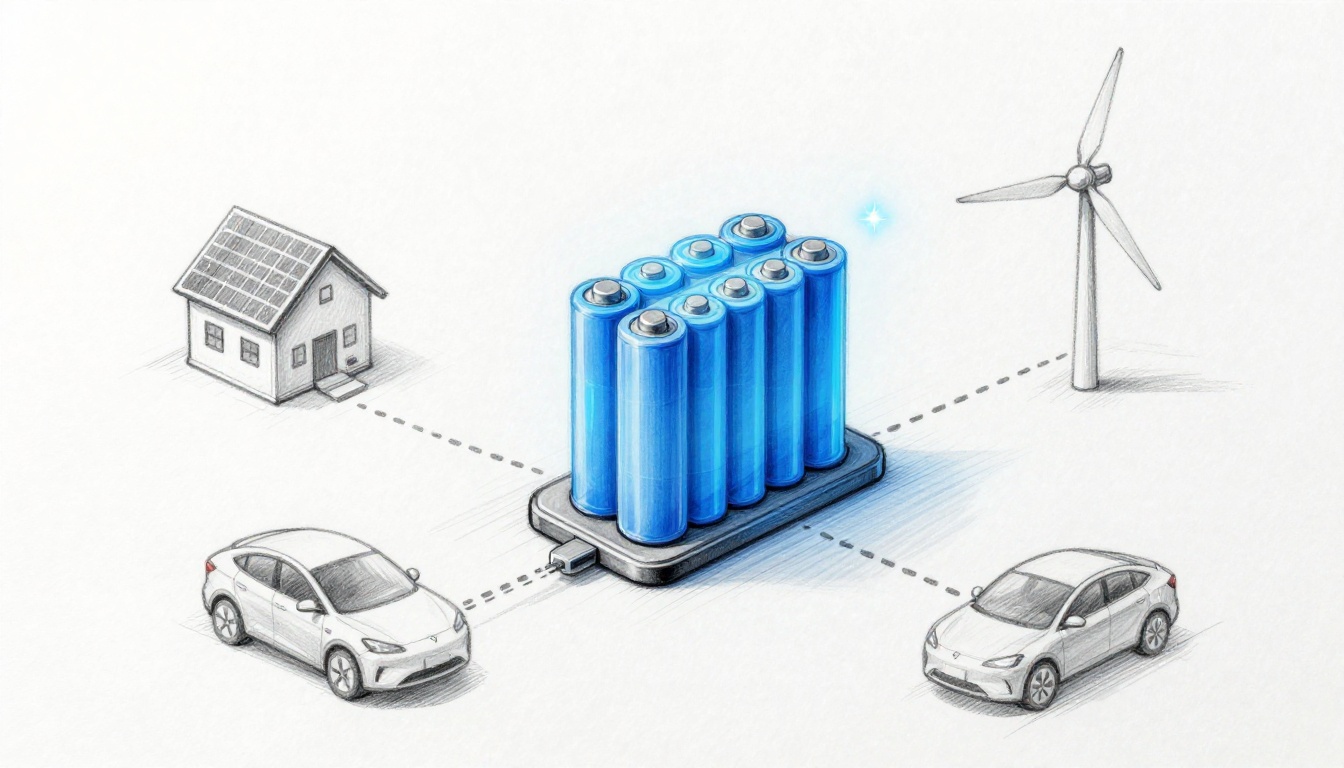
Next, renewables are raising the bar. Solar and wind are useful, but they don’t follow your schedule. Batteries act like a buffer, holding energy for later so homes and utilities can use power when the sun drops or the wind fades. If you’ve ever used a home battery as backup during an outage, you already get the idea: you store power now, so life keeps running later.
There’s also a quieter but growing pressure point, grid stress. More people plug in at once, and more data centers draw power around the clock. When demand spikes, the grid needs fast ways to smooth out supply and demand.
One more thing pushes innovation: raw material costs. Some industry estimates put around 70% of battery price risk tied to materials. That’s why companies chase new chemistries, better refining, and supply chains that don’t depend on one country.
You can even see this in market reporting, like the EV batteries market research that highlights expansion into new chemistries and manufacturing scale (for context, see EV Batteries Business Report 2026).
Electric Vehicles Leading the Charge
EVs are the top driver for battery upgrades because every buyer feels the results. Better batteries mean longer range, faster charging, and lower costs. That translates into cars people can actually use, not just cars that look good on paper.
When you hear “range improvements,” think about a simple cause-and-effect loop. More energy stored in the same space means fewer charging stops. Better charge control means less slowdown during fast charging. Better safety systems reduce risk and help manufacturers ship more units with confidence.
This demand also pulls entire battery supply chains forward. Tooling gets built. Factories scale. Engineers learn faster. Even packaging systems improve, since battery packs have to protect cells under heat, vibration, and real road conditions.
If you picture a Tesla road trip without fast charging, you get the emotional impact. When charging times drop, drivers plan trips differently. And when range grows, the “battery anxiety” factor shrinks.
In short, EV makers keep rewarding the best-performing chemistries. So battery companies race to deliver the next step.
Renewables and Grids Needing Reliable Storage
Renewables turn power into a timing problem. The sun isn’t out at night. Wind can fade during peak hours. That’s where batteries help most, because they can respond quickly and hold energy until it’s needed.
Utility-scale systems also face a stability challenge. Grids don’t like sudden swings. Batteries can smooth those swings and reduce strain on other power sources. Think of a battery as a “power bucket.” When the stream comes in too fast, it fills the bucket. When the stream slows down, it pours out what you saved.
Meanwhile, energy-hungry facilities keep multiplying. If data centers expand, they can add long, steady load. During heat waves or storms, grids already run near the edge. Storage gives operators another lever.
Here’s the key: batteries improve because they’re valuable in two directions. They store renewable energy, and they stabilize the grid. That makes demand broad, not limited to one market.
Breakthroughs in Smarter, Safer Battery Designs
Demand creates pressure. Breakthroughs turn that pressure into real product change.
Right now, battery innovation is showing up in several directions at once:
- safer designs (less risk of overheating),
- higher energy density (more range per pound),
- lower cost (less reliance on expensive inputs),
- and longer cycle life (more years before capacity drops).
Some of the biggest headline categories include solid-state, sodium-ion, lithium-metal, and silicon-enhanced lithium-ion.
However, it’s not just chemistry headlines. Many improvements also come from better monitoring. Sensors and smart battery management reduce stress on cells, so batteries age more slowly.
One more analogy helps. Traditional lithium-ion batteries are like a system with liquid electrolytes that move charge. New designs often swap that liquid foundation for more stable materials, or they adjust how charge moves through the system.
Solid-State Batteries: Lighter and Less Fire-Prone
Solid-state batteries aim to reduce one of the biggest fears: thermal runaway. Because solid electrolytes can be more stable than liquids, the design can improve safety margins.
They also promise higher energy density. More energy in a smaller space could mean EV packs with more range, or lighter packs that still meet performance goals.
By 2026, solid-state efforts are starting to shift from lab talk toward early deployments and pilots. For a snapshot of companies moving toward real-world production, see Factorial moving toward production.
The bigger story is momentum. Even when mass adoption takes time, each pilot teaches manufacturers how to build at scale. That learning shortens the gap between “promising” and “practical.”
Sodium-Ion and Other Cheap Alternatives
Sodium-ion is one reason costs can drop. Sodium is more common than lithium, so the supply chain can be less fragile. That matters when prices swing.
Sodium-ion also fits well with storage needs and some EV use cases. It tends to hold up in colder conditions better than many basic lithium systems. And for stationary storage, the performance trade-offs can be worth it.
For example, CATL and CHANGAN have announced a mass-production sodium-ion passenger vehicle plan for mid-2026 (details here: CATL and CHANGAN sodium-ion launch). That’s a clear signal that sodium-ion isn’t just a science project.
Other alternatives also show up in the same push for faster charging and lower cost. Aluminum-graphite concepts have gained attention in fast-charging research, including work associated with Stanford.
If solid-state is about safety and density, sodium-ion is often about price and availability. Together, they give battery makers more options, and that speeds up improvement.
The fastest progress usually comes when companies build multiple paths, not one perfect design.
Billions in Investments from Top Companies
When tech gets competitive, budgets follow. Battery companies, automakers, and energy firms keep funding new factories, new lines, and new chemistries.
CATL is working on sodium-ion at scale. Renault and partners like Basquevolt have focused on lithium-metal directions. Companies such as Škoda have also pushed cell-to-pack ideas to reduce waste and cut cost.
At the same time, investment isn’t only about new cells. Recycling builds matter too. If companies can recover materials reliably, it lowers long-term price risk. In the US, supply chain and recycling projects are part of the push to keep batteries coming, even during global disruptions. Firms such as CMBlu and Volexion are part of the broader storage and recycling push, aiming for longer service life and better recovery.
And competition speeds everything up. If one company can cut cost by a meaningful amount, others must respond fast. If one design improves safety, regulators and buyers shift expectations. Then everyone has to catch up.
CATL and Sodium-Ion Pioneers
CATL stands out because it pushes sodium-ion in ways that connect directly to real products. The company has signaled improved life and cold performance, which matters for everyday EV use, not just ideal lab conditions.
If sodium-ion can reduce winter range loss and keep cells stable, manufacturers can offer more consistent ownership experiences. That’s a strong selling point for budget EVs and fleet vehicles.
As more factories scale, learning curves kick in. Costs fall when yields improve and processes get repeatable. That’s why investment plus demand creates rapid battery tech change.
Government Rules Speeding Up the Shift
Demand and innovation matter, but policy decides timelines too.
In the US, rules around battery manufacturing and supply chain requirements can shape what qualifies for incentives. FEOC-style restrictions and domestic-content expectations push firms toward local and North American production, and they encourage partners to manage foreign equipment exposure more carefully.
Tax credit eligibility details matter a lot for projects. If compliance is unclear, companies delay. When guidance becomes clearer, projects move. For an example of how FEOC rules reshape eligibility for energy storage credits, see How FEOC rules reshape ITC eligibility.
Policy also supports R&D and recycling. That helps companies build safer chemistries and recover materials, instead of treating batteries like a one-time consumable.
In short, government action adds pressure and direction. It reduces uncertainty for investors and rewards safer, more secure supply chains.
Conclusion: The Real Reason Batteries Are Improving Now
Battery technology is improving rapidly in 2026 because four forces line up at once. Big demand from EVs and renewables pulls innovation forward. New chemistries and smarter monitoring turn that pressure into measurable gains. Investment keeps shrinking the time between tests and factories. Finally, government rules push companies to build for long-term supply reliability.
If you’ve felt batteries “upgrade” in your everyday life, you’ve been watching the same engine. The next wave could mean longer EV range, more affordable storage, and fewer compromises at home and on the road.
What would you try first if battery costs kept falling, would it be an EV, or a home backup system?